A-Z Challenge 2018 – Zeal about Surnames

a2z-h-smallI am hopeful that the various posts over the course of the A-Z Challenge, which has been about surnames, surname research and registering a One-Name Study has been enjoyable and given you plenty of scope for ideas and thoughts.

You can see all the posts I have written about surname research HERE and there is a small list of other writings about One-Name Studies and surnames that featured under Writing about your One-Name Study

So what to do next if you are enthused about One-Name Studies and surnames:

  • Visit the One-Name Studies website and perhaps
  • Join the Guild of One-Name Studies and see what the organisation offers
  • Sign up for the Pharos Course – Introduction to One-Name Studies the course runs over five weeks and you will broadly learn:
    • About One-Name Studies
      • History of One-Name Studies
      • Why have a One-Name Study
      • How suitable is my surname
      • Introduction to the Guild of One-Name Study
      • Getting started
    • Surnames and their history
      • How did surnames start?
      • An introduction to common meanings & deviations of British Surnames
        • Non-British surnames
      • Changes, spellings, deviations, Other pitfalls for the unwary
        • Deviants and Variants
      • Surname Distribution & Migration
      • Importance of individual surname studies
    • Core records you will need and information gathering
      • What are core records?
      • Civil Registration records and indexes in the British & Ireland
      • Indexes to the Census
      • Family Search, will indexes and other readily available indexes
      • Data Capture
      • Measuring your progress
      • Organising your One-Name Study (and I have a presentation that I am in the midst of writing, so stay tuned!)
    • Analysing and making sense of your data
      • Introduction to analysis
      • Designing spreadsheets
      • Family reconstruction
        • Software for a One-Name Study
      • Migration & linking people to places
      • Finding missing data
      • Drawing conclusions
    • Practical aspects of running your own One-Name Study
      • Registering a study with the Guild
      • Ethics
      • Data Protection
      • Publishing your study
        • Facebook Groups & pages
      • Preserving your study
      • Organising your time
  • Purchase a copy of Seven Pillars of Wisdom: The art of a One-Name Study.

I teach the Pharos course and have two studies, one is a Surname whose origins are typically British and the other is for an Italian surname.

The chances are you have been undertaking a study and not necessarily realising that it is a One-Name Study, you can read more HERE. Whether you are new to the concept or have been undertaking a surname research project for a while why not consider your aims for your study.

The next Pharos course begins 15th May 2018 and you can sign up HERE

I hope you have enjoyed the A-Z series as much as I have enjoyed writing them. Over the course of the last month I have promised I would come back to several topics and plan to do that over the coming weeks.

Posted in A-Z Challenge, A-Z Challenge 2018 - Surname Research Series, Genealogy, Introduction to One-Name Studies (Pharos course 901), One-Name Studies | 3 Comments

Favourite Book(s) #17 – Naples ’44 by Norman Lewis

Naples '44This book has sat on my bookshelf for at least 20 years without being read. Then last year I read in a newspaper that it was to be broadcast on BBC 4 and narrated by Benedict Cumberbatch. Sadly the recording is not available on iPlayer, but the write up from the BBC website says this and I quote direct from the BBC 4 site:

“In late 1943 Norman Lewis was posted by the British Intelligence Corps to newly liberated Naples. He arrived to witness a city devastated by fascism, bombings, Nazi occupation and the Allied invasion. Written 30 years later, his remarkable memoir evocatively captures the resilience and resourcefulness of the city in the desperate months following the Nazis’ withdrawal.

Director Francesco Patierno combines extracts from this account, read by Benedict Cumberbatch, with powerful archival footage and clips from films set in Naples in the 50s and 60s, to portray a war-torn and once-dynamic city returning to life”

I was lucky enough to hear the broadcast and following the broadcast immediately started the book. I have always felt somewhat torn by emotions relating to the Second World War because being half Sicilian I had Grandparents who fought on both sides. I wondered for a long time if they fought in the same area and potentially were firing at each other. I don’t know the answer to that and perhaps that is for the best.

I have my maternal Grandfather’s military service and know that between 1940 when he joined the Army until late November 1943 he was in Sierra Leone. Meanwhile, my paternal Sicilian Grandfather never talked about his time in the military and always said that it was better to be captured by the British, which he was, than shot by the Germans after Germany and Italy split their alliance. He served his time as a Prisoner of War in England. I dare say he saw ruthless atrocities, just as any service man did during the Second World War, he like many others never spoke of them.

The book itself is a diary that was kept by Lewis reflects his time spent in Naples during September 1943 and October 1944. For me, this book gave me an insight into the life of the Italians in Naples and suspect that it was similar across Italy.

War is a shocking thing. I will never truly understand what both my Grandfathers experienced during this time. I can only attempt to read and research to gain an understanding.

We must never forget those that perished during the War years, regardless of where and how they perished. Equally we must never forget the experiences of those that survived the war. Everyone has a story to tell, and sometimes that story dies with them.

I am sorry to write such a deep post for this book, but to lighten the mood just very slightly.

Cumberbatch is a Surname registered by the Guild of One-Name Studies and Bob, who has registered the Cumberbatch surname will be one of the speakers on the Guild webinar next Tuesday where he, along with Paul Howes will be talking about Sharing the Joy of their respective studies. You can register for the Webinar HERE. The webinar will be available to everyone live and for a week after, when it will become a members benefit.

The webinar takes place at 7pm British Summer Time (BST) on Tuesday 15 May 2018.


Posted in Books, Favourite Book(s), One-Name Studies | 2 Comments

#Museum Week – Thoughts about the week

logoMWI spotted the #MuseumWeek the day after the week commenced. I thought it was a great idea and had I known about it in advance I would perhaps have made difference choices.

In October, National Libraries week will commence (8-14th) and I have made a tweak or two. Firstly I am going to run over the whole of October and it will be in a similar vein to the A-Z challenge which took place in April. All posts will be linked in to the topic of surnames and One-Name studies and be relevant to libraries or a specific library, so stay tuned!

Museum Week was a great opportunity to spotlight museums that might have material relevant to those researching a surname. We tend to think of museums as purely visiting opportunities and whilst that is the case and I personally love visiting museums, they generally speaking have websites and in many cases catalogues and indexes you can search, thereby adding value to your One-Name Study or surname project.

By taking part in weeks such as these we add to the publicity of the various organisations and add other and extended dimensions to our own research projects.

I look forward to taking part in future years and will do a bit more preparation.

Posted in #MuseumWeek, Genealogy, Introduction to One-Name Studies (Pharos course 901), One-Name Studies, One-Place Studies | Leave a comment

#Museum Week – Migration Museum

logoMWEarlier in the week I shared a very similar post about migration and you can read that post HERE

Today’s post looks to a very topical one for the UK this week, migration into the UK and does also reflect the link to the Partition Museum which you can read HERE.

Migration Museum UK

Screen capture from Migration Museum

London is a very culturally diverse city and the Migration Museum captures some of the groups that reinforces that diversity. Visit the website and let the top banner scroll between the slides, the full slide this quote comes from is one of those slides

I am the daughter of migrant and what I find fascinating is that no matter who the latest group of migrants are there are significant similarities between all of those groups. What does change is the country the folk came from, the religion and culture and perhaps the underlying reasons for migrating.

This post, from the website says that we tend to believe that when HMT Windrush arrived in London in 1948, migration began in earnest, but the truth with migration to England, Great Britain and of the course the United Kingdom began much earlier that that. The Windrush issue is something that is very important, concerning and something must be done – this is not a political post and I don’t wish it to be. From a genealogist point of view just how many important documents have been destroyed and that is an open question for any nation.

Of course, migration hasn’t just happened in London, it has happened over time in many, many places in UK and many major cities have Little Italy’s & Chinatown’s as folk move into areas where others have already settled.

This museum attempts to bring those strands together wants to record and honour those folk who came here from other lands, regardless of when. Any country forms on the back of the people who came before us, whether they were migrants or not.

Whilst as someone with a One-Name Study and One-Place Study there does not appear to be anything index or collection that might assist, I came away from an hour exploring the site with six things written on an index card, of ideas and suggestions of where to look for material on the bases of what material was on this site.

The Pharos course, Introduction to One-Name Studies does not specifically look at “foreign surnames”, and by foreign I mean names where their origin is outside of Britain, so Italian or German for example, but there is a small section about  them in the course. I am researching an Italian surname in particular. The Guild of One-Name Studies requirement is that the aim of a study is to be global, with no time limits. Therefore it is relevant to understand the foundations of surname research and to look at the scope for researching surnames whose origins outside of the UK inside the UK, especially since the UK is a country with a long history of migration, which is a talk that I am giving to Legacy Family Tree webinars later this year.

Posted in #MuseumWeek, Genealogy, Introduction to One-Name Studies (Pharos course 901), One-Name Studies, One-Place Studies, Research Resources | Leave a comment

A-Z Challenge 2018 – YOUR Study

a2z-h-smallOnce a genealogist has registered the surname with the Guild they agree to do essentially several things:

  • Aim to make the study global
  • Respond to all enquiries.

In fact the five broad principles can be seen here.

There is guidance for a study, the Guild has mentors and volunteers that will help guide you, answer questions and so forth. There is the book, Seven Pillars of Wisdom which was published by the Guild in 2012. There is the Introduction to One-Name Studies course which is run by Pharos, and I  teach that. There is an Advance course which is taught by Helen Osborn and that builds on the material learnt in the introduction course and is probably best taken when you have some time under your belt with a study.

The introduction course gives a foundation for undertaking a study – learning about the numbers that reflect the people in your study, the history of surnames, and then drawing conclusions as to the history of your surname of interest.

The details of your study are left up to you to decide – the core data, the storage of the data, when you go global etc. There is no prescriptive way and where you start may well depend on the origins of the surname.

I have stated several times that I research in three places at one

  • Where I am (England)
  • Where my family originated (the surname is clearly Italian, and my own family are from Sicily)
  • Where they went (Italian migrated globally, but the key places are Argentina, United States and Australia. My own family line went to New York, Alabama and Louisiana, so those three states are my US focus).

The One-Name Study that YOU register is YOURS, you decide how it is kept and maintained and consider the aims of your study. You work at your pace and enjoy the experience and research.


Posted in A-Z Challenge, A-Z Challenge 2018 - Surname Research Series, Genealogy, Introduction to One-Name Studies (Pharos course 901), One-Name Studies | 2 Comments

#Museum Week – The Partition Museum

logoMWI came across the Partition Museum just as the news was broadcasting the news of the name given to the newly born baby of Duke and Duchess of Cambridge. The little boy is to be called Louis Arthur Charles, which is a name that I had suspected.

The connection to Partition is through Lord Louis Mountbatten who was the last Viceroy to India – see the connection?

The museum is reasonably new, established in 2016 and whilst it does not necessarily have much online for visitors, the historical event that this museum represents does provide food for thought on the people who lived a lifetime in India and contributed to the Country it became before partition in 1947.

For those of you who have been reading this blog for a while will know that I established an Orlando in India a while ago and that has been added to the long (and getting longer by the minute) list of things that I need to followup. If you want to read that post then CLICK HERE. In addition to this, I have been a member of the Families in British India Society (FIBIS) since the early days and their website is a great asset to the genealogical community.

Posted in #MuseumWeek, Genealogy, Research Resources | 1 Comment

A-Z Challenge 2018 – X Marks the Spot!

a2z-h-smallThe phrase X Marks the Spot is typical to denote where someone should sign their name or perhaps it denotes a pin mark on a map identifying where a particular location is.

So today I am going to chat about bringing to life the people who are in our own ancestral lines or people with whom we share no connection, but they bare the surname we are researching.

On occasions, when I am researching a family who appear in my One-Name Study I often have to remind myself that these were not my people, but fit into someone’s ancestry. So where do we stop researching?

Some One-Namer’s record the marriage between two people, one of whom appears in their study. Depending if the individual who bears the surname will depend on how far the line is followed. If the line is male it is easier to define, but a female poses a question and consideration.

The Guild offers no suggestion to this quandary and I personally follow the female line through to children and then what happens to those children. Sometimes there is a cross over between two studies, both registered with the Guild and in those instances I reach out to the other member and offer to do a reciprocal swap of information. That is one of the nicest things about the Guild – the friendly responses, connections and collaborations. To quote a former Chairman “members helping members” Families do often marry into each other, and sometimes more than once.

Whether these folk are our own ancestors or part of our study it is quite fascinating to follow someone’s life through their trials and tribulations and for us to attempt to understand all the details. If we are very lucky we connect with an ancestor of the person who perhaps shed further light on them or provide snippets of information.

Posted in A-Z Challenge, A-Z Challenge 2018 - Surname Research Series, Genealogy, Introduction to One-Name Studies (Pharos course 901), One-Name Studies | Leave a comment

#Museum Week – McMaster Museum of Art

Glancing through my #MuseumWeek  Twitter feed earlier and I found a fascinating one logoMW

Posted in #MuseumWeek, Genealogy, Research Resources | Leave a comment

A-Z Challenge 2018 – Writing about your One-Name Studies

a2z-h-smallWhether you write articles, Tweets, Facebook posts or a blog you are writing and publicising your study and fulfilling at least three of the Seven Pillar’s of Wisdom: the Art of One-Name Studies, published by the Guild in 2012. The book is also available from Amazon in Kindle format.

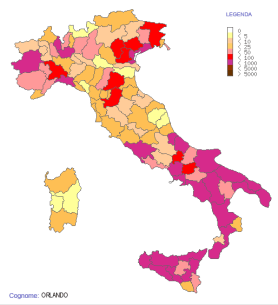
In the last few years I have written more and more about my own studies, and in particular about my Orlando study, Italian research and about the broad genre of surnames and surname research.

Here are a few articles I have written in the last year alone (in reverse order):

You have nothing to loose by writing about your surnames. You may even find a connection to your family or someone else researching the surname. In some cases, including my Orlando study, our One-Name Studies and surname research is bound together with a One-Place Study and perhaps our cultural heritage.

Pathway to My Sicilian Heritage Image


Posted in A-Z Challenge, A-Z Challenge 2018 - Surname Research Series, Introduction to One-Name Studies (Pharos course 901), One-Name Studies | 3 Comments

#Museum Week – National Army Museum

logoMWA few months ago I stumbled across something very interesting on this website. In fact I was so intrigued by it, I made it the focus of my regular column in Family Tree Magazine in the June issue, which has not yet reached the bookshelves.

The collections page, which can be found HERE is interesting with the various elements, but what caught my eye was about half way down the page – Irish Soldiers’ Records.

The search feature of this record set enables you to search the more than 11,000 soldiers who served in The Connaught Rangers, the Leinster Regiment, the Royal Dublin Fusiliers, the Royal Irish Regiment and the Royal Munster Fusiliers. These regiments of course were disbanded in 1922 when the Independent Irish Free State was established.  Searching for a surname like Butcher produces 94 results, all of whom record that as an occupation. This is a fascinating data set and well worth checking out.

Posted in #MuseumWeek, Genealogy, Research Resources | Leave a comment