George Butcher #GOONSblogchallenge – Post 8

706c2-georgebutcherwwii

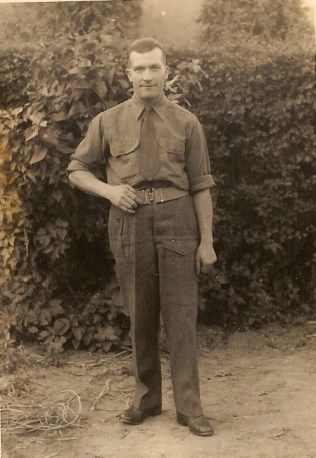
George Butcher 1908-1974 – From the personal collection of Julie Goucher

Today is the 112th birthday of my maternal Grandfather, George Butcher.

Born in 1908 in Wanborough, Surrey, he was one of 9 children who survived into adulthood from a family of 12.

At the time of the Second World War he was working for a local Dairy called Lymposs & Smee at Guildford, which later became Unigate Dairies.  His three brothers and oldest sister Rose, who was married was living at Manor Farm Guildford. Two of his other sisters were living in nearby in the villages of Shackleford & Hurtmore and the second eldest was living in Essex with her husband who was a military man.

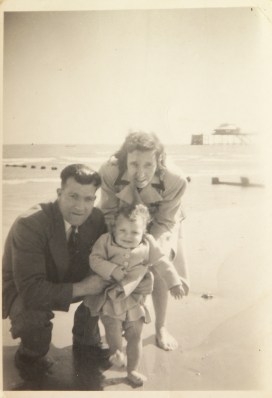
This photograph was taken at Manor Farm, Guildford, likely  before his first posting, which happened to be Sierra Leone in West Africa, where he was stationed from midway through 1941 until December 1943. At this point my Grandfather was aged 32 and had been married just over a year. My Grandparents spent a lot of time with my Grandfather’s family and my Grandmother’s sister Elsie. My Grandmother’s brother married to my Grandfather’s sister and was living as I said, in Hurtmore. The families were connected and associated with each other and maintained a fairly good communication stream regardless of the absence of the social media platforms of today. Letters and cards were always sent either through the postal services or via family members.

According to his Pay Book, my Grandfather was granted 28 days leave 9 November 1943, he was then granted a further week from 12 December 1943. His father had been unwell and died on 10th December 1943 according to his death certificate, with his death registered by my late Great Aunt who was the eldest, on 13 December.

Charles Butcher (1869-1943)

Death Registration – Charles Butcher 1943

The pay book shows no further annual leave after December 1943, meaning that he remained on active service until he was demobbed in 1946.

Turning to look at the service record, the document shows that upon enlistment in Dec 1940 he spent 146 days on home soil. He was sent off to West Africa on 7 May 1941 where he spent 2 years and 186 days. He then spent time again on home soil and then was sent off to north west Europe from July 1944 where remained until March 1946.

Sitting on my to do list for far too long has been a detailed assessment of his time in West Africa and during his time in Europe and how that matches up with other key dates.

George Butcher (1908 - 1974)My Grandfather was awarded four medals which hang in my living room, alongside a tapestry which he worked on to kill some time whilst he was stationed in Sierra Leone.

My Grandparents were happily married for almost 35 years. After my Grandfather’s death in 1974, she remained a widow, living another 21 years.

Posted in #GuildBlogChallenge, Butcher One-Name Study, Puttenham & Wanborough | Leave a comment

GENUKI – Genealogy UK and Ireland

UK and Ireland Series

Created using Wordclouds.com by Julie Goucher January 2020

I mentioned in a recent post that I would be sharing a variety of material that was previous published, or going to be published in the now defunct, online genealogy Magazine, In-Depth Genealogy where I had a column called Across the Pond. This is the first of those pieces.

Regardless of where  you live, be that within the United Kingdom or elsewhere, if you are beginning your journey of researching in the UK and Ireland, then the first port of call, should be to the very useful site of GENUKI

The site describes itself as

“GENUKI provides a virtual reference library of genealogical information of particular relevance to the UK and Ireland. It is a non-commercial service, maintained by a charitable trust and a group of volunteers.”

The site is free to all users, of course the costs is the time of the trustees and volunteers who strive to make the site user friendly and worthy for the genealogical community. As it is volunteer run, each county or regional page varies in the depth of the material. Two counties that immediately spring to mind for the amount of engagement is Devon and Durham, whereas, my home county of Surrey is not overly engaged.  Nonetheless, wandering through the pages is a worthy one and I certainly recommend it.

The GENUKI site is an excellent starting point, to get your genealogical bearings within the regional structure of England, Scotland, Wales which makes up Great Britain. England, Scotland, Wales and Northern Ireland make up the United Kingdom and of course the Republic of Ireland is the majority of the island of Ireland, with the six counties in the north are Northern Ireland.

Whilst the regional areas are distinct, there is a great deal of “free flow” across the borders of the regional centres, including Ireland and Republic of Ireland in much the same way as movement across the counties. GENUKI has a great many links to provisions and a very useful map which shows the counties, making identification of neighbouring counties easily identifiable.

For those searching for surnames for their one-name study, depending on the surname, you might find it useful to have an idea of where your surname is the most prevalent. I wrote quite recently about the Butcher study here where I showed the distribution of the surname across England and Wales. As I said in that post “my native Surrey comes out the most, as does Kent, Essex, Middlesex and Suffolk.” therefore those Counties were the ones that I looked at first on the GENUKI pages. Even though I have been researching a long time, I always find something that I have not seen previously on the site.

For those wondering about citations following finding material that will sit in your One-Name Study. I decided to look at the County of Suffolk and selected a transcription of Pigot’s Directory for 1823-1824. There were four BUTCHER references which are provided in the format of Name, Occupation and location in the County:

Butcher, John Hatter Ipswich
Butcher, John Fish Curer Lowestoft
Butcher, Mary Anne Straw Hat Maker Debenham
Butcher, Robert Wine & Spirit Merchant Bungay

The citation that I have used is:

Pigot’s Directory of Suffolk 1823-1824, Index provided by David Kolle, Melbourne, Australia 1994, Accessed 1 March 2020 link via GENUKI Suffolk pages (https://www.genuki.org.uk/big/eng/SFK/sfka_e)

Go on, grab a beverage, sit and explore! In closing, I should point out that the word GENUKI is a registered trademark and further details about the structure and “ownership” of the pages can be found HERE

Posted in UK & Ireland (Eire) Genealogy Series | 1 Comment

Launch – UK and Ireland Genealogy Series

UK and Ireland Series

Created using Wordclouds.com by Julie Goucher January 2020

Following the demise of The In-Depth Genealogist online magazine last year, I have a rather large pile of articles, that were published either on the In-Depth genealogist blog or in my monthly column, Across the Pond ,that I thought worthy of sharing here.

In addition there are some random ideas and rough drafts of material that I thought I would add to the pile.

My plan is to create a UK and Ireland series on this blog and the posts will publish randomly, so if you don’t want to miss any then please subscribe.  Now, for the purpose of this series I have simply used the term Ireland, which will likely then break down into the categories of Northern Ireland and Republic of Ireland. Also remember that for many elements, the same might be applicable for the Island of Ireland.


Posted in Genealogy, UK & Ireland (Eire) Genealogy Series | Leave a comment

Researching Females in a One-Name Study

Female SymbolA frequent question that pops up on the Introduction to One-Name Studies course is about researching women, especially if the female marries out of the surname.

It varies, depending on the person undertaking the study. Some carry on, including the individual, others do a couple of generations and some do not carry on, with the individual ceasing in the study the moment the female marries out.

There is no right or wrong way and the Guild of One-Name Studies, leaves that up to the individual member to decide.

Personally I follow the female for at least two further generations in my study, so effectively the children and grandchildren. If the female connects to my personal family then I continue on beyond the two generations. If the female marries into another study then I swap the information with the other study holder. On occasions I do carry on for another generation or so if I am doing other elements of investigations for example multiple births.

If you have a One-Name Study what do you do? please leave a comment!

Posted in Genealogy, Introduction to One-Name Studies (Pharos course 901), One-Name Studies | 2 Comments

Sicilian Sulphur Mining #GOONSblogchallenge – Post 7

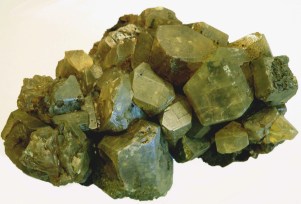
Sulphur from San Cataldo Mine

Sulphur from the mine at San Cataldo – Mindat.org

Caltanissetta is located in the centre of Sicily, dominating the Salso River. From the beginning of the 19th Century, Caltanissetta became a mining centre following the discovery of huge sulphur deposits.

Between 1830-1835, according to the General Statistics of Sulphur Mines, Sicily doubled the production of sulphur from 350,000 to 660,000 Cantari (on estimations, 1 Cantaro equals 79.34 kg), which outmatched both Great Britain and France and classified itself as the worlds biggest region in Sulphur exportation.

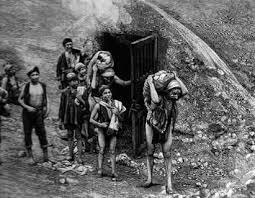
Between the mid 19th Century until 20th Century, there were some 40,000 workers employed as sulphur miners, amongst them many, many children known as Carusi.

At the beginning, mines had small spiral staircases that met the heart of the mine and prevented the mine from collapsing. The pathways were very narrow, and subsequently they were impassable by adults, therefore only could be accessed by children, who walked the treacherous pathway several times each day.

Sulphur Mining in Sicily

Carusi at Sulphur Mines in Sicily.

The head of the mines approached the families to recruit the children. Poverty prevailed in Sicily and families were very large, therefore the parents entrusted their children into the miners care in exchange for financial reward. The families believed that once the debt had been repaid the children would be returned to them, sadly the miners often would alter the children’s names and would exchange the children for those with other miners, making the children unrecognisable to the family. The children did not know any better, and through ignorance and exhaustion that prevented the children from developing their individual identities. They therefore remained a Carusi for life.

The feeling of a love and hate relationship with the mines was based upon the numerous misfortunes beneath the earth. One example is a blast triggered by fire damp at Gessolungo where over 60 miners died. Later, in 1952 there was an blast at the Tumminelli mine, where six people died. Word got out that the rescue teams had remained under the collapse. It was impossible to control public order with thousands flocking to the mine from the towns to look for relatives. The chief engineer of the workers, police commissioner and the prefect met and gave the order to suspend the rescue mission, three of the men who were involved were still alive at this point.

The mines remained prosperous until 1906 when the Anglo-Sicilian sulphur company stopped activity following the discovery in the United States of a new technique to extract sulphur, known as the Frasch method.

After the end of the Korean war, the request for sulphur declined dramatically which in turn triggered a crisis throughout the Sicilian mining industry. Sulphur was produced at a prohibitive cost, almost six times higher than obtained overseas from the fractional distillation of petroleum. At the end of five years, which had previously been envisaged as the period of recovery by a reorganisation plan, the majority of sulphur dealerships defaulted. In 1964 the region of Sicily revoked the mining concession for individuals, entrusting them to the mining Sicilian body, later to the regional Sicilian chemical mining society.

After the Second World War sulphur miners fought for the passage of the mines to be held in public administration, demanding better work conditions, the end of the feudal mentality in the management of the sulphur mines and a shift within the mining sector with a cycle of production and chemical transformation in the Sicilian territory, but the political stance was very different.

Sulphur mining was an important part of Sicilian life, giving culture, economy and deep roots to the whole of Sicily, not just the three provinces of Enna, Caltanissetta and Agrigento, which had nurtured 840 mines until the early 20th century, producing 90% of the world sulphur.

Of that period nothing remains, but abandoned mines, landscapes spoilt by crumbling asbestos filled buildings and memories of a financial viable business built upon the exploitation of a poverty stricken population.

#guildblogchallenge

Posted in #GuildBlogChallenge, Genealogy, Miners and Mining, Orlando One-Name Study, Sutera, Sicily, Virciglio | 3 Comments

Q & A – How do I set up an eBay search for my Surname?

Q & A

Created by Julie Goucher – Feb 2020 Using Wordclouds.com

Following my article in Family Tree Magazine, where I mentioned setting up an eBay alert for a surname, I received a few questions on how to set it up. I thought I would also answer that here, in a step by step format, in case others had the same question.

  1. Log in to your eBay account
  2. In the search box at the top of the page insert what you want to search for, making any selection as to the category Just before the search results, there are three headers – All listings, Auction, Buy it now and just below that, is a heart symbol and the words Save this search
  3. Click on Save this search and each day you should receive an email alerting you to what is available on eBay relevant to your search request.

Be mindful that some surnames and place names might yield a lot of search results. You can filter them to be more specific, but the risk is you might not see something that is relevant.

Certainly with my two studies, for BUTCHER and ORLANDO they are a troublesome search, I have selected the categories of collectables, meaning that I exclude items for sale that relate to Butcher shops, Butcher blocks etc, though I do still see post cards of Butcher shops, and personally I would prefer to see them and discount them rather than not see them at all.

You can see what searches you have set up once you have logged into your eBay account https://www.ebay.co.uk/myb/SavedSearches?MyeBay&CurrentPage=MyeBayFavoriteSearches

There is opportunity to exclude specific words associated with a surname or place, which would look like Butcher -block – shop or Orlando – Florida.

The eBay approach varies hugely between members, depending on the name being studied. Members of the Guild can access the presentation given by Guild member, Alan Moorhouse about using eBay in his Farmery One-Name Study, at the Name of the Game seminar in 2017 (members’ need to be logged in to view).

Dwerryhouse PostcardThis is the purchase I made recently, which is shown in the latest Family Tree Magazine article (March 2020 issue) for the surname of DWERRYHOUSE.

There are other sites which might yield results, such as Invaluable, although I have not had much success, personally, with this site.

Posted in Dwerryhouse, Genealogy, One-Name Studies, One-Place Studies, Q & A | 1 Comment

Genealogy Blog Party – We ❤️ February – actually no, I don’t! #GOONSblogchallenge – Post 6

GBPFeb20_PIN

Copyright of Elizabeth O’Neal

Taking part in the Genealogy Blog Party, hosted by Elizabeth at MyDescendantsAncestors.com.

February, and in particular Valentine’s day is now a subdued day. The day in 2020 marks the 6th year since my Mum passed away, just two days before her 67th birthday.

As each year passes, it does not get easier, but I do find myself reflecting on my own family and finding the good in that, as opposed to the depressed view that is easier to display.

I wasn’t sure quite what to write for this post and wrote several times over the last week or so, each time deleting and starting again. I then looked at a selection of photographs and this one is something that showed the love shining through.

A picture is worth a thousands words and I thought that I would share two such photos.
Mum and Grandparents

Family collection of Julie Goucher

First up is this one, taken at Southend, Essex around 1948, my late Mum with my Grandparents.

My Grandmother, was a no nonsense sort who had a lovely and infectious sense of humour. The whole concept of motherhood was something that happened and I cannot quite imagine my Grandmother in her young years. My Grandfather was fairly similar to my Grandmother, in so much as he dotted on my Mum and had a tormenting sense of humour.

By this point, my Grandparents would have been married, almost a decade, having married in November 1939. There are no wedding photographs of their happy day. My grandmother hated with a passion her photograph being taken and I suspect and can hear her now, saying “George, let’s not bother”. I do so wish that someone had bothered.

At the point of their marriage, my Grandfather was aged 31 years and was living with his both of his parents at Manor Farm, Guildford and a number of siblings with their spouses. My grandmother, aged 26, was living with her sister and brother in law and their growing family, at Guildford, Surrey, as her parents had died in the 1930’s – her father in 1931 and mother in 1937. In 1940 my Grandfather enlisted in the Army and was posted to Sierre Leone until December 1943. He spent some time on home turf, before heading to France, Belgium and the Netherlands. He was demobbed from the Army in 1946 and returned to his former job, at Guildford working for the diary, Unigate, formerly Lymposs Smee where he remained until he retired after more than 30 years service.

My Grandmother, spent the war years working at Guildford laundry. She hated ironing right up until she died and told me the work was hard and hot. The laundry dealt with the washing of military clothes and bedding. She also had at least two evacuees for the duration, one of which remained as close friends up until that 14 year old evacuee passed away about a decade ago. Out of the time of war, something great was forged and carried on another two generations.

Having been demobbed in 1946 and resuming his paid work, my Grandmother I guess reverted to being a housewife. Mum was born 16 February 1947 which was known as the deep freeze. Her birth registered at Guildford on 19th February 1947. It was brutal, freezing cold, rations continuing and their were frequent power cuts. Mum was wrapped and place in a drawer of the chest of drawers to keep snug and safe.

Each summer my Grandparents would head off to Southend to visit my Grandfather’s sister and her husband. Those visits carried on for decades only ceasing when my Aunt died in the mid 1980’s having outlived her brother and husband. This photo is one of close to a hundred or so that exist showing the family at the farm, Southend or even Devon where they holidayed.

ef4fe-mum

Family collection of Julie Goucher

The second photograph is one that long time readers may well have seen previously. It is though my absolute favourite of Mum. My Grandmother was functional. She was not the sort to have used ribbons and bows. If something was not quite right, she would say “oh, blow it, let’s not worry about X”, whatever X was. This photograph therefore speaks volumes to me, Mum is wearing the pretty blue dress with matching bow and the dainty shoes. She is standing in such a petite way. A diva for sure.

The photograph at some point before I inherited it became torn. There are no markings to tell where it was taken, but I suspect Guildford at a photograph called Donnivan Box as that matches with several others from around the same time. The bow is with me now, although the dress has not survived.

When Mum was just four and a half she contracted Polio. She spent 10 days at home, with the Doctor believing Mum had flu. The delay in a formal diagnosis undoubtedly saved her from declining further. She was admitted to hospital, just outside of Woking, Surrey where she spent six months seeing her parents through a glass window, just once a week, long before the days when paediatric wards existed in the way we know of them now. Before the days when nurses wore uniforms with teddy bears on and provided space for parents to stay by their child’s side. Mum was discharged just before Christmas and embarked upon more than a decade of visits to the hospital. Her only obvious sign of the polio was the lack of a calf muscle in the left leg, she avoided both calipers and having to be in an iron lung.

Mum retained a deep routed fear of hospitals up until she died. She was like my Grandmother in so many ways and I see myself sharing a great number of those characteristics. Stubborn, potentially argumentative, independent and very loyal.

We owe so much to those that walk before us and perhaps that it was right that, someone who was so loved should leave us on Valentine’s Day.

In loving memory of my Grandparents George Butcher (1908-1974) and Lilian Edith Butcher nee Matthews (1912-1995) and my Mum, Christine Joyce Butcher (1947-2014).

#guildblogchallenge

Posted in #GuildBlogChallenge, Butcher One-Name Study, Genealogy Blog Party, One-Name Studies, Polio, Surnames | 8 Comments

Family Tree Magazine – How to Start a One-Name Study.

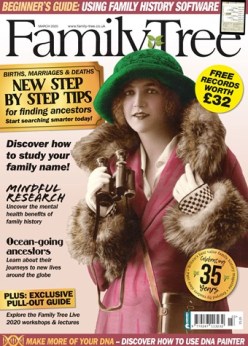
FTM March 2020The launch of my 2020 series on surnames has begun in Family Tree Magazine, March issue and on sale now.

This article four page article, How to Start a One-Name Study is demonstrating the starting of a study and setting the scene. I selected the surname of DWERRYHOUSE and have commenced the building of that study. We focus on choosing a surname, registering the name with the Guild, getting a feel for the origins of a surname. We chat about the global aspect and keeping study material organised. We conclude with final reading.

I also do a step by step guide to search and download the results from FreeBMD. Even if you are a reader living outside of the UK and researching a non-British surname, it would be relevant to search FreeBMD and gather the material, to work upon at some point.

I also share that a One-Name study is not a Olympic race, it is more akin to a gentle stroll in a park – a study evolves over time.

IMG_1710My final comment is this header picture, which will change each quarter, hopefully reflective of the evolution of a study.
Family Tree Magazine is available in paper and digital format from the magazine.

In the June issue we look at growing a One-Name Study.

Posted in Family Tree Magazine (UK) Surname Series (2020/21), Genealogy, One-Name Studies | Leave a comment

DNA Ethnicity Estimates and the Vircigilo Surname #GOONSblogchallenge – Post 5

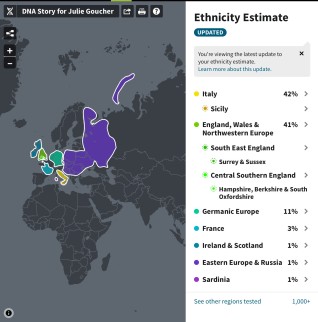
Ethnicity Estimates Feb 2020

Ethnicity estimates for Julie Goucher Ancestry Feb 2020

Over the weekend I spotted that Ancestry had updated the Ethnicity estimate page on my DNA test. I thought nothing more of it, until I scrolled down and noticed that there now showed a line for Sardinia which was not there previously.

By coincidence, just last week I shared post number four in the Guild Blog Challenge (#guildblogchallenge) where I talked about the surname of my paternal great Grandmother, Virciglio. If you did not see it, you can read that post HERE.

In that post I shared that having looked at the surname distribution map, the nearest locations to Sicily for the surname was in Sardinia and Lazio, although, the frequency of the surname outside of Sicily was in fact Piedmont.

The ethnicity element is hardly an exact science, yet, mine has previously been fairly accurate. I am 50% English, with the majority of my maternal line hailing from the south east of England – Surrey and Sussex and Hampshire which is classed as central southern England. I am also 50% Sicilian, so perhaps I might therefore treat my ethnicity as a pointer in the direction for more research.

Is your ethnicity estimate fairly accurate compared to what you know? or is it wildly inaccurate?

#guildblogchallenge

Posted in #GuildBlogChallenge, DNA & Surname Projects, Genealogy, One-Name Studies, Orlando One-Name Study, Virciglio | Leave a comment

Working on a Global Surname Project , for a Geographically Concentrated Surname

Typically surnames will have a hotbed presence, even the most common surnames. In those instances, it will often be personal to the researcher. In the case of my own Butcher ancestors, Surrey is a particular hotbed for me, followed by Sussex and London with my own family groups migrating across the seas at varying times to Canada and Australia.

butcher-surname-atlas

Distribution Map using Surname Atlas, based upon the 1881 Census for England and Wales

From my study though, Butcher appears as a widespread surname, but as we can see from this image, concentrations appear in some Counties more than others.

The darker the colour the more instances of the surname. My native Surrey comes out the most, as does Kent, Essex, Middlesex and Suffolk. If we look at Sussex there are few instances there. In Scotland, there are the least instances of the name, as far north as Moray, Angus and Perth.

Butchers - surname atlas

Distribution Map using Surname Atlas, based upon the 1881 Census for England and Wales


If I look at the map for the variant of Butchers, the spread of the surname is very different. The disparity between the numbers, could be for a variety of reasons, but probably pronunciation and the adjustments of the name over time – essentially loosing the “s” at the end of the name.

Guild members, upon registering a surname agree to the commitment to research the surname globally and this does mean to go beyond the members own family. There is no constraints as to when you go global, just that you do.

Quite recently someone remarked to me that they had not registered their study, because the research shows that the surname in question had not undertaken significant migration. There is a difference between a surname not organically migrating and a member choosing to not pursue a surname on a global scale and they are not the same thing. It is hardly the members’ fault if their surname has not migrated on a global scale, so why restrict yourself to the benefits that undoubtedly come from surname registration?

Many surnames are regionally featured. I can think of a few, all registered with the Guild and listed below. To find about them, visit the Guild’s website and insert the name into the surname search box:

  • Daglish (hotbed is in the north east of England)
  • Tickle (hotbed is Devon and north east of England)
  • Tresise (hotbed is Cornwall)
  • Featherstone (hotbed is in part of Yorkshire and north east of England)
  • Keough (hotbed is Ireland and Lancashire)
  • Orlando (hotbed is Italy)

What I find interesting is the reasons for the migration from one region to another, one country to another. That is why, global is important because otherwise you cannot be sure that you have captured all individuals with that name, irrespective of the country of origin or time frame.

Context is very important, that is how the study holders of some of the studies above will be able to establish the cause of movement of individuals bearing those surnames. In these cases, mining may well be the cause.

In terms of families working in the mining industries, whether you are mining tin or coal is neither here or there. It is the skill involved that is key. People with a skill and the bravery to migrate may well have caused the name to become global, even if the name started out regionally. In the case of mining, I can think of movement from the north east to counties in the midlands, Wales to Patagonia, Sicily to part of the United States.

It is material such as this that can be explored as part of a one-name study and is covered in the Advanced One-Name Studies course.

Posted in Advanced One-Name Studies (Pharos Course 902), Butcher One-Name Study, Genealogy, Introduction to One-Name Studies (Pharos course 901), One-Name Studies, Practicalities of a One-Name Studies (Pharos Course 903) | Leave a comment