Desk Ramblings (27)

Desk Ramblings

Created by Julie Goucher, July 2019

Research resources are just about everywhere. They always were, but the internet has made them so much more visible and accessible.

Of course, the downside at least in part, is the closures of some archives as they struggle with budgets and austerity. The internet has also provided a false view that “everything” is online. It is not and there is nothing quite like being in an archive/heritage centre/museum or library.

Museums, libraries, heritage centres and collections of papers are all great to search for names and places which litter our personal genealogies and our specialised studies.

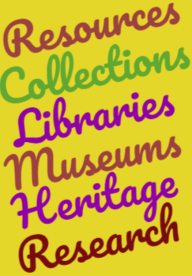
Research Resources

Created by Julie Goucher, Feb 2020. using Wordclouds.com

I spent some time today, doing a little genealogical website (this one!) housekeeping. Merging some of the categories, deleting others and created a new image. I have a tendency to be very blue and green focused, so I opted with a burst of yellow, on what is frankly a dull and dismal day weather wise.

Having done that, I set about selecting a list of libraries that will potentially feature in the workshop that I am hosting at #FamilyTreeLive. Of course, the list is three times (at least) as long as I have time for at the show, so a good number of those libraries will be cut from the discussion. The work won’t go to waste though, as I expect I shall write about a good many of them here, especially if they are good name rich material.

The latest Pharos course is now underway, with the course closing to new participants on Monday, so this is the last call!  The next Introduction course will be in early June, so plenty of time, between now and then to read the contents of the Surname Research tab at the top!

Posted in Desk Ramblings! | Leave a comment

Interview at Organize Your Family History

Organise Your Family History

Copyright Janine Adams of Organise your Family History.

A few weeks ago I was approached by professional Organiser and family historian, Janine Adams who asked if she could interview me for the “How They Do It” column.

I agreed, and the interview went live a few days ago on Janine’s website. You can read what I had to say HERE.

Posted in Genealogy, Organisation & Structure | Leave a comment

Q & A – Frank, Anton and Anna Hunt – Württemberg, Germany

Q & A

Created by Julie Goucher – Feb 2020 Using Wordclouds.com

Before Christmas I gave a webinar to a genealogical group in the United States. I was forwarded a question, but noted some weeks later that the email was without the address of the genealogist. I therefore through I would reply, via this site, replacing the name with the initials of the originator. Any questions can be found under the Q & A category.

I have a 2X great-grandfather that came to the US.  First record I have of him is Feb 1880 when he marries my 2X great-grandmother.  His Americanized name was Frank Hunt.  He lists his place of birth as Württemberg, Germany and that he is 24.  He lists his parents as Anton and Anna Hunt.  On the 1880 census, he states his parents were born in Germany.  I do I even begin to figure out what his given name was or any other information?
Any tips would be greatly appreciated.
S.S

There can be a variety of reasons why a migrant might change their name. What I am going to do here, is to provide a few things that might be worth considering or exploring.

In the first instance, I would go back to the original census you have located him on, which is 1880 and the marriage to your great great Grandmother and see if he signed his name – essentially could he read and write? Those that could not were not in a position to see if their name was spelt incorrectly or not, so the name could have been changed over time.

The other initial focal point would be to have a look into the place he was from, in this case, Württemberg, Germany. Look on a map to see exactly where this is. What was Germany in 1880 might not be Germany now, and was perhaps part of the wider empire. The other thing to consider is what was the occupation given as? Very often migrants settle where there are others, people they knew or knew via others, or those from the same place or working the same job or sharing the same religion.

See if you can locate a naturalisation record. The chances are he was naturalised under his “Americanised” name (if he Naturalised), but the other information might provide clues to his origins. I would also do a wide search online for the name he assumed, or even the place he was from. At the time of the First World War, he would have been in his 50’s but he might have had children who would have been seen as enemy aliens, in which case, if the father or descendants were interned, it might provide a clue in the records.

The German Genealogy Group have a very interesting website, whilst you do not say where the family were at the time of the marriage or census, the indexes and material of the group might be worth exploring.

I hope this helps and if you are the researcher who asked this question, please do contact me.

Posted in Genealogy, Q & A | Leave a comment

Surname Vircigilo – #GOONSblogchallenge – Post 4

Paternal Line

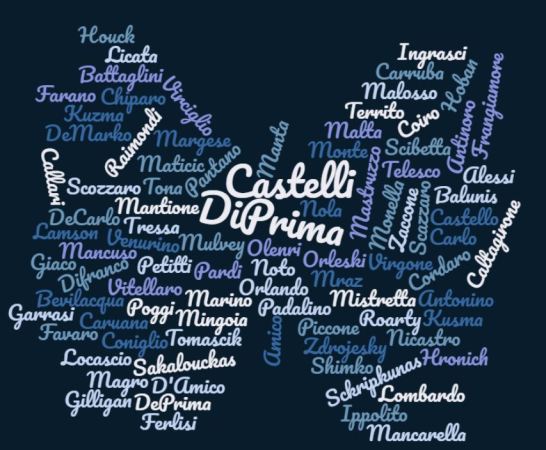
Designed by Julie Goucher 2018, using Wordclouds.com

There is no secret that I love surnames and the heritage & history that each one portrays. This image, here is reflective of my paternal line, which is predominately in Sicily, but there are lines that have migrated elsewhere, some that ping-ponged their way across the Atlantic or English Channel.

Vircigilo DistributionThe surname of my Great Grandmother, VIRCIGILO, can be found predominately in Sicily as this distribution map, from Gens.info shows, but there are occurrences elsewhere, including Sardinia.

My own family is from a village in the dark pink area of Sicily on the map, but try as I might, I cannot find the birth record for my Great Grandmother, Calogera Maria Vircigilo.

Whilst as genealogists we deal with evidence and facts, sometimes you can only hypothesise and use reasoning to move forward and hope that you do indeed find some proof to either prove or disprove the hypothesis. In this case, given the family tendency to use traditional naming patterns I have begun the quest to locate the father of Calogera with the view that this might yield a positive response.

The traditional naming patterns are, first son is named after the paternal Grandfather, second son named after the maternal Grandfather, first daughter is named after the paternal Grandmother and then the second daughter is named after the maternal Grandmother.

Calogera married Giuseppe Orlando, in Sutera, Sicily on 2nd May 1883, together they had ten children:

  1. Pietro Orlando born 1884 and who died in 1887, just aged 3 years.
  2. Salvatore born in 1886 and given the name Salvatore. He survived until adulthood, passing away in 1937.
  3. Pietro Orlando born and died in 1890
  4. Maria Giuseppina born 1891
  5. Pietro Orlando born 1893
  6. Vincenza Orlando 1896-1911
  7. Carmela Orlando born 1897 and died 1898
  8. Rosa Orlando born 1899
  9. Antonio Orlando born 1901 and died 1902
  10. Giuseppe Antonio Orlando born 1903 – My line of descent.

Giuseppe Orlando - Death 1918Church records are more comprehensive that those found in England and Wales. This document is the death record for my Great Grandfather, Giuseppe Orlando, Calogera’s husband.

The document, in fact this true for all vital records, declares both the parents and spouse. So this is a vital clue to her parentage. I still have to locate the record though. In this document, Giuseppe is the son of Pietro Orlando which is stated in the body of the document and in the right hand side column and Maria Giuseppina Magro Malosso. The document also says that his wife is Calogera Virciglio daughter of Antonino Vircigilo.

Despite this, I still do not have a document to prove the parentage of Calogera. I find that I am drawn to consider Sardinia as a potential location for links with the family, though as you can see the other location on the map highlights Piedmont as a more common area than Sardinia. Lazio is also a possibility given it’s proximity.

Vircigilo is not a very common name. A quick search of FreeBMD reveals very few in England and Wales and there are none prior to Second World War, which is reasonably significant. According to Forebears.io, the occurrences of the surname in 2014 appears like:

Italy 146, Croatia, 1, Switzerland 7, France 48 which includes French Guiana, Germany 2, England 72 and United States 72. The site does allow you to drill down further as per the various regions, Sicily is at the top, with 85. In England the most occurrences are in Surrey with 16. Again, something fairly telling in line with what I already know.

After the Second World War, the south of the mainland and Sicily were poor, though that was nothing especially new, but following the war, things were much harder and many looked elsewhere to find a way to survive. Much of Europe needing to be rebuilt, there was scope for low paid jobs in a variety of Countries, including England.

Surrey was a County that welcomed migrants. Not all were Italian, some were from Poland and Latvia, both Countries under now Russian control and therefore they were concerns of recriminations. The Italian community at Woking grew to become a 4,000 strong community. Mass is still given in Italian at the local Catholic church.

At this point, I am gathering every occurrence of the surname I come across. If there is any link to Sutera in Sicily then there is a high probability of a connection to my own family.

#GOONSblogchallenge

Posted in #GuildBlogChallenge, Genealogy, One-Name Studies, Orlando One-Name Study, Surnames, Sutera, Sicily, Virciglio | Leave a comment

Introduction to One-Name Studies (901)

Pharos Logo

Copyright – Pharos Tutors

**Disclaimer**  Any views shared here are my own and do not form or imply any official view point of Pharos Tutors or the Guild of One-Name Studies.

As a Pharos tutor, one of the things I enjoy most is inspiring others to fully understand the entire strategic thinking of a surname project & One-Name Study.

The introduction course is the first course in the suite of One-Name study courses. Focus is on the history of surnames, understanding what a one-name study is, collecting records & gathering records, making sense of the records collected and then practical aspects of such a study. You can read more HERE and you can read any of the extensive posts on the topic of surnames via the surname research link.

Each week there is a lesson and a chat session. The forum provides a platform to get to know fellow classmates and to share answers to the exercise questions, or to ask questions etc. The course is aimed at those researching in England and Wales, Scotland and Ireland, but not exclusively so. I have taught a number of students residing across the globe and a number of students who are researching a surname whose origins are elsewhere.

I am a Trustee of the Guild, and have been since 2015, though that is not entwined with my role as a tutor with Pharos.

The next course begins 4th February 2020 and there are still a few places available. The following intake of this introduction course will be early June 2020.

Posted in Genealogy, Introduction to One-Name Studies (Pharos course 901), One-Name Studies | Leave a comment

Choosing a Surname Course

Pharos Logo

Copyright – Pharos Tutors

**Disclaimer**  Any views shared here are my own and do not form or imply any official view point of Pharos Tutors or the Guild of One-Name Studies.

There are relatively few formal genealogical based courses, though there are some out there and there are even fewer surname based courses available. Pharos has offered over the last ten years two courses, the introduction course that I now teach and the advanced course. From March 2020 there is to be a third offering from Pharos, written by myself and called Practicalities of a One-Name Study and we will talk about them in more detail over the coming days. All three courses are in association with the Guild of One-Name Studies.

The Pharos courses are offered over five or six weeks and take the format of Tutor directed learning. There are weekly lessons, with each lesson accompanied by an online chat where we discuss the various elements of the lessons.  There is also a forum platform to accompany each course where students can discuss the lesson material, ask questions and respond to the various exercises.

The courses are a welcomed opportunity to strengthen what is already learnt in an informal approach, but also lends itself to being able to be what I would referred to as layered learning. This means that participants can take advantage of seminar, conference and webinar sessions provided by the Guild as a member benefit in addition to wider learning where it is possible to learn and add context to research. Whatever learning we do, it is worth keeping some form of log or diary – key factors learnt, what you want to explore next and anything else deemed of being note worthy.

Posted in Advanced One-Name Studies (Pharos Course 902), Introduction to One-Name Studies (Pharos course 901), One-Name Studies, Practicalities of a One-Name Studies (Pharos Course 903) | Leave a comment

Genealogy Blog Party – Organise and Prioritise

GBPJan20

Copyright of Elizabeth O’Neal

Taking part in the Genealogy Blog Party, hosted by Elizabeth at MyDescendantsAncestors.com.

I have kept notebooks, journals and planners since I was 12 and I have written about them here where I explain how the obsession came to be. I subsequently wrote two more posts, firstly about the Benefits and Thoughts and about Notebooks and Inbox Review.

Readers of this blog will likely have noticed that I often create mini series of posts, typically surname related but not necessarily so. I have tended to scope out any series in my usual notebook, but since about last autumn, I have kept a separate planner, so that I can ensure that I have posts written or at the very least have the day highlighted when they should be published or scheduled. I often write posts months ahead of when they are published. Though I have on occasions drafted the posts and then subsequently forgotten to schedule them, which was another benefit of a separate planner. Writing this blog is not the only writing I undertake, so it is essential that I am organised.

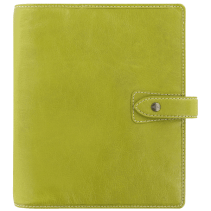
MaldenA5PearThis separate planner is actually an A5 Malden Filofax which I purchased for another purpose originally, in this gorgeous colour which Filofax call pear.  The planner I have divided into sections:

  1. General posts
  2. Surname posts
  3. European Ancestors material
  4. UK and Ireland series
  5. Software and Apps
  6. Other writing

I have set up the planner like this so I can plan and ensure that any subsequent plan actually works out correctly, with a view that there will be no periods of quietness on this site, though that does not always work out! I also list other potential posts, that might be time specific.

The last section covers genealogical articles, such as those for Family Tree Magazine, or WDYTYA? Magazine, or Pharos course material, such as the new Practicalities of a One-Name Studies course. Also in this section is a writing project I have been working on for over a year; the end is in sight!

Now there will be some readers, who will wonder why I bother. The answer to that is to keep me organised and to ensure that my writing portfolio is kept up to date.

Posted in Genealogy Blog Party, Organisation & Structure, Stationery, Filofax, Journals & Notebooks | Leave a comment

Italian First World War Dead – #GOONSblogchallenge – Post 3

Italy’s involvement in the First World war was nothing short of disastrous. In 1915, knowing that Italy was keen to expand its geographical area Britain promised Italy that upon defeat of the Austro-Hungarian empire there would receive territorial rewards if they supported the cause. Italy broke with The Triple Alliance on 3rd May 1915 and just three weeks later declared war on Austria-Hungary, although not on Germany, 5.8 million Italians were immobilised from a population of 38 million. Italy was both militarily and economically unprepared for war.

The war for Italy lasted just three years, but in that time more than 650,000 Italian soldiers were killed and more than a million seriously wounded. 600,000 Italians were captured by the Austrians and deported of which a 100,000 died. From the 5.8 million immobilised soldiers, 4.2 million were deployed to the front and 56% were former farmers.

At the end of the War, Italy was virtually bankrupted. National debt in 1914 had been more than 15.5 lire by 1919 that number had risen to 85 billion lire. Inflation rose to 400%. More than 500,000 civilians died mostly from food shortages and the poor harvest in 1918.

The promises made in 1915 did not come to fruition, many Italians felt that they had paid a hard price and received almost nothing in return and it was this sentiment that led to Benito Mussolini to rise to power.

For those of us researching Italian ancestors one thing to be mindful of is that if your ancestor retained their Italian Citizenship but lived elsewhere, the UK or US for example they were required to serve in the Italian military.

Full Page

The Golden Books – showing the page containing the name Vircigilo

In the 1930’s Italy’s Ministry of War published what are known as the Golden Books. There were 28 books published plus an additional three appendices commemorating those who perished during the First World War and fought in the Italian Military.

The website can be located at http://www.cadutigrandeguerra.it/CercaNome.aspx

The website is not the greatest design, and the main page and the initial results can be translated using your internet browser, when your surname yields a response it shows the surname, first name and the father’s first name, which is very helpful, the second field shows which volume the record is in followed by the province, the page and sub-page, the commune or town of birth, date of birth and the last two fields have links, first to the actual page of information (in Italian) and the last field is the personal data and this can be translated in your browser.

The image shown below shows the search box, the transcription and then the excerpt for the surname of Vircigilo, although there were two individuals that perished.

Full example to illustrate

For those of us researching Italian ancestors it is a vital record of our ancestors, because even if they resided elsewhere they may well have returned home to Italy to serve their country. If anyone is researching the surname of Virciglio, especially in Sicily I would be especially delighted to hear from you!

#GOONSblogchallenge

Posted in #GuildBlogChallenge, First World War (WWI), Genealogy, Italy, Virciglio | 1 Comment

European Ancestors – Russia (Russian Federation)

Russian Flag

Flag of the Russian Federation courtesy of Wikipedia

Russia is the largest country in the world covering an amazing 1/8th of the world’s land mass that is inhabited, with a population of in excess of 150 million. The country spans 9, yes, 9 time zones, linking Eastern European with northern Asia.

The Crimean Peninsular is recognised as Ukrainian territory, but is administered by Russia,

There are key and distinct periods of time that influence the history of Russia, through a variety of political, social and economic influences.

  • 1721 – Imperial Russia proclaimed by Peter the Great
  • 1914 – Russian Republic formed
  • 1918 – Soviet Russia, Civil War
  • 1922 – Soviet Union (USSR)
  • 1991 – Russian Federation

By the 18th Century Russia had expanded through a mixture of annexing and conquering to create an empire that was the third largest in history and stretched from Poland in the west and Alaska in the east.

The Russian Revolution was actually a succession of events, beginning in February 1917 and then subsequently again in November 1917 culminating in Civil War in 1922, though unrest against Soviet rule continued in Asia until the early 1930’s.  The unrest was an attempt to bring about change significant change to the Russian way of life. The Tsarist regime was plagued with unrest by those who were seeking a fairer Country structure. The Country was in chaos and then that was further compromised by the First World War, conscription and famine.

By 1990, the Country was the second largest economy. In 1991 the Soviet Union dissolved, and the emergence of 15 independent republics.

This is not a creative abridgement of a plotted history of Russia. It is a very brief (and I mean brief) look at the key indicators within a country’s history which will affect the lives of your ancestors if you have links to Russia or the countries that were dominated by a Russian mindset and that will determine where you look for traces for your ancestors.

Posted in European Ancestors, Russia/Soviet Union/USSR | Leave a comment

Genealogical Mailing Lists

Mailing List(2)

Created by Julie Goucher using Wordclouds.com

In the early days of the genealogical world online, the mailing lists were the way to virtually meet other genealogists, swap information and learn from each other. The world moved on to Facebook, Twitter and a plethora of other methods. As I said last week, the demise of the mailing lists is sad, it is the end of an era, ironic when you think we are at the beginning of a new decade.

The lists have have begun migration, some to Groups.io, others to Google groups, some to FaceBook and some will fold completely. There is a section on the archives page for each list which provides a space for the new URL for the replacement list. Of course, there might not be replacements for some lists. The archives are remaining on the current Rootsweb site, and whilst they are promised to remain, I will not be relying it on, and instead will be reading through the archives as fast as I can. The message boards ARE remaining, though I wonder for how long?

It is somewhat ironic that the demise of the list structure has for some lists been the most activity they have seen in a few years. Meanwhile, I have not currently made plans to move my own surname lists, but will likely do so. There are Facebook groups associated with both studies, and they are not terribly busy, but better to be in both places and provide opportunities, than in one place and miss out connecting with fellow researchers.

Posted in Genealogy | 2 Comments