Strategy for a Genealogical Project – What Project?

genealogical project strategyIn an earlier post I talked about strategy, breaking it down into ten segments. Today I am going to write a  about deciding on a project, essentially segment one.

What project? 

There can be a whole host of reasons for embarking on such a project, perhaps even more than one reason. Perhaps your ancestors resided in a small geographical area and inter marrying across families was rife. Perhaps you have “misplaced” an ancestor – essentially they are not where you expect them to be. Or perhaps you can not find someone or you have found two someones with the same name, born around the same time, in the same general area. I feel your pain on all of those different reasons!

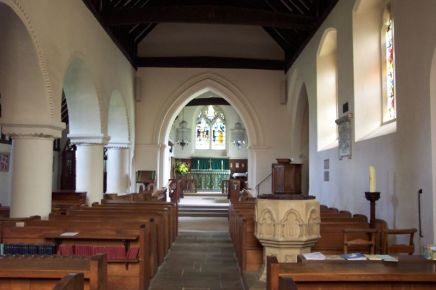
puttenham church taken 2004

Puttenham Church – 2004 Julie Goucher

I am going to talk about my One-Place study, for the rural parish of Puttenham in Surrey and the neighbouring village of Wanborough, which is separated from Puttenham by way of the A31 road, or as the locals know it, the Hogs Back. My maternal Grandfather was born in Wanborough, his father, Charles Butcher from Wonersh, Surrey and his mother Annie Prudence Harris from Puttenham. In turn, Annie’s parents were from Elstead and Frensham, both Surrey villages and all of these within 19th Century England easy travelling distance and within easy reach of villages in the neighbouring counties of Sussex and Hampshire.

The photo here of Puttenham, shows the font where generations of my family were Christened from 1724.

As I worked back through the generations of ancestors, from Annie, I was repeatedly faced with marriages and liaisons of individuals with the same surnames, all in the same areas. I recall several weeks where all I did was extract material from the Puttenham parish records, which was frustrating. As a way of removing the frustration, I extracted the complete parish records and other information besides.

Looking back, I did not set out to undertake a One-Place Study, it simply seemed a logical progression to my research and as a way of avoiding me becoming totally frustrated. Now this was the days before the internet, so there was no Ancestry or Google. It was all undertaken by visiting repositories and seeing the original document or a microfilm of the original document.

In the modern age with the use of the internet, such a project is actually much easier to undertake, whether you are focusing on a place or a surnames and especially if undertaking a large study although the approach might in fact be very different now compared with the late 1980’s when my studies began. Don’t misunderstand, not all records are online, but a good many are, and in a variety of places.

As I worked back through the Puttenham records, I came across a Butcher family. I already knew that my own line hailed from Wonersh, but now contemplated if this family were connected to my own. That was probably the moment the Butcher One-Name Study was devised, although at the time I did not recognise it as that.

I will be back, looking at how we can achieve such a project.

Posted in Butcher One-Name Study, Introduction to One-Name Studies (Pharos course 901), One-Name Studies, One-Place Studies, Puttenham & Wanborough, Strategy for a Genealogical Project | 4 Comments

Writing about One-Name Studies

Over the course of the last year I have spent a lot of time writing articles about beginning a One-Name Study and used my own as a living and working example. These articles eventually formed a series, generally aimed at those new to Surname research or One-Name Studies, but not specifically so. I believe that you can always learn something!

Those articles are:

  • From a Single Name – Beginnings of an Italian One-Name Study ~ which appeared in the Journal of One-Name Studies ~ Vol 13, Issue 1, pp 30-32 ~ Jan-March 2018, for which I was awarded the Guild of Award of Excellence.
  • Aims, Methodology and Processes of a One-Name Study  which appeared in the Journal of One-Name Studies ~ Vol 13, Issue 3, pp 16-18 ~ July-September 2018
  • Strategies of a One-Name Study ~ which appeared in the Journal of One-Name Studies ~ Vol 13, Issue 4, pp 22-24 ~ October-December 2018
  • Evolution of One-Name Studies – The Butcher & Orlando Studies ~ which appeared in the Journal of One-Name Studies ~ Vol 13, Issue 5, pp 13-17 ~ January – March 2019

These articles did not initially start as a series, it simply emerged that way, beginning from a question posed by a student on the Pharos introduction course which I answered and then turned into an article. I then focused on the aims and processes of my studies, a more general structure and then finally into an article on the comparison of two significant studies (sadly the footnotes and references were not copied across from my text to the actual printed journal!)

Having written the articles, they generated a number of emails with other Guild members and of course, it is often the small comments that yield a glimpse of an idea for future articles and written material. Of course, as I read the journal, I often find that I think or read of other data sets or material that I should explore for my own studies.

Isn’t that the point with reading and sharing information? That we inspire others or perhaps even ourselves, spurring ourselves on to more research opportunities or ideas.

In the meantime, I have started work on the idea for my next article, although what often starts as an idea does in fact change by the time the article is submitted to the editor! I hope by the end of the year to pull together these articles and a few others and publish, but more on that in the coming months.

Posted in Introduction to One-Name Studies (Pharos course 901), One-Name Studies | 1 Comment

Tea for One!

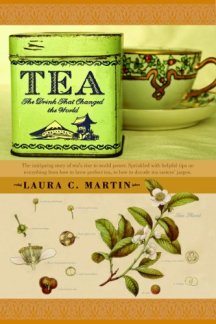
I have always been a huge tea drinker, although a bit of a philistine, nothing fancy or flavoured, but a nice general every day breakfast tea. I sat earlier this week reading a few blogs from fellow tea drinkers. and spotted a book about Tea. teaI went across to Amazon to read the preview to discover that there were two books, written with the same title, by two different authors in two different years. Having read the preview of both books, I can see the tones are very different. As I could not decide which one I preferred, I ordered both.
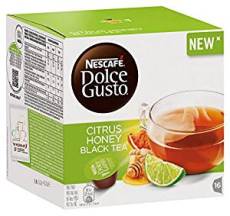
We have a coffee machine, one of those you put the pods in and hit a button and a cup of coffee is produced. A week ago I wandered across to the coffee machine website to see if they did tea and was surprised to see that they did, although nothing that resembled my regular tea. There was tea with citrus and honey, Chai tea, tea with mint and one other that truly didn’t appeal, or at least enough to buy a box of 16 pods as an experiment. I called their customer service and asked if they produced a mixed tea box. I surely could not be the only one who wanted to try one pod or at the very least didn’t feel compelled to purchase 16 pods on the off chance that the other 15 would not go to waste. The lady said she would feed my comments back to the development team and would see if she could find me one to sample. I thanked her and thought that she would send me one pod.

downloadBy coincidence on the same day, a package from the customer service team that I called last week arrived. In it, a box of 16 citrus and honey pods. I tried one and have to say that I could be a convert when the mood takes me! Hubby also tried one and was equally impressed. I do not like sweet tea, and would have expected one with honey to be sweet, but the citrus and honey in that particular combination is spot on!

I dropped their customer service team an email of thanks and will certainly be purchasing more.  Next I fancy trying a peach tea, if only I can find one!

wkendcookingWeekend Cooking is hosted by BethFishReads and open to anyone who has any kind of food-related post to share: Book reviews (novel, nonfiction), cookbook reviews, movie reviews, recipes, random thoughts, gadgets, quotations, photographs, restaurant reviews, travel information, or fun food facts. If your post is even vaguely foodie, feel free to grab the button and link up anytime over the weekend. You do not have to post on the weekend.

Posted in Weekend Cooking | 3 Comments

Keeping a Writing Portfolio

writing imageJust recently I saw a comment from a fellow genealogist, although I cannot recall who, where they stated that they kept a writing portfolio.

Over the years I have kept a list of what has been published, where and when – you can see the list HERE. I also tend to keep a copy of the article, presentation, or proposal that is used or written originally. I often give the same presentation to different groups, although the presentation might be titled the same, the content is potentially different, with links and resources up to date.

I would be interested to hear your thoughts on whether I should keep a copy of the printed article, either physically or digitally?

Posted in Writing | Leave a comment

Family Tree Live – 26 & 27 April 2019

I can now share with you that I shall be delivering both a workshop and lecture at Family Tree Live. The workshop will take place on on 26th April and the lecture on 27th April. You can read more about Family Tree Live, book tickets, see when specific workshops and lectures are scheduled for, by checking out the dedicated Family Tree Live web page.


Posted in #FamilyHistoryLive, Family Tree Magazine (UK) Surname Series (2019), Genealogy, Introduction to One-Name Studies (Pharos course 901), One-Name Studies, Presentations | Leave a comment

Family Tree Magazine 2019 – Surname Research Series

ftm feb 19

Family Tree Magazine (UK) – February 2019

In this month, the surname series continues with us looking at the catalyst for choosing a surname. We briefly touch on deviant and variant surnames.

You can read more by looking through the posts I have previously written HERE, or by taking the Pharos introduction course.

Posted in Family Tree Magazine (UK) Surname Series (2019), One-Name Studies | Leave a comment

Sunday Salon – Getting Back to Reading

921a1-sunday2bsalonIt is a long while since I have taken part in a Sunday Salon. Social media has reduced the amount of time I read, as has writing and producing various presentations, syllabus and course material.

I returned to education and read History with Educational Studies in 1997. Education was my minor and by the end of the first year the education element was history and I moved to a history major. The amount of reading was overwhelming. As a mature student I had to pay my own fees and the usual domestic bills. I had 12 hours of contact time, and probably about 30 hours of reading. I still worked in pharmacy, mainly as a locum as that was all about I could manage, both in terms of hours and endurance.

Having moved house, I came across a number of papers, notes, scribbles and my paper copy of my thesis and pondered on ditching the lot. I might publish my thesis but that is very much in the future as I have a writing project that needs to be completed this week. (So why am I here writing this post?). As I could not make a decision I found a patterned box and dumped the lot in there, it now resides on the top of my bookcase, or one of them, taunting me every time I walk into my office.

I searched through my camera feed on my iPhone earlier and realised that in addition to some actual pictures, I have many, many snap shots of book covers. Books that appeal to me that I have seen on various social media channels or even in Waterstones. Am I the only one?

Smiths is the nearest bookstore to me and I use that term very loosely. There are also no independents and if independent shops were not going out of business I might even contemplate opening a bookshop, ah to dream. Despite the contention between supporting independents or using the chains, I do rather like Waterstones. You can wander and browse the shelf’s. I usually take a few pictures of books so I can check the price on Amazon, I know, shocking! There is something rather therapeutic browsing bookshelves and contemplating purchases.

Books are one of the things that I never experience buyers remorse with, how about you?

Posted in Books, Sunday Salon | 2 Comments

Strategy for a Genealogical Project

genealogical project strategyOver the course of the last few Introduction to One-Name Studies courses I have been asked a number of questions and thought that it was worth sharing them here. Over the course of the next few weeks I will share the questions and subsequent discussion. I hope you find it interesting.

The first thing to consider is:

  1. What project do you want to undertake? – What is it that makes X fascinating to you that you want to explore more in-depth? This could be a One-Name Study or a One-Place Study. Researching a house,business, school etc.
  2. How are you going to achieve your quest? – How many hours do you have available to undertake the project? It does not need to be a lot, you might be working full time with a family and still want to undertake a project of this kind. Or you might be retired and have an abundance of time available. Perhaps consider working with others who share the same interest, or maybe you already have a body of work that you are using as your basis for the project.
  3. Plan the Structure of your Project – This will likely depend on what your project is and your starting data. You might be researching a Surname that you know originates in Ireland and you reside in the United States. Establish how big the surname is, look at migration points – where folk migrated to and how they did. Look at what material is available online and with easy access. Bear in mind that only a fraction of what is available is online. Given that the fact that Northern Ireland and the Republic of Ireland was one Country until 1922, you might find that records exist in both the archives of Northern Ireland and Republic of Ireland. Given that and the geographical distance from Ireland to England, you could look at FreeBMD and search for your surname. How many are there? You might also consider HOW you are going to keep data that you find? – input directly into a genealogical programme or downloaded to a hard drive or copied into a note book or even create a spreadsheet. FreeBMD data can be exported as a CSV file and imported directly into Excel.
  4. Focus on the elements of a project – This might include the distribution of the surname, using a mapping site such as public profiler or Surname Atlas. It might include the origin of the surname and the type of surname it is. For each element I recommend a plan to be written. It does not have to be fancy, just a note of what you plan to do.
  5. Create & Maintain a Research Log – This is really important as it enables you to track what you have looked at and what you have found, so be sure to record positive AND negative results.
  6. Managing Research Results is important, otherwise you will drown in data. Decide how you are going to process your data – enter it straight into a family history programme, or an Excel file. You could add to Evernote or One-Note. There is no right or wrong way, find what is best for you. Make sure that you record the citations of the information you find, perhaps this is a newspaper article, or information from a parish record, the purpose of a citation is essentially to share with others where you saw the information, so that they, if they wish can follow your research.
  7. Connecting with others – This is really important. Firstly you get to share your journey with others and you can connect with others who might share the same interest. You could set up a Facebook Group (or Page, although I prefer Groups). You might use a Twitter account, you might join organisations such as the Guild of One-Name Studies or Society of One-Place Studies, you could add your place to the Register for One-Place Studies. Another avenue to explore is the facilities of archives, libraries or museums – if your surname “hotbed” or place is located in a particular County check out the archives, include local museums and share your interest with them. They might help you connect with others with the same interest.
  8. Bring your data together – in this element we are concerned with family reconstruction, essentially putting families together, using primary source material. You can also draw out an individual timeline, such as I described HERE that way you can see what your individual was doing at a particular time and you can see what is missing and then consider where you could look for that data.
  9. Share Material – Having worked really hard to gather and expand your collected data, I would recommend enabling others to see it. You can do this in a variety of ways, write a blog, have a website, write articles, share stories via Facebook.
  10. Preserve Your Work – If you are a member of the Guild of One-Name Studies with a registered surname, you can signup to a Members Website Project. That enables you to advertise your study, display it for others and preserve it, all the while working on your project.

I am likely to write about these ten elements and how I undertake them in a project I am working on, so you have a working example to perhaps use as a guide.

Posted in Genealogy, Introduction to One-Name Studies (Pharos course 901), One-Name Studies, One-Place Studies, Strategy for a Genealogical Project | 11 Comments

Six Degrees of Separation from The French Lieutenants Woman to……

The #6Degrees meme occurs on the 1st of the month over at the blog, Books are my Favourite and Best which is written by Kate.

french lieutenants womanThe French Lieutenant’s Woman by John Fowles is not a book I have ever read, although I might have seen the film.

This month I kick off with one of my favourites, France: A History: from Gaul to de Gaulle written by John Julius Norwich. franceThis is not a particularly academic book, but a plotted history of France. I love the way this author writes and it was in fact the next book I show here that prompted me to purchase this one.

sicilyThat book is Sicily by the same author. Anyone who has been reading this site for a period of time will known that I am half Sicilian. Something that I am very proud of. Sicily has had a variety of occupations, Arabs, Romans, Greeks and French, to name a few.

I am very process driven; so for me the best way to understand any country or to begin to research in that Country is to read about the general history, essentially setting the scene for that research, and this book does that.

seeking sicilyAnother book that I absolutely love is Seeking Sicily by John Keahey, this has a different approach to the Norwich book. It looks to contemporary Sicilians who have maintained the cultural changes of the Island and the legacy the earlier invaders left behind.

sicily genealogyMy final book on the Sicily theme is this one, Sicilian Genealogy and Heraldry. A must for anyone with Sicilian heritage written by Louis Mendola.

This is a very comprehensive book. It focuses on the Jewish in Sicily, Early history of the island as well as earlier settlers. There is a chapter on DNA and a variety of fascinating resources that can be accessed when researching Sicilian ancestry.

Having been a genealogist for a long time, I took rather a long while to have a DNA test. I eventually did and was fascinated with the break down on my ethnicity. Now, a number of DNA genealogists, those whose expertise exceeds my own do not set a huge amount by this, but for me there was a degree of accuracy that reflected the early foundations of occupiers of Sicily and I was drawn in to those discoveries. Having taken a test I needed to be able to understand the results, or at least a fighting chance of understanding them and for that I purchased my next book.

DNA Book -Blaine BettingerThe Guide to DNA Testing and Genetic Genealogy by Blaine Bettinger. I love this book. Not written in a patronising way, nor complicated manner. It is easy to see what you need to do in order to understand DNA results and what questions could, and perhaps should be asked.

When I am not researching, sometimes you just need a gentle genealogical fix whilst reading for non-research or academic purposes and of course there are books that enable that. Originally they were mainly by US author’s but over the last few years, some UK author’s have put in an appearance. I shall therefore end this month’s chain with this next book.

rett macphersonThis is the first in a US based genealogical series involving character, Tori O’Shea. Anyone who is partial to these types of books should consider this one and a few others. In fact I might even put a list of them together!

Thanks Kate for hosting another of these. I have enjoyed participating and now await for February’s instalment!

Posted in #6Degrees Meme, Books, DNA & Surname Projects, Genealogy | 2 Comments

Southern California Genealogical Society Webinar Series – European Surnames

SCGS - Webinar ImageI can now share with you that I shall be presenting to the Southern California Genealogical Society (SCGS) webinar series in early December 2019.

The webinars are open to all live, before becoming a SCGS members benefit.

You can view the complete line up for 2019 HERE

To register for my webinar, European Surnames and How They Can Help in Genealogical Research click HERE

Posted in Genealogy, One-Name Studies, Presentations | Leave a comment