Strategy for a Genealogical Project – Preserve Your Work

genealogical project strategyIn an earlier post I talked about strategy, breaking it down into ten segments. Today I am going to write a about preserving your study which is essentially segment ten and the last in this particular series. You can read the strategy series HERE

I began all my studies, both relating surnames and places in the late 1980’s. Much of my work is on paper and my aim is to get all the material scanned and added to the relevant individual on my website. (I use Roots Magic for my genealogical programme and export a GEDCOM to TNG which populates on my website).

My website is with the Guild of One-Name Studies and is part of the Members’ Website Project. The project exists to preserve members studies after they are no longer members. At that point, the sites become a legacy sites and these are not updated.

There are other ways that you can preserve your work. The Guild offers surname profile pages and you can see my Orlando one here. Guild members have the option to have their profile retained by the Guild and identified as such. I have opted to have my profile page preserved.

I keep a regular back up schedule. I use Dropbox, Google Drive and currently I am using a USB stick to collate the images, photos and documents that are on my website. I shall then forward that stick to the Guild library. I also have an external hard drive and back everything up. I have also left written instructions so that items are given to particular individuals and they are retained within my family.

Thanks to the Guild, my actual genealogical data is preserved and it is so important to preserve your work, in case of your demise or some kind of disaster.

What are your preservation plans for the future? We do discuss this in more detail, in the Introduction to One-Name Studies Pharos Course

Posted in Genealogy, Introduction to One-Name Studies (Pharos course 901), One-Name Studies, One-Place Studies, Strategy for a Genealogical Project | Leave a comment

Strategy for a Genealogical Project – Share your Study

genealogical project strategyIn an earlier post I talked about strategy, breaking it down into ten segments. Today I am going to write a about sharing your material which is essentially segment nine. You can read the strategy series HERE

There is a great deal of overlap between today’s post and yesterday’s, but we are bringing together genealogical strands to make a robust project.

Some of the folk in my study are written about on my blog, either as standalone pieces or I focus on a theme and write a post on my blog. Each post that is published is also set up to post to Twitter and my Facebook page. Articles can also be written, a number of the genealogical magazines will accept relevant pieces, also the Journal of One-Name Studies will take articles relevant to One-Name Studies, on occasion that features a fascinating person in someone’s study.

A profile page on the Guild website is also useful. They are indexed by Google and are a great way of advertising your work, as are websites.

One thing I have not mentioned is about presenting about your study. Over the years I have talked about my Orlando (Italian) study and back in 2017 I reworked a presentation about my Italian study and made it available on the Guild of One-Name Studies website, you can watch the presentation HERE and download the Syllabus that I wrote to accompany it. You can also see both the presentation and the syllabus on my Orlando Profile

By sharing your knowledge, whether that is answering an email or writing a post you are advertising the study. That might lead to some interesting connections and perhaps information for your study, or you might inspire others to start their own study.

I will be back tomorrow with the last segment in this particular series.

Posted in Genealogy, Introduction to One-Name Studies (Pharos course 901), One-Name Studies, One-Place Studies, Strategy for a Genealogical Project | Leave a comment

Strategy for a Genealogical Project – Bring Material Together

genealogical project strategyIn an earlier post I talked about strategy, breaking it down into ten segments. Today I am going to write a about bring material together. which is essentially segment eight. You can read the strategy series HERE

I said in one of the earlier posts that this was much like bring the strands of a tapestry together and hopefully from today’s post you will see what I mean. There is much overlap with the last post and the next post.

You have gathered material for your project, whether that is from a data set extracting references to a surname or references from an archive relating to a place. At this point I am going to focus on the surname element, but will come back later, after this series finishes and talk about places.

I reconstruct family groups and follow the family through the Census recording places of birth (and any variations!), occupations, ages of children including missing children (did they die or go into service, the military of simply move away). I tend to draw out trees and I have shared this previous in this post. Once I am happy that I have the correct people in the correct family and I have the citations and sources ready I enter the material into my genealogical programme. Usually once a month I update TNG by uploading a GEDCOM file and the various images and pictures if I have them. On occasions there are people who leave a huge documentary footprint. For those folk I create an individual timeline and I wrote about that here and at this point the material is in my genealogical software. I write out a timeline, it helps me think and identifies what material I have and what I do not, which is just as important. In the case of Daniel Butcher, I have copies of the majority of the sales and purchases that he made in Surrey. All those document will be scanned and added to my website, linked to Daniel because he was a prolific character.

There are things I don’t know about him. From a variety of documents it is clear that he did have a good relationship with his brother Richard, they entered into a number of property deals together. Suddenly he was written out of Richard’s will. Daniel too was not liked by his wife’s aunt, she left a rather scathing comment about him in her will. He was a reputable member of the community and served at the manorial court. That was until he stopped serving ten years later. I get a sense that something happened to Daniel, I of course don’t know what and may never find out, but that does not stop me wanting to know and the search continues.

For individuals born later on, so they appear in the Births, Marriages and Death indexes I note down where the individual is on the Census, how old they say they are, where they were born, children, spouse, occupation. I track the individuals by using the material from FreeBMD and keep that material in a spreadsheet, much like a holding pen. As I track each marriage, I enter the details onto the spreadsheet and then into TNG. That way I can track how far through the marriages I am and add any documents to the individual in TNG.

Not all Guild members work this way, we each have our own method of working and ways in which we bring those strands together so we can build a profile of an individual’s life and consider how hard things would have been compared to our modern 21st Century existence where we can touch a button for pretty much everything.

Tomorrow I will be back, writing about sharing material.

Posted in Genealogy, Introduction to One-Name Studies (Pharos course 901), One-Name Studies, One-Place Studies, Strategy for a Genealogical Project | Leave a comment

Six Degrees of Separation from Fight Club to…..

The #6Degrees meme occurs on the 1st of the month over at the blog, Books are my Favourite and Best which is written by Kate.

fight-clubThis month’s starting point is Fight Club which I have not read, nor have not seen the film. It doesn’t appeal to me at all, but I did read the reviews on Amazon and the preview that was available.

Nonetheless, I was able to eventually pull together a chain with ease, although not as much ease as last month!

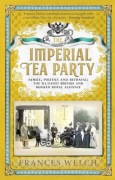
ImperialFirst up is the Imperial Tea Party by Frances Welch which is about the dubious alliance that exists following the marriage of Alexandra, granddaughter to Queen Victoria to Nicolas II of Russia in 1894. The book has lots of accounts, written at the time of what the individuals concerned were thinking at the time. This is a well researched book and one I enjoyed.

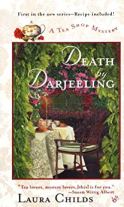
Death by DarjeelingGiven my fascination and obsession with drinking tea I recommend the following literary blend of this lovely cozy series by Laura Childs. There are currently 19 books in the series, and as I like to read books in order, here is the first one,  Death by Darjeeling. This is a Tea shop mystery and they are easy read, gentle books, well that is apart from someone being murdered….

Next I am moving along to another light read, I have read about half ofMurder at the Book Club the book and rather enjoying it. It is a crime mystery, although I would not say it was a cozy mystery.

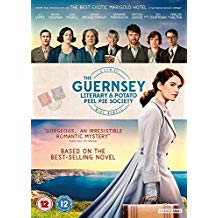
Guernsey Potato PeelKeeping with the book club theme, this is one of my favourites. The Guernsey Literary & Potato Peel Society. Set on the island of Guernsey during the second world war, it is the story of a book club that came together in rather unusual circumstances during the Nazi occupation of the Channel Islands. The film released last year although I only recently managed to watch it. I enjoyed the film, it was a pleasant few hours to while away on a Saturday evening.

Guernsey Books by Anne AllenKeeping in the theme of the Channel Islands, the next is a series of books, written by Ann Allan, all the books are set in Guernsey and are a delightful read. I am eagerly awaiting the next book in the series. I say series, but each book can be read as a standalone book and two more have been published since this image was taken. The author lives in the town I lived in and just over two years ago I went to a book reading, just as book four I think was released.

The Day the Nazi's cameAnd finally we arrive at the last book and we are keeping with the Guernsey theme. The day the Nazi’s came is a true account from the time when the Channel islands were occupied during the Second World War leading up to the movement of Islanders to the various camps in Europe.

Thanks Kate for another months of #6degrees. I look forward to next month.


Posted in #6Degrees Meme, Books | 11 Comments

Strategy for a Genealogical Project – Get your Project Out There!

genealogical project strategyIn an earlier post I talked about strategy, breaking it down into ten segments. Today I am going to write a about connecting with others which is essentially segment seven. You can read the strategy series HERE

It is so important to connect with others, sharing the basic fact of your project – your Surname Research, the name of the place, school, house you are interested in.

If you don’t tell others, how will they know you and your project exist? Perhaps they might hear from someone else or perhaps they find a reference to you on the web, or maybe just luck.

Social media can be and often is, powerful. We have so many opportunities to share our projects, connect with others who might be looking to you for answers or hoping you can help them. Even if you cannot help at the first contact, you might be able to going forward. You both know each other exists and that is just as useful as you can engage in dialogue in the future.

Types of Social Media vary and yet in many ways they are identical. They reach the masses and can be found via very search options and even a simple Google search. You could use Twitter – set up an account with your project name, tag other groups into the tweets you send and re-tweet others. Facebook offers both pages and groups. A page is controlled very much by the admin, any posts made by others are not so easily found, nor are they profiled. A Facebook group, in the name of the study or project can simply have a presence online and enable people to join and share information and photos. You can check out Pinterest and perhaps set up a board for your study or project.

Members of the Guild with a registered study have a profile page for their surname. You can search the main website and reach out to the person who has registered the surname. If you are the member then set up a robust and inviting profile page – these are your study shop window. They are also indexed by Google. Some members complain they don’t hear from folk, to which I reply that you need to be where people are. You need to work your study, share it, shout it from the genealogical rooftops! Members with a registered study will be in the annual Guild Register which is published around July.

Members with studies can have a website hosted on the Guild platform for free as part of the Members’ Website Project, again these are indexed by Google and there are a number of options available. I personally have sites using TNG. Blogs are useful platforms to share your material. Some members of the Guild have theirs linked to their TNG site with the Members Website Project. I have mine hosted separately currently and I will write a bit more on that in the future, sharing a dilemma that I have. The point of a Blog is the ability to share information about your study and the individuals in the study. You can use WordPress or Blogger to host it, both a free of charge, but you can upgrade your WordPress account. There us also Typepad, which is a payable hosting service. We will come back to blogs and articles as part of day nine.

I view my website and study profile page as my shop. It remains fairly static although there are tweaks and additions to the site, in much the same way as a shop might rearrange the store. My blog is my shop window, it changes often, well as often as you write it, but it is a transient space.

You can connect with libraries, archives, small geographical history groups and advise them of your project. Write articles for local history societies, genealogical groups and magazines. Writes a newsletter making it available via a website, blog. Register it with the British Library (or equivalent if you are overseas) and finally you can add to the Guild library. I subscribe to the newsletter of Paul Howes for the Howes One-Name Study in which he shares interesting snippets he has come across during the previous month. Paul has impressively written since 2008. I only wish I could manage to write my Orlando newsletter as frequently!

Be creative in spreading the word of your study and tomorrow I shall be back with how you can bring your research all together as we discuss segment eight and we discuss more in the Pharos Introduction to One-Name Studies course


Posted in Genealogy, Introduction to One-Name Studies (Pharos course 901), One-Name Studies, One-Place Studies, Strategy for a Genealogical Project | Leave a comment

Strategy for a Genealogical Project – Managing Research Results and Citations

genealogical project strategyIn an earlier post I talked about strategy, breaking it down into ten segments. Today I am going to write a about managing research results and citations which is essentially segment six. You can read the strategy series HERE

You are likely keen to get started with your project. But before you head off to set up spreadsheets and databases, consider what you want to achieve. By investing some time thinking about this, you will undoubtedly save time in the future.

What are the aims of your project? I have talked quite a lot about aims of a One-Name Study and you can read a number of posts HERE, in the Journal of One-Name Studies and not to mention my series in Family Tree Magazine (UK) during 2019. If you want to develop a website and use TNG then there is no point in creating a snazzy card index or spreadsheet, because you will waste time retyping your material. The best advice that I can give you is to select a piece of genealogical software and use that – Guild members tend to use one of the top three (in no particular order) – Roots Magic, Family Historian and Legacy. All of these have trial versions and I would recommend taking them all for a spin and seeing what fits with you. Spreadsheets do have a part to play and I personally add material to my spreadsheets and see them as a holding pen, before the individuals are added to my Roots Magic programme.

A number of Guild members add every individual to their genealogical program by fact, and then, as they confirm different elements merge the records into one. Some do not mind having rogue, unattached people in their database, whereas I prefer to have folk at least attached to someone else, either by a marriage or via their birth linked to the parents. None of these methods are right or wrong. It has to work for you and it is only by trial will you find what fits with your way of thinking.

As you will at some point be adding individuals to your genealogical programme you will be adding citations and sources to the records. You might find that you have more than one source per event, see this example:

  • Baptism record from the parish record
  • Birth record from the General Registrar Office (GRO) with the index available from any number of the subscription sites or Family Search or FreeBMD
  • Other factors, such as you might provide the source as a link to another study – my own Grandmother’s birth in 1912 will have the both the baptism and birth recorded and I will also link the Matthews One-Name Study as another source, that way we can “cross pollinate” with other studies

The same applies to marriages and perhaps more so, as each marriage has at least two surnames (unless the bride marries someone of the same surname) and therefore can perhaps link into another study. I have a number of Butcher & Howes marriages for example. Of course, it is not necessarily an event linking to another study. Perhaps there is a link to another Guild member rather than a study, an event from a Guild member’s own family history or a recorded submitted to the Guild indexes.

You might decide to keep, as I do a master file of material. I hold my master file in Evernote, but may well move it across to One-Note in the future. I also have a file in Google drive and as I add material to my website I add the images to the file in Google drive with the intention of adding these to the Guild library for safe keeping. I also keep a back up in Dropbox and on a separate hard drive.

When you are researching and gathering material, ensure that you note or record the citation for the record, especially if you are using the web clipper in Chrome for adding material into Evernote. You might recall what you were looking at four hours later, but not perhaps four years later! and there is nothing worse than having to revisit sites because you did not record the citation appropriately. It is also worth mentioning that some indexes are updated from time to time and therefore might need more than one visit.

Again the best advice I can give to someone starting out is do not drown in research material. All the records will still be there in the future, so try and avoid data overload and focus on working on the material you have. However, Guild members are very good at sharing material with others, certainly for my Butcher study not a week goes by when I do not receive an obituary or other communication and it has been known that I have stopped my current work to focus on whatever I have been sent. Nothing wrong with that, but remember to document your sources and research.

I will be back tomorrow with segment seven, chatting about connecting with others and spreading the word about your study. In fact there is some overlap with the last four segments, but think of it as a tapestry, gathering the strands together to make a fantastic picture.

Posted in Genealogy, Introduction to One-Name Studies (Pharos course 901), One-Name Studies, One-Place Studies, Strategy for a Genealogical Project | 3 Comments

Strategy for a Genealogical Project – Research Logs

genealogical project strategyIn an earlier post I talked about strategy, breaking it down into ten segments. Today I am going to write about retaining a research log and the value of it, essentially this is segment five. You can read the strategy series HERE.

As I have mentioned numerous times, I am a prolific note taker. I note all sorts of things down, not just research and over the years I have moved between an online version, held in a spreadsheet and one retained in a note book. My preferred method is notebook and pen, and I never leave home without them!

I do not just record what data set I looked at and for whom, I also record the results, including the negative results. I also date the pages (with the note also indexed at the front of my notebook). At the same time as recording what I have discovered or not, I also build a to do list, essentially what I should look at next. Sometimes those to dos are not just to locate a particular set of information in a data set, but perhaps to locate an image of a location that I can use to illustrate the place or surname.

I talked about how my planning and note taking method formed in this post. As I explained there, I draw out trees as I work through the data, it helps me think and build the to do list. I also shared about building a time line of a specific individual and you can see an example here, in a post about Daniel Butcher, again scoping the information out in the manner enables me to see what information I have AND what I do not have.

One of the important elements is to record where you find material – the citations. The point of a citation is so that you can see where you obtained information from or someone else can follow in your footsteps and arrive at the same conclusion as you or identify something you have missed. By citation I mean, what the document actually is. So using the example from the time line of Daniel Butcher, there are references to Manorial records, those are the citations, along with the reference number allocated to them by the archives that holds them, in this case, Surrey History Centre. Parish records are a citation, so Daniel’s baptism is from Bramley parish records held by the Surrey History Centre and in this case I obtained my copy from both the History centre AND one of the online record providers, and they are listed as repositories.

Tomorrow I shall be looking at managing research result and again that will include citations. Do I have a perfect database for my own genealogy and One-Name Studies? No is the answer. Will they ever be perfect? I hope so, but it might take me a while to achieve what I want. If I was hit by a bus tomorrow would someone be able to pick up when I left off? probably although they would have a lot of filing and scanning to do!

My final message here, is do not strive for perfection. Do not strive to have a complete project before you publish, because that might never happen. Strive for what is best use of your time and adds the greatest value to your study and the genealogical community. I will talk a little later in this series about sharing material and as readers and former students of the Introduction to One-Name Studies course will attest to, I am a big believer in sharing your work and spreading the word.

Posted in Genealogy, Introduction to One-Name Studies (Pharos course 901), One-Name Studies, One-Place Studies, Stationery, Filofax, Journals & Notebooks, Strategy for a Genealogical Project | 2 Comments

Strategy for a Genealogical Project – Focus Elements

genealogical project strategyIn an earlier post I talked about strategy, breaking it down into ten segments. Today I am going to write a about focus elements of a project, essentially this is segment four. You can read the strategy series HERE.

In addition to gathering genealogical data for your surname or place. You can also do a number of other things that add to the foundations of such a study.

One of the things you might look at is the distribution of the surname over time across a particular country or even across the globe. Factors to consider are the mass migration to countries such as Australia, United States and Canada for example from continental Europe and what was the catalyst for that migration at different time frames. Equally you might look at the distribution of a surname across parts of an Empire – migration from the United Kingdom for example to Countries such as Canada, Australia, New Zealand and South Africa. You might be focusing on an Irish surname, in which case you might see a surge in the 1840’s to the United States, or from Wales to parts of South America. What do those factors mean for a study? Another focus might be a surname that is specifically found in a particular part of the Country and then appears in another random part of the country – are those groups linked? and would could have caused the migration – lack of rural work and increase work availability in factories. Alternatively, when did the railway appear in the area and was that a catalyst for movement?

Other factors are the history of the surname and it’s origins. What type of surname is it? What does the place name mean? Is a particular surname used also as a place name and is that it’s foundations? What about immigrants coming into another country – are their surnames retained, either through choice or through actively altering the name so that it sounded “less foreign” and what time frame might that have appealed to immigrants?

Depending on the type of surname, your research and hypothesis might be different. It would be useful to document down what conclusions you have come to at a particular time. If, at some point in the future your thoughts and conclusions change about the place name or surname, I would document it and date the information, leaving in place the earlier conclusions. That demonstrates to others the evolution of such a study and that is quite important too.

I recommend writing where you plan to search for information on the history or distribution of the surname, what books, software and websites and are those good choices?

All of these factors enable us to dig deep as we research people of the same surname or a location. What appears to be insignificant can actually be a nougat that sets us on a pathway of discovery.

I will be back tomorrow, discussing the value of a research log and plan. Where to record those nougats that set us off on a research path. We discuss some of these elements on the Introduction to One-Name Studies course.

Posted in Genealogy, Introduction to One-Name Studies (Pharos course 901), One-Place Studies, Strategy for a Genealogical Project | Leave a comment

Strategy for a Genealogical Project – Planning Structure of a Project?

genealogical project strategyIn an earlier post I talked about strategy, breaking it down into ten segments. Today I am going to write a about planning the structure of a project, essentially segment three. You can read the strategy series HERE

When I began the early stages of collecting Butcher material it was to some degree scattershot. There was no planning, if I spotted a Butcher reference I wrote it down and usually wrote where I found the material, but on occasions didn’t which is totally unhelpful.

The Guild of One-Name Studies at this time were advocating that those undertaking a study began with the General Registration Office (GRO) indexes. In the late 1980’s that involved going to St Catherine’s House and manually lifting down the books – four a year for births, marriages and deaths, so twelve heavy books a year in total. It also meant trawling through microfilm and fiche indexes to locate records. There was no online, no Ancestry or FindmyPast. There was the IGI, but nothing like the FamilySearch we know of today.

I started my extraction of Butcher material from St Catherine’s focusing on Surrey and Sussex only, that took me over 4 years. I eventually went back and collected the rest of the material later on, but I managed to do a download from FreeBMD, covering the years 1837-1983 for the whole of England and Wales in about 2 minutes – oh how times have changed.

Whether the surname is a popular one of not, you need to decide where you are going to start your data extraction. You could start with the material from FreeBMD and why not, it will take minutes. You might choose to start with the area, whether that is parish records or registration districts where you know your family came from and work outwards from there. Or you might decide to start with Census material or marriages.

There is no right or wrong approach. I choose marriages. A Census has the potential for too many “others” – borders, visitors, servants etc. I make the sweeping assumption that people get married then have children and therefore I can create my family groups from marriages, then go back and look at Census and parish records. You also might start your research outside of England and Wales.

You might choose to start in the area (country or state) where you reside, or where your family resided or where you have easy access to material. You decide where you want to start. Consider boundary changes, Ireland for example was one Country until 1922. From 1922, the country is split with the Republic of Ireland and Northern Ireland which is part of the United Kingdom. You might choose to work on more than one area at a time, again there is no right or wrong approach

The next question is how to keep material. Spreadsheets or a genealogical programme or both? I use both, but I also have a huge amount of paper because my study started well before the use of a computer. When I teach the Pharos One-Name Studies course, I always say to students that I am envious of those just starting out, because they don’t tend to have the paper baggage that needs to be digitised. I am a prolific note taker. This series was created by using pen and my notebook and I have talked previously about how I use a notebook for my research and how I began my love affair with notes! You can read those posts HERE and HERE. You might also choose to retain notes in One-Note and or Evernote and I wrote about my use of those tools HERE

I will be back tomorrow when I will be looking at the focus elements of a genealogical project, but specifically a One-Name Study.

Posted in Introduction to One-Name Studies (Pharos course 901), One-Name Studies, Strategy for a Genealogical Project | Leave a comment

Strategy for a Genealogical Project – Achieving a Project?

genealogical project strategyIn an earlier post I talked about strategy, breaking it down into ten segments. Today I am going to write a  about achieving a project, essentially segment two. You can read about segment one HERE

The first point is be realistic in your understanding of a project. You will need to invest time as you undertake your research and that be a challenge depending on your domestic commitments. As I said previously, the internet has changed the way we can undertake such projects and we can to some degree sit at home, on our sofa or at our desk and work away. You might have an hour a week to spend or you maybe retired and have significant time at your disposal. Whatever your personal situation, do not let how much time you have available effect your plans. Scope out your ideas and perhaps work with others, sharing the workload.

I have always worked on the Orlando study solo. Yet my Butcher study has had intervention from family members and others with connections to various Butcher families. The amount of connection with others will depend on your approach to “advertising” your work, another factor will typically be that a popular surname is likely to have more interaction with others, compared to a smaller study. The Orlando study breaks that theory because it is a large study with limited interactions from others, and it is only in the last few years, since I began writing about the study that I have received contact from other researchers.

I shall leave you to ponder on how you might achieve your project and I will be back tomorrow, looking at  ideas for planning a project.

Posted in Introduction to One-Name Studies (Pharos course 901), One-Name Studies, Strategy for a Genealogical Project | Leave a comment