(Advent 6) – Family Trees

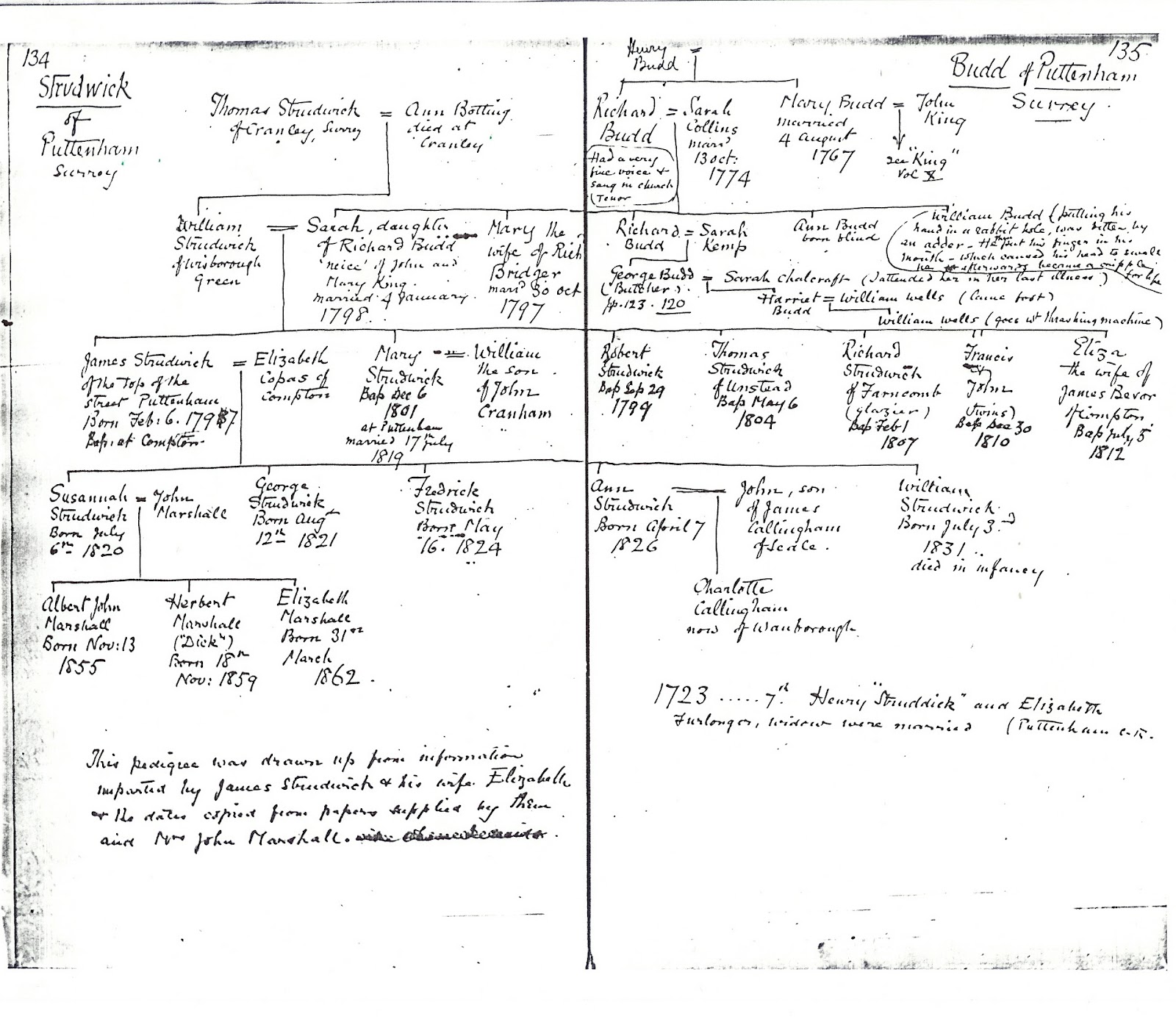
Taken from the manuscripts of Rev Charles Kerry (vol 10)

Family Trees, Pedigree, or lineage – are they the same, different or simply different things to different people?

A family tree is something that I produce when I am researching. It is a rough drawing of who sits where in the family group, on occasions, the group has overlaps, siblings marry siblings, strengthening the relationship or connection with two families.

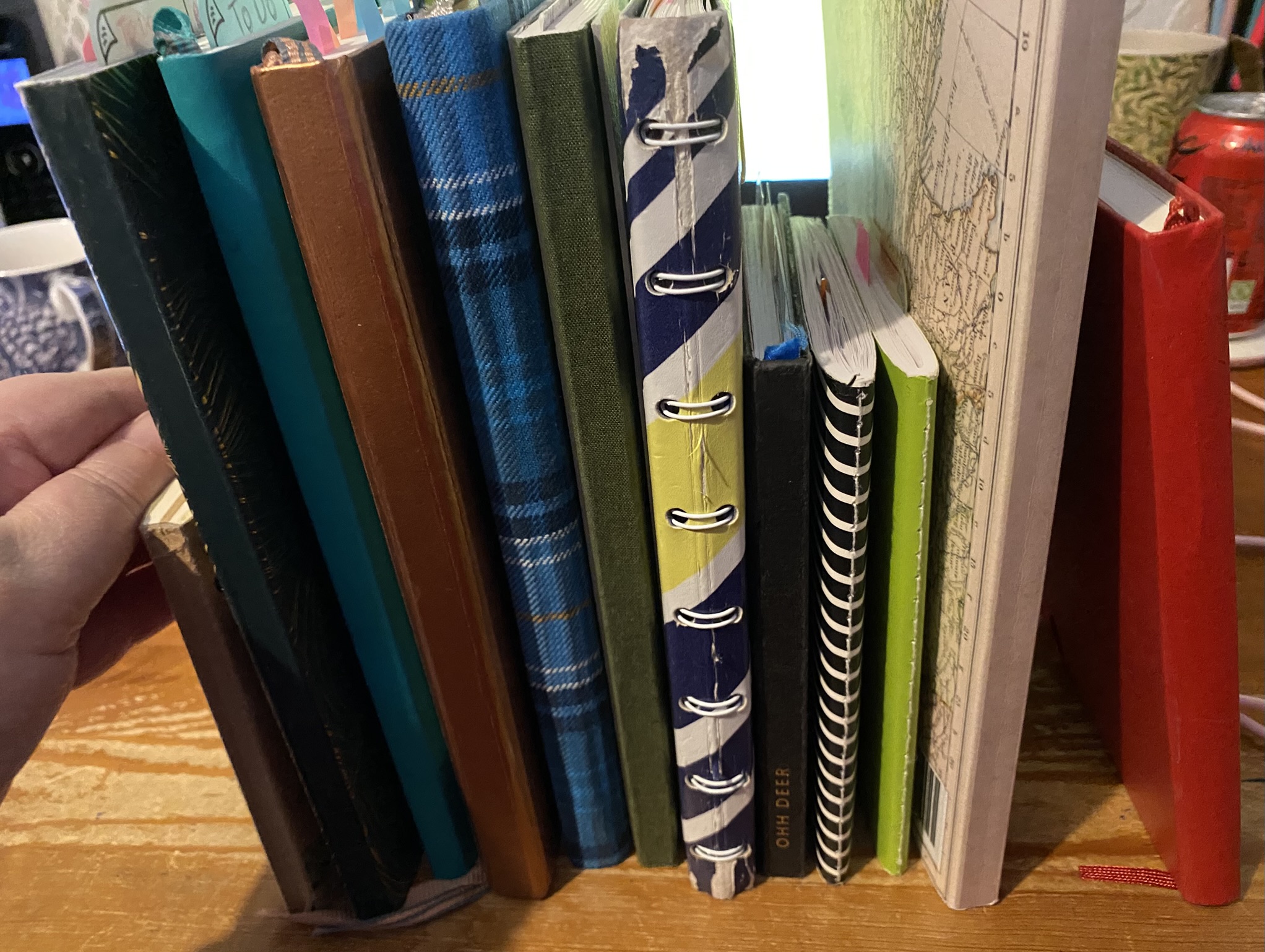
It might have some basic information, perhaps a birth date, a source might appear as an abbreviation, a place where something happened represented by an initial or two. For me this is a work in progress, it helps me think and I frequently have more than one version – each version is dated. The versions appear as I perhaps move notebooks, or perhaps I take one individual, then move them to a page of their own and build their tree.

The image at the top of this post is repeated below in a larger format.

Taken from the manuscripts of Rev Charles Kerry (Vol 10).

I talked yesterday about the Budd family. This is a pedigree that was drawn by the curate of Puttenham Surrey, Charles Kerry. Kerry kept a series of manuscripts, which included things told to him by parishioners, information from parish registers and little antidotes, for example, he refers to my several times great grandfather, Richard Budd as having a fine tenor voice. Richard Budd was born in 1742, there is no way that I can think of that I would have known that fact, had someone note written that down. It is the little details like that, which takes a pedigree and turns it into something resembling a family tree.

Here is another example of a family tree created using pen and paper….

Butcher “Tree” – created Julie Goucher, 1993

Drawn in the format of a rough mind-map it puts people where they should be, adds in varying information – dates, places, occupations, legal/inheritance/taxation information. 

A pedigree is names, dates and perhaps places. It is a document that shows the ancestral pathway of an individual, their parents, siblings, and ancestors. If you look back at the first image, you will see that under the Budd family, Kerry mentions the word pedigree. As I said, different things to different people.

Lineage Society is essentially researching direct descent from an ancestor; ancestry or pedigree; there is a list of some of the Societies HERE. You could think that my research with Henry Budd was an example of this, and perhaps it is, however, what makes it different, is that I have researched the Budd’s which includes some which is not related to me. I have not researched every individual or family with the Surname Budd. Usually with Lineage Societies you provide genealogical evidence with sources cited and pay the subscription fee to join.

A One-Name Study or Surname Study as defined by the Guild of One-Name Studies, aims to research ALL instances of the surname wherever they appear globally and across all dates. There is no time constraints as to when the study goes global – think marathon, rather than a sprint!  The reason for the remit to be global is because of migration.

There are “micro versions” or “focus studies”, where people are researching all of a particular surname in a county, or two, or perhaps all the people with a specific name, for example Henry Budd.

For my own Butcher One-Name Study, I have devised that I will work through material in batches, essentially following counties that are neighbouring, as that typically means migration paths. For me that is Surrey and Sussex which is where my own family hails from. Then I am moving to Hampshire and the Isle of Wight, Devon and Cornwall and so forth. For Countries outside of the UK, I am focusing Australia, beginning with Tasmania, New South Wales and Western Australia. That does not mean I have not deviated from my plan, sometimes the research itself dictates a path way.

Posted in Advent Posts, Genealogy | Leave a comment

(Advent 5) – Evidence

Julie Goucher, 2019 using wordcloud.com

Regardless of what research you are undertaking, every separate fact contained within a document should be individually recorded into a database, and subsequently, every fact should be supported by evidence.

The evidence documented with the citation, which subsequently can be seen/obtained from…..

Let me provide an example:

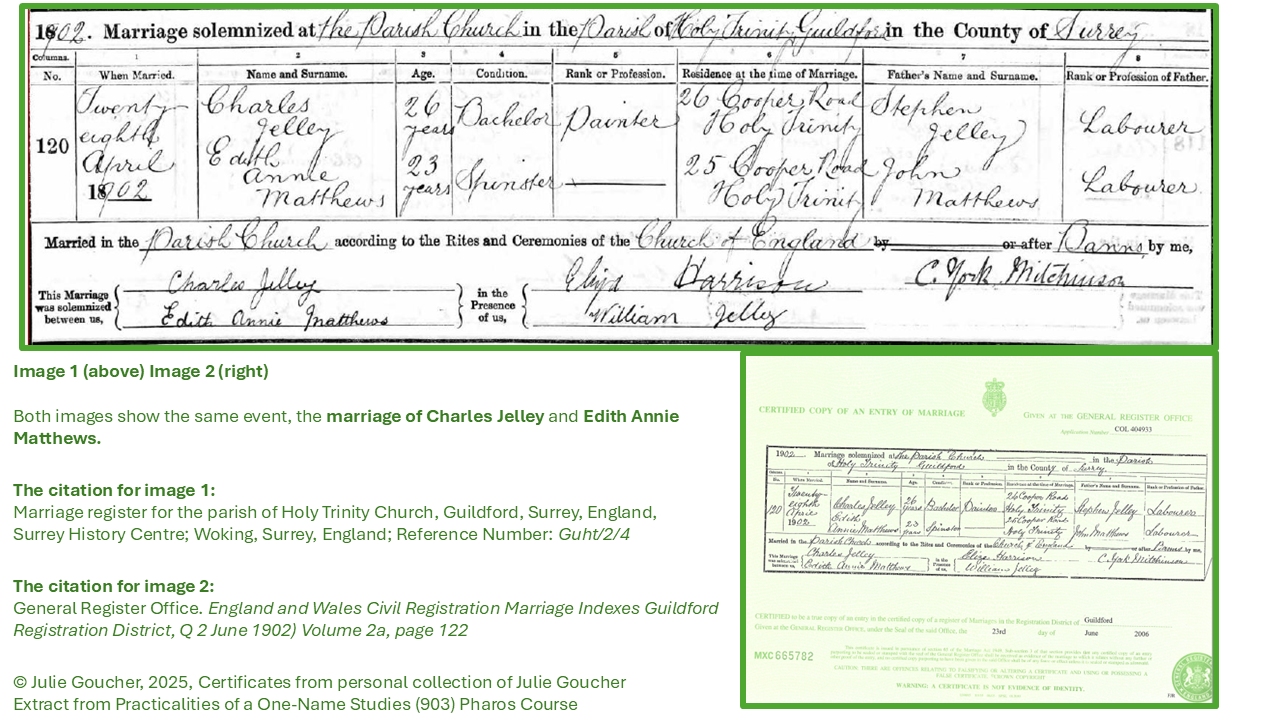
Below is an extract from the Practicalities of a One-Name Studies course which I wrote and tutor for Pharos Tutors and Teaching. The document shows two certificates, both representing the same event: Marriage of 2 April 1902 of Charles Jelley and Edith Annie Matthews which took place in Guildford, Surrey.

Each fact, such as occupation of the groom, address of both bride and groom, ages at the time of marriage, occupations of their fathers are all recorded as separate facts within my database for each individual.

Whilst both certificates show the same event, they are different source documents, with different citations. Copies of both certificates can be viewed or obtained in different ways. Furthermore, there is a difference between both certificates, can you spot it?

© Julie Goucher, 2025, Certificates from personal collection of Julie Goucher – Extract from the Practicalities of a One-Name Studies (903) Pharos Course

In addition to that, there is a reference list, which might be saved as footnotes or end notes, or in a separate section, a repository list and a bibliography.

Sources themselves can be defined as three different types:

  • Primary Sources – identified as something written at the time an event took place, or soon after the event. 
  • Secondary Sources – identified as something written about an event.
  • Tertiary Sources – identified as something written, as a summary that incorporates both primary and second sources.

The point of evidence is that it gives credence to claims made. It means that future researchers can follow the pathway to events, substantiating or not, earlier research.

One thing to remember is, person A can undertake research and provide evidence of all claims made. However, person B might verify the research of person A, but also have a document that person A is completely unaware of. Does that devalue the research of person A? I think not, but I would go a stage further.

In a perfect world we would try to find as many sources as possible so to verify a fact, or to disprove one. We might have a hypothesis, something we think could be the case, or might be so. We might have reasoning because we know records have not survived, as far as we are aware. An example of this might be:

My several times great grandfather, Henry BUDD married Martha OTTWAY in 1723, in the parish of Chertsey, Surrey. They settled in Puttenham, Surrey and raised a family of eight children, I descend from Richard BUDD who was their second to last child, born in 1742. The family thrived in Puttenham from 1724 onwards, but there is still more work to be done.

Two things of note are:

1:- Upon looking for Henry’s birth, I spot a reference to Henry Budd made by the curate of the time, Charles Kerry. The reference states that the baptism of Henry’s eldest child, Martha was “first of the Budd’s” I had already deduced that from a thorough viewing of the parish registers. Thus, Henry came from elsewhere, but where?

In 1720, Henry is witnessing a marriage in Elstead, which is just a few miles from Puttenham. A further search revealed that it was likely that Henry came from a family of Budd’s just over the border into Hampshire; the parish of Binsted. At this point I had not undertaken a more rigorous search

2:- By complete chance, I came across a reference from Sussex Family History Group, where the identified some marriages that had taken place between grooms from Sussex to brides in Surrey. A look down the list, and I spotted a Daniel Budd of Lurgershall marrying Alice Willson in 1704 in the parish of Peper Harrow, a village within a mile or two from Puttenham.

Is Daniel connected to Henry? I have a few ideas and hunches. I have created a timeline of information relating to both Daniel and Henry. What is clear, is that the material relating to Peper Harrow parish is scanty prior to 1837.

In closing today’s post, evidence is vital and at this point I cannot say with certainty that I have located all instances relating to this family of Budd’s, but I do have a hypothesis, and that is the best I can do.

Posted in Advent Posts, Genealogy | Leave a comment

(Advent 4) – Distribution of Surnames

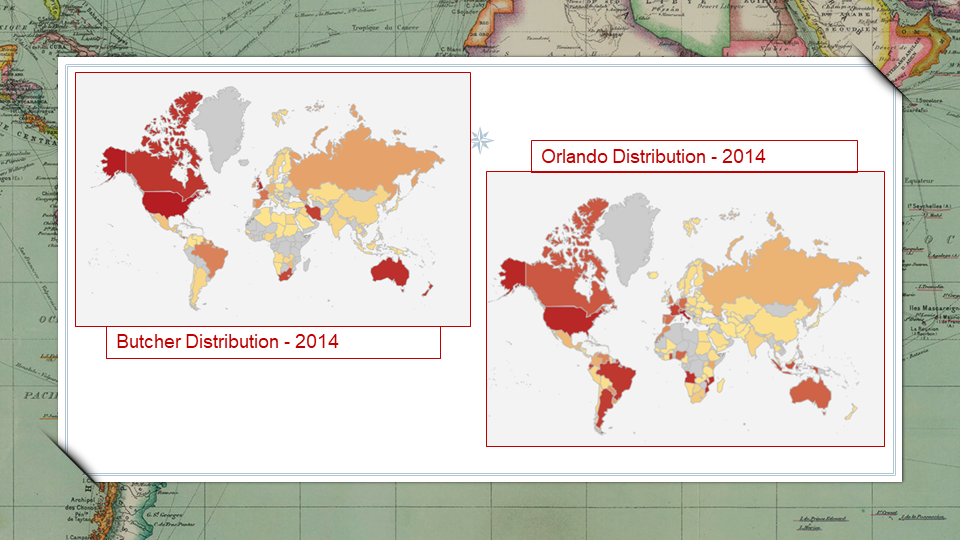
Distribution of Surnames 2014 for Orlando and Butcher – Copyright Julie Goucher, 2020 using Forebears.io

Surname distribution maps add a new and different dimension to a One-Name study.

A surname may well have it’s origins in one Country, and a map can provide an interesting insight to how migration can influence the geographic spread of a surname. Going a step further, historical events can influence migration which in turn can be identified using a distribution map.

Especially those of us researching European surnames, a map can be used to identify where to start. In Europe, excluding UK and Ireland, events are recorded in the town & village in which they occur. If you are researching and find a Census or passenger list which simply lists the Country of origin as the place of birth, that is helpful, but not going to break those brick walls down.

Virciglio

courtesy of Gens.info

In my Italian family I have the surname of Virciglio. This map from Gens.info shows where the surname appears in Italy and the Islands. As you can see it is not a name that is widespread, although it is reasonably popular in “my” bit of Sicily.

We know, because history tells us, that there was significant peaks of migration from Italy and in particular south of the mainland and the islands. Famine was widespread, the only way of having a reasonable life was to migrate to other Countries and one of those countries was the United States.

Virciglio USA

Courtesy of Gens.info

Using another map from the same site shows the distribution for the same surname across the United States. This is especially helpful for the United States because, like Italy, records are held at local level, so I can discount all the states where there is no colour, at least initially.

Do surname distribution maps provide all the answers? – No, but they do provide scope for further research and considerations.

orlando Map

Courtesy of Gens.info

That said, when I insert my Italian study surname into the Gens.info website, the map looks like this which does not tell you anything beyond it is a popular surname and especially in the South and in Sicily.

There are a number of other surname distribution sites covering a number of other European Countries and there is a very useful Facebook Group too.

Don’t think that this site is not worth exploring if you are researching British surnames, a quick search of two Guild registered surnames, Butcher and Howes both produced a map, and whilst not the colour explosion of the Orlando map, certainly of interest nonetheless.

More details and information is covered in the Pharos Introduction to One-Name Studies course.

Posted in Genealogy | Leave a comment

(Advent 3) – Choosing a Surname

Created by Julie Goucher, 2020, using wordclouds.com

There are always more questions than answers, and always a burning obsession to find out more, even if the odds are against a successful search. Therefore it is no surprise that researchers choose their surnames of interest for a variety of reasons. 

There are a variety of reasons for researching a surname, here are just a few:

  • Researching as a link to the past 
    • Surname of a birth family
    • Maiden Surname
  • General curiosity about a surname.
  • Where does the surname come from?
  • My name is foreign, how did it get here?
  • Spellings of different surnames and are they related?
  • An attempt to demolish a genealogical brick wall.
  • By collecting all the references to a given name, it means that you do not necessarily miss your elusive ancestor.
  • …….the list is endless; and there is no right or wrong answer.
  • If you have questions about different surnames, the questions are likely different AND you might even find the answers to those questions is entirely different.

More than likely you will have already started your surname research before you become aware of the concept and before you have considered the basic foundations for a study.

What are the foundations? well here are a few things to consider:

  • Seek to understand the history of the surname
    • Where did it come from
    • What does it mean
    • How big might my study be?
  • What do you want to achieve by undertaking your study?
    • It doesn’t matter if you don’t have a firm idea, but begin thinking about it.

More details and information is covered in the Pharos Introduction to One-Name Studies course.

Posted in Advent Posts, Genealogy, One-Name Studies | Leave a comment

(Advent 2) – Back up Data….

Julie Goucher, 2025

On the first of every month I do a series of things, all of which keep me organised and undertaking what I call my office housekeeping.

  • Back-up computer files. 
  • Downloads from talks, other genealogists etc, these are moved to my cloud storage, into the appropriate filing system.
  • Photographs and screen captures (mainly book covers) saved in cloud storage.
  • Back-up my genealogical database files. These are held in Dropbox and as soon as I finish with the database I back-up.
  • Review my research log – I run through my database, (including any Excel files), locating what I have done and what is still to be done.
  • I whizz through my notebook(s) noting what still needs to be done, though mostly things have already made it to my to do list, but this is a good check to make sure nothing slips through the net; and another run through means I capture anything else that occurs to me.

Whilst this might not seem particularly surname related and more general, it is important to keep these basic principles up to date.  Spending time on the basics means that we have a solid foundation on which we can build our genealogical projects etc. 

Posted in Genealogy | Leave a comment

(Advent 1) – Aims of a One-Name Study

Created by Julie Goucher, 2018, using wordclouds.com

One of the questions that is asked, of students on the Introduction to One-Name Studies course is about Organisation. The way we keep our study may differ from that of our own family history research.

As I responded to a question from a student, I simply commented that it was important to look at the aims of your study. What followed, was that my fingers travelled across the keyboard at a fairly rapid rate and before I knew where I was I had written a very lengthy post. I then cut and pasted that into a document. Since then I have realigned and updated the post, using questions to confirm clarity and then published it in the Journal of One-Name Studies.

How we organise our material will depend on what our aims are for our studies. Are you simply wanting to:

  • Collect instances of the surname
  • Reconstruct families
  • Do you going to want a website to share and preserve your material?

This is not a case of collect or reconstruct, as a number of members, me included do both. The key thing is, if a website is on your horizon, but you have elected to keep your material on index cards then you are going to have to do a whole lot of work and retyping to turn the contents of the index cards into a means used to create a website.

There is nothing wrong with the index card approach, and I use them, but they are not my only means.  I did a review of my aims and methods a five years ago and decided that I was going to computerise my entire research, digitise 25 years of papers and insert the scrappy bits of paper drawn trees into my software programme and ensure that I had the evidences to support the tree.

I also knew I wanted to use TNG (The Next Generation) software and opted to sign up for the Members Website Project, which is a members benefit for Guild of One-Name Studies members, and enables me to use a website on the Guild’s server AND to preserve my work, whilst still allowing me to update and continue working on my study. I get to the website and TNG from my computerised study by means of a GEDCOM and the ability to add what is referred to a “media” which is images, documents and a number of other elements.

My GEDCOM is not perfect because I have 25 years of work in the filing cabinet and numerous computer files – it remains as a work in progress, as I ensure that I have source citations and so forth all appropriately identified. My aim is that I am going to share how I made the jump from paper to my database.

So, what are your aims for your One-Name Study, where do you want your study to be?

For those interested in joining the Introduction to One-Name Studies course, please visit HERE – if you are quick you can use the discount code for the Black Friday event

Posted in Genealogy, One-Name Studies | Leave a comment

Q & A – About Surnames

Created by Julie Goucher – Feb 2020 Using Wordclouds.com

A few weeks ago I received the following Question.

Julie, I have been reading your site for quite a while. Would you be able to share some posts about One-Name Studies?

Thanks, M

I did answer M a few weeks ago and said that I would pull together a few posts.

At the end of last week I was in the car, on the way down the M1, which is a long way from my native Surrey. I was pondering when I would get these post written, as I usually spend time writing posts during the advent period.

As I had not formulated any posts I thought that I would pull these post together, over the next few weeks. The posts will start on 1st December and run through to 26 December, what we call Boxing Day in the UK.

As I am literally just home, this will be a short post introducing the series, which will start tomorrow, 1 December 2025 – I hope you will join me, read along and perhaps ask a question or two?

Posted in Advent Posts, Q & A | Leave a comment

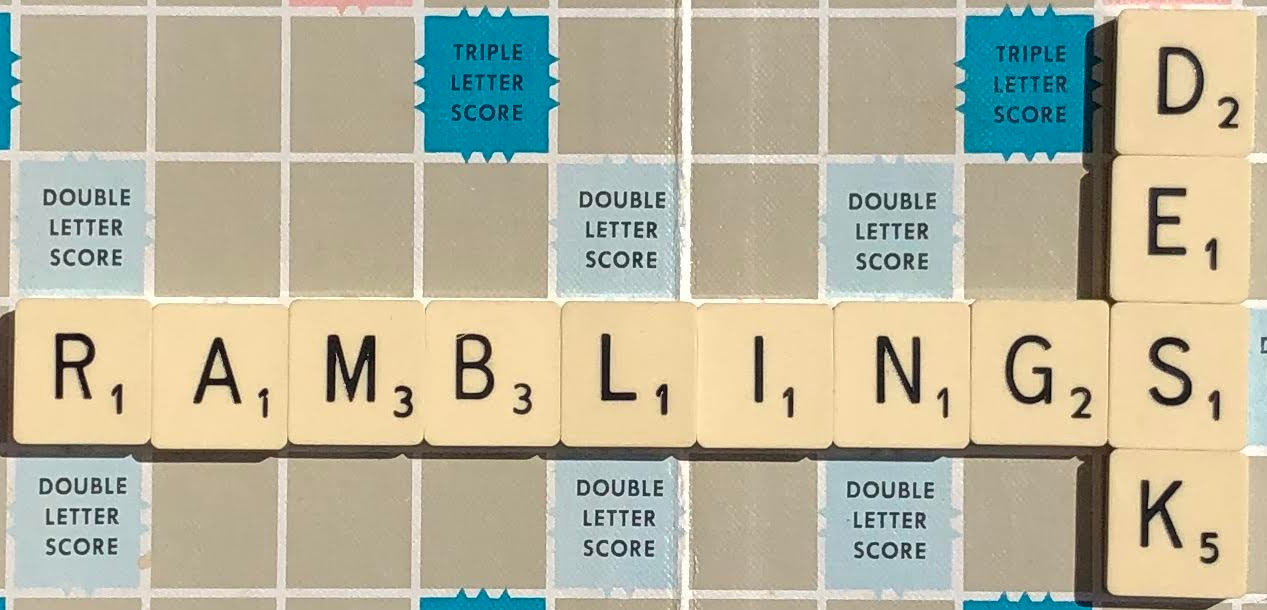
Desk Ramblings (33)

Created by Julie Goucher, July 2019

It has been some time since I wrote here, let alone write a Desk Ramblings. I needed to take a step back and remove one stress factor. That said, I don’t view writing here as a stress. It has simply been a casualty of me getting overwhelmed. 

I am feeling much better, there are still issues for me to deal with, but the worse is behind me. My never-ending to do list has grown by several items, both caused by WordPress. 

I am a creature of habit. I dislike writing in blocks and routinely write posts with the classic edit option. Except the option has disappeared and is only available to those with business accounts. Whilst I do pay for my site, I do not have a business account and currently do not feel it as value for money.

Whilst I was pondering and debating the classic edit I noticed that there were some changes on my site that I had not done, and as I pondered on that, I decided that my categories and archives were too long and could do with some tidying, so you will see some tweaks in the coming days weeks

Back in the summer I had issues accessing my Twitter or X account. After a number of attempts at logging in I finally managed it, however this was not a case of me forgetting a password. 

Someone had hacked into my account, changed the email on the account and then deleted all my saved posts, messages, followers and those accounts I was following. I reached out to Twitter support and frankly they were useless. Then the hacker changed my email back so I could login and inspect the damage. I have no idea who might have done this, but the whole situation left a bad taste and Twitter support were frankly a disappointment.

This was just a few weeks after a cyber incident involving a well known UK retailer. I did not think much of it, until I had a bogus debit, resulting in the bank completely replacing my card and going through a rather tedious online form which returned the funds to me.

I firmly believe in looking forward, not back which is curious for someone who a genealogist and historian, but there we are. Meanwhile, I need to get this online space tweaked and adjusted. Whilst I am still on Twitter, I have moved my account to BlueSky, but I am still at that stage which is akin to wearing in a new pair of shoes. I have also been looking at Sub-Stack, but we shall see.

In the meantime, I am almost at the end of another busy year of tutoring for Pharos – I have just started tutoring the last course for 2025, and all courses will be available in 2026. It has been another busy year giving presentations to various groups, including the Society of Genealogists, I have three talks to wrap up the year. I am trying to conclude a couple of projects that have been underway for too long.

That said, I am keen to get back to my online space, I have missed it. Until next time!

Posted in Desk Ramblings! | 2 Comments

July 2025 Round up

Happy July everyone!

I have another busy month with tutoring and presenting. 

I have three talks with the Society of Genealogists:


5 July 2025 – Genealogical Research on the Isle of Man – Information and book HERE


12 July 2025 – My Ancestor was an Alien – Information and book HERE                


17 July 2025 – Getting the Most from a One-Name Study – Information and book HERE

The three images shown here are courtesy of the Society of Genealogists.

The Pharos Tutors Advanced One-Name Studies course continues for another two weeks and another four tutorials. This course will next run again in 2026 – information or to book HERE.

That is it for today’s post. I will be ramping up my postings once again, the last couple of months have been quite busy – more on that at a later date.

Posted in Advanced One-Name Studies (Pharos Course 902), Genealogy, Presentations | Leave a comment

H is for History

Created by Julie Goucher, 2023

Our Genealogical pursuits are underpinned with the history relevant to the country where our ancestors hailed from, and also by wider current affairs. Our people, much like us today did not live in isolation. They, as we are, were affected by social, economic, political and religious facts. Impacted by decisions made by politicians, either those in office, or those that were part of a previous government. It is those elements that underpinned the life factors of our ancestors. 

I am reminded of my great aunt who was born in 1900, telling me that she remembered her grandmother, Caroline Ellis who was born in 1844, qualifying for a pension from the government of 10 shillings a week.

I knew that my great Grandmother had looked after her mother, so my grandfather, my aunt and the rest of the siblings were used to, and aware of the extended family approach to society. Without that family support there was only one other viable option and that was the workhouse.

The ‘Old Age Pension’ was introduced in the UK in January 1909. A pension of 5 shillings per week, or 7 shillings and sixpence for a married couple, was payable to a person with an income below £21 a year. The original state pension qualifying age was 70, and was subject to a means test.

There is a discrepancy of how much the pension was, but whatever the amount I am sure that it was a welcomed addition to the family coffers. The family “home” comprised of:

  • my great grandparents – Annie (Harris) & Charles Butcher
  • my great great grandparents – Caroline (Ellis) and Henry Harris
    • Caroline born 1844 – died 1935
    • Henry born 1843 – died 1929
    • In 1911 Caroline and Henry are living next door to Annie & Charles. Also living with them is Caroline’s brother, Edward who is now a widower.
  • my grandfather – George Butcher plus 11 siblings born between 1900 & 1917. Three sadly died as infants, 1902, 1903 and 1912.

Two additional points of reference:

  1. The extended family was an important of my family. Of the row of six cottages, at least half was occupied by family.
  2. Edward Ellis had spent a little over four years in the Army, as part of the 67th Regiment of Foot (Royal Hampshire). He contracted chronic Hepatitis whilst serving in Thyetmoo in what was noted as British Burmah, (Burma), where he had spent two years. His condition was recorded as significantly impaired, resulting in an enlargement of his liver. He was found unfit for further service.

Edward returned back to Surrey where he married in 1882. His wife died in 1907 and by 1911 he was living with his brother in law and sister Caroline. He died in 1921 at the workhouse in Guildford, likely because he was unable to receive the care he needed from the family at home.

Posted in A-Z Challenge, Genealogy | Leave a comment