Introduction to One-Name Studies (901)

Introduction to One-Name Studies Pharos Course (901) Image Julie Goucher, 2022

This week, the latest running of the Introduction to One-Name Studies course (901) began. It is always a popular course and it is very interesting to see the surnames that everyone is interested in.

It is still possible, for another day or so, to join the February intake.

If you want to read more, or to sign up for either the February or 31 May 2022 course click HERE.

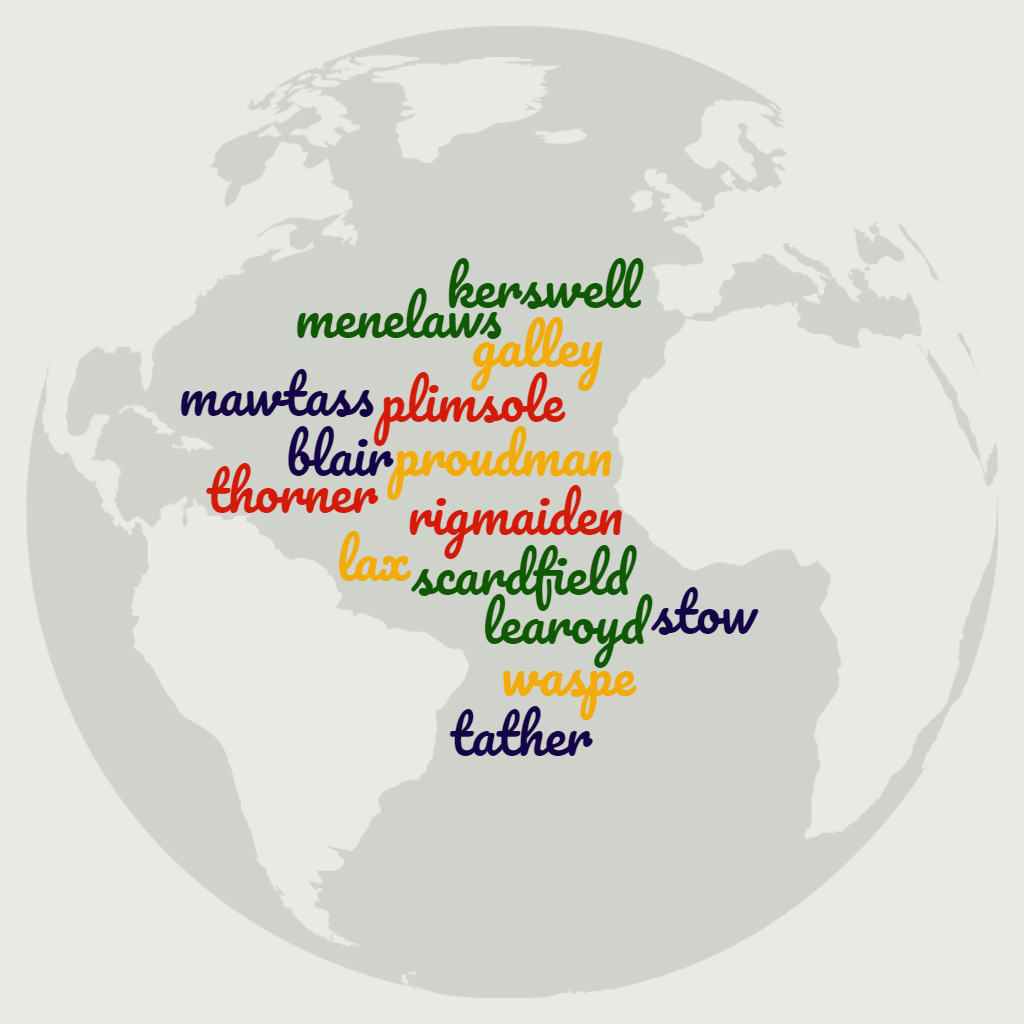
You can see some of the names being researched by current students on the course in the image below.

Created by Julie Goucher, 2022 using Wordclouds.com

Posted in Genealogy, Introduction to One-Name Studies (Pharos course 901), One-Name Studies, Surnames | Leave a comment

The Journey to a Specific Project (3)

Created by Julie Goucher, 2022 using Wordclouds

You can read other posts Journey to a Specific Project HERE.

Last time I talked about how we did a One-Name Study in the “old days” and whilst they were great genealogical days, the modern times are great too.

The amount of material online is phenomenal, but that is only a fraction of what is available. Our local studies libraries, record offices and archives centres are in many instances fighting for their survival, and we must use these outstanding organisations, or risk loosing them, or at the very least loosing the fantastic archivists and their knowledge, from these organisations.

I have talked quite a lot about how I started researching; the catalyst was seeing my great Grandmother, who we all called Granny on the 1881 Census. In fact I wrote quite about it during the recent Census Series, but how did I get to see the Census in the first place?

I knew the library had a local studies facility, as a student I had often used the “quiet” seating upstairs and would see others arrive and visit that element of the library. I subsequently found myself during the summer, with a little free time, so I ventured to the local studies library, entering through that “magic door”. On duty was a really enthusiastic librarian or archivist, called M.

M listened to me and asked a few key questions, and took me to a filing system, extracting a roll of film, taking me to a reader, threaded the film to the reader and told me which dial to turn, telling me what I was to look out for. M then walked away and left me to read the film. Suddenly I spotted this:

Puttenham 1881 Census – Surrey History Centre – RG11; Piece: 780; Folio: 86; Page: 7

I already knew that my great, great Grandparents were Henry Harris and Caroline (formerly Ellis) from listening to my great Aunt, who was the eldest daughter of Annie P. I also knew where the family were living.

M came back to see how I was getting on, each time she would produce a film, thread it to the reader and off I would go, following the family from 1881 which was the last census available at the time, back through the decades to 1841. Over time, I learnt what films were where, how to thread the reader, and much more besides.

M eventually retired, but she had done so much more that day than just get me started looking at a census. Her kindness and enthusiasm went far beyond just doing her job, more than she would ever know.

At the time, the Surrey Records Office was in Kingston upon Thames, with further records held at the Surrey Muniment Room which was located at the building of  Guildford Museum, and as I described the Local History Library which was held at the library at Guildford. The Surrey History Centre was built at Woking and brought together all those facilities.

In modern times, Surrey material can be found online at a variety of sites. You can see what is available and where it is HERE. Surrey History Centre has a number of research guides online and these can be downloaded free of charge.

As I researched my generations of Surrey (and Sussex, and Hampshire) ancestors I was able to expand on that research and focus on my One-Name Study for the surname of Butcher. Despite several decades of research, I only registered it with the Guild of One-Name Studies in 2017 and I am currently revisiting my earlier research, focusing on what information I know, what I don’t know and what I need to access or locate to move my research forward.

Posted in Genealogy, Journey to a Specific Project | Leave a comment

Genealogical Field Notes (3) – Unusual Research Opportunities

Part of Genealogical Field Notes

Research is in many ways like unravelling a ball of wool. You start to investigate, then all of a sudden you are completely overwhelmed with the all data that is now available and that is without leaving leaving our computers.

That feeling of being overwhelmed needs to be controlled or your research will start to resemble a bird’s nest, which is what my husband, calls the tangled mess of his fishing line.

Perhaps rather than randomly searching, you let the data come to you. Here are just a few suggestions that I have had some great success & discoveries with:

  • eBay
    • Even if you choose never to use the auction site, at least register, and explore this as a research option. Under the “My eBay” section at the top right of the page (once you have logged in) is the facility to add specific words to a saved search. This can be the name of a place or a surname. Then every time some lists for sale an item with the specific word an email is sent to you and sometimes you can strike it lucky. As my credit card will confirm, I have had some real success!
  • Google Alerts
    • Using the facility of Google Alerts you have a quick and painless method of being made aware of when something using your search criteria is published on the internet. You can use this again to keep track of surnames and places that are connected to your ancestry. Indeed, you can utilise it for anything you have an interest in. As with eBay, I have been made of some good pages published online which have given me and opportunity to pursue a line of enquiry.
  • Abe Book Search
    • Using this facility can be rather useful and I have had varying degrees of success. Visit the website, I have chosen the UK site because at the bottom of the page you can set Country preferences. From here you can create an account and then each time a book is listed with your search preferences it is emailed to you. The rarer the book the wider the net will need to be cast. I suggest that to receive listings for a particular name as both an author and within the subject search under keyword.
  • UK BookWorld.com
    • The same can happen at this site, although this is predominately within the UK. You will need to create an account and then set up search options and again, an email will plop into your inbox with hopefully some fascinating details

My suggestion is to utilise a free email address, such Gmail, and then you can keep the various emails until you want to search through them. I would not leave it too long, as you may miss out on a real gem!

Of course, you do not have to buy all the book options you see, use the searches to identify sources and then tap into your library or the free e-books. Or utilise the search facility to perhaps tap into another organisation.

Why not use whatever is available to you, and adjust it for your own research and discovery purposes.

Posted in Genealogical Field Notes | Leave a comment

#52 Ancestors – Week 1 Foundations

Created by Julie Goucher, 2022 Using Wordclouds.com

I am terrible at following these regular posting schedules, but thought that I would see if my track record improves for 2022, so fingers crossed!

For our research to be successful, I think the most important elements is for the foundations of our research to be robust. My approach to this is:

  • Revisiting earlier research, some of which was done some years ago.
  • Revisiting earlier research logs in tandem with revisiting earlier research.
  • Checking my earlier to do lists, making sure that outstanding to do’s have been captured and moved to the most recent to do list.
  • As I work through the earlier research, checking the entry in my database and the citations.
  • Cross referencing images and documents with the database and labelling structure.
  • Adding any notes to my research log and to do list
    • Sometimes there is material available now that was not when I first worked on the individual record.
    • Sometimes as I read the material again an idea becomes apparent that needs to be captured.
  • Add the Individual reference allocated by my software to my research log, so that I can see where I am up to.

This is not a quick process, but if the review is taking place, working through at a steady pace, it will yield great results. I try and do five individuals a day, but sometimes that is not possible. I am also clearing the never ending pile of filing and processing, which includes materials for my own one-name studies.

Posted in #52Ancestors, Genealogy | Leave a comment

Roman Naming Conventions – Tria Nomina

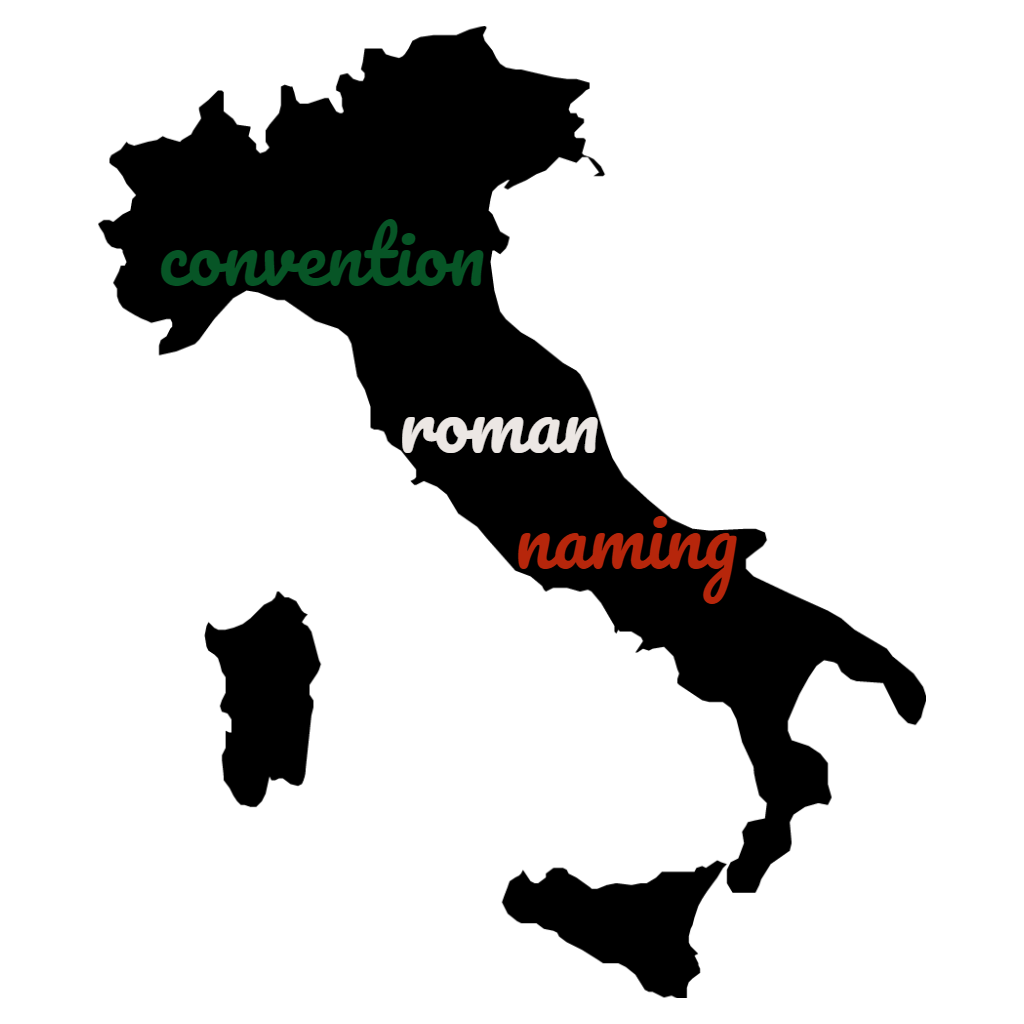
Copyright Julie Goucher, 2022 Created with Wordclouds.com

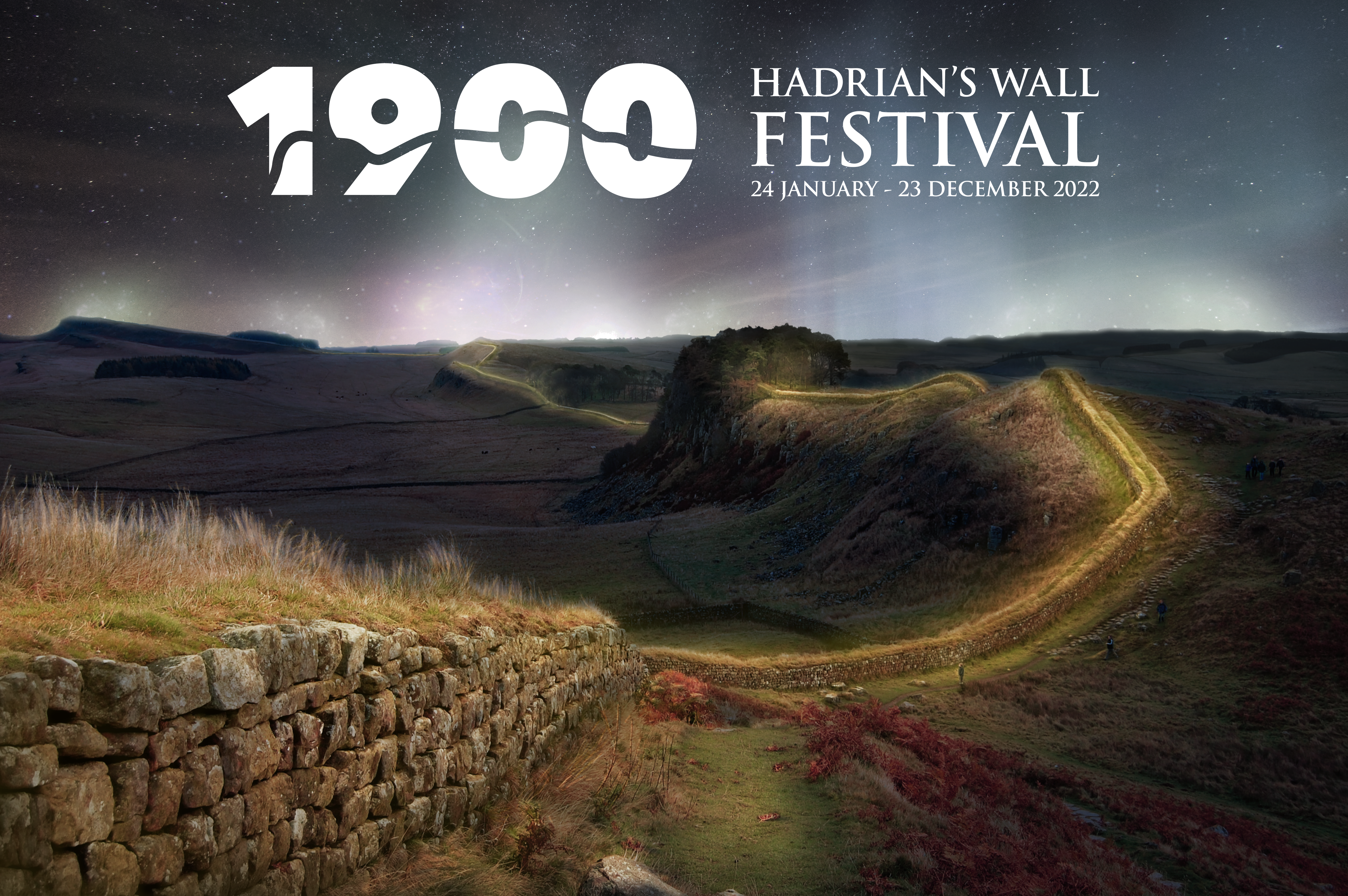
Today, the 24 January 2022 marks the 1900th anniversary (AD 122-2022) of the commencement of the building of Hadrian’s Wall. The anniversary celebrations conclude, on 23rd December 2022 which is the final day of the Festival of Saturnalia.

The Romans and other people of Italy during the period of 14 Centuries built a system of nomenclature that was different from others across Europe and the Mediterranean Sea. This consisted of both personal names and family names. Referred to as the Tria Nomina, the combination was

  • Praenomen
  • Nomen
  • Cognomen

These came to be regarded as the basic elements of the Roman name, in fact representing a continuum of development from the 7th Century BC through to the end of the 7th Century AD.

The names that developed during this time became one of the defining elements of Roman Civilisation, despite the system itself disappearing during the early Middle Ages. The names though had significant influence on the development of naming practices across Europe, and many survive in modern languages, such as French, German and Italian, and opposed to the “dead” classical language of Latin.

Praenomen – A personal name chosen by the parents of a Roman child. First given eight days after the birth of a girl, and after nine days for the birth of a boy. Conferred a second time when girls married, or when boys reached manhood.

Nomen Genilcium – A hereditary name born by the peoples of ancient Italy and later by both citizens of the Roman Republic and Roman Empire. As Rome gradually expanded, and people granted citizenship, it gradually lost it’s value in indicating patrilineal ancestry.

Cognomen – A third name for citizens of Ancient Rome under Roman naming conventions. Originally a nickname. It lost it’s purpose when it became hereditary. Cognomenia became the second name, (the gens or family name or clan name) in order to identify a particular branch within a family or clan.

Official image for the 1900 Hadrian’s Wall Festival – used with permission 2021

All my posts will be listed and linked above HERE, they can also be found using the category of 1900 Years of Hadrian’s Wall, and the full link for the series of posts

If you want to see who else is taking part in celebrating this amazing 1900th anniversary, or want to participate then please visit the main website the for the event HERE. You can read my entry HERE.

Posted in 1900 Years of Hadrian’s Wall, Genealogy, History, Non-British Surnames, One-Name Studies, Surnames, Surnames Series 2022 | Leave a comment

Discussion – What to look for that suits your (One-Name/Surname) Study

Copyright Julie Goucher, 2021 – Slide Template by Slide Carnival

As I was unable to give the presentation live, I said that I would organise an online event whereby we could discuss the presentation and I could answer any questions. For those who missed the recording, it can be found HERE.

I am now in a position to arrange the discussion – which will be FREE to attend, but you do need to register which you can do HERE. After registration you will receive a confirmation email.

Scheduled for 7pm on Thursday 27 January 2022

This is open to all, as is the recording, but space is limited.

For those interested in reading about and finding more information surnames:

Posted in Genealogy, Introduction to One-Name Studies (Pharos course 901), One-Name Studies, Practicalities of a One-Name Studies (Pharos Course 903), Presentations | Leave a comment

Medieval European Society During 14th Century

Image from The Medievalist – Medievalists.net

One surname type is that of occupations, and these can be traced back to Medieval times across Europe.

The surname of Smith refers to someone who worked with metal. The surname Silversmith was used by someone who worked with silver. In German speaking parts of Europe, someone who worked with metal was called Schmidt, which translates to Smith.

Someone who worked with wood often had the surname of Carpenter, those who spoke French, were called Charpentier and those who were in German speaking areas, called Zimmerman. Those who made wooden furniture could were often called Joiner, which in French translates to Joignour.  You could ask why the need for a separate name, such as joiner, but the reality is that surnames began because we needed to distinguish one person from another. The diversification of joiner from carpenter, could be quite simply the use of wood in a specific way – the general carpenter, took that name in the simple form, whereas the chap who made his living making furniture selected the name joiner, because he quite simply did literally that, he joined wood.

A baker in England often had the surname of Boulanger in France, or Becker in Germany. A butcher in England often took the surname of Bouchère (female) or Boucher (male) in France, in Germany the name was Metzgerin (female) or Metzger (male); and in Italy the name translates to Macellaia (female) or Macellaio (male).

Surnames though do not exist in isolation, they represent people who were living their lives and in order to consider those people, it is useful to add some context to their lives, and the times in which they lived; essentially setting the stage.

At this period of time, the chances are, we may not be able to identify “our people”. That very much depends on their social standing, their country of origin, occupation and any other identifiable marker, that could be potentially found in historical records. For most of us they are likely to not be available, but if they are then that is a win.

In Medieval times, society was primarily comprised of three elements – Christianity, agrarian and feudal.

Christianity – Broadly speaking, it was very likely that England, France, Italy and Germany were all similar during the 14th Century.

The Church of England was no different to the State in Medieval Europe. The church was an important part of everyday life, and its functionality was that of a governing body. During 14th Century it was simply inconceivable that the Church and State were two separate entities.

The church owned a significant amount of property and coupled with business interests, and its involvement with various levels of education, the church played a significant part in the affairs in Medieval society.

The church organised the timings of festivals, and feast days, as the seasons passed – Lent for example was organised by the church when the granaries dried up and meat was a shortage. Easter was seen as a celebration of the resurrection of Christ, but the festival took place when the grains were refilled and vegetables could be harvested.

Agrarian – Every household in the 14th Century had a self sufficient vegetable garden and space for small animals. Subsistence farming had become a dominant way of life after the urban centres of the Roman Empire collapsed.

Villages followed the Open Field System, thin long strips of the field outside of village centres. The planted fields were kept for as long as possible as they were ploughed by Oxon, and later by horses. Farms gave assistance to neighbouring farms with planting, ploughing, harvesting and other agricultural measures.

The farmer took care of the crops and field rotations, enabling nitrogen in the soil to go back into the ground and the land given the time to adjust. At key times even the children assisted.

There were disputes being villagers and there are as a result of this some fascinating court documents that are able to shine a light on the nature of the disputes and how the situation was ordered to be addressed. These disputes could be things like individuals ploughing too much in their neighbours strips, or adjustments made to what was agreed to be grown.

Feudal System – This flourished during the 14th century, establishing a social hierarchy in the community. The tip of the structure was the King, with the Nobles, Earls, Vassals, Peasants all situated beneath the King, with varying levels of servitude.

The King pledged support and protection to the Nobles and granted them land and titles. The Nobles in turn vowed loyalty to the King, promising to provide military service.

Vassalage System – This was the lower ranking men who pledged their loyalty to the Nobles, and entered into a mutual obligation.

The peasants agreed with their Lords on the amount of harvest or the number of days labour and earnt the right to retain a portion of the harvest.

Medieval society was organised on a Three Estate Model, which essentially divided the community and society into three social orders:

  • Those that ruled or fought
    • Those that fought and were supposed to protect the others in the social order
  • Those that prayed
    • Those protecting humanity for committing sins
  • Those that worked (representing about 90% of the people)
    • Those that supported the members of the two groups above which together represented about 10% of the people.

Social Movement – The eldest son born into the family of the First Estate inherited the titles, lands and income of the family. By the 14th Century Nobles and landowners realised the practice of Primogeniture was the only way to retain power and legacy.

The solution to the problem was to send children to pray as Monks and Nuns. Children born into the First Estate would become part of the Second Estate and lead comfortable lives. The Clergy, Nobility and Peasantry constituted the Three Estate Model.

A typical village in the 14th Century consisted of houses, a church, and trade shops. They would be gathered together in a cluster that would be surrounded by ploughland, called the Open Field System. which followed a Three Field System, whereby two fields were planted and the third field rested, or lay fallow for the year.

Better farming methods, produced more food. In turn that meant that people had more to eat and were better able to resist illnesses and diseases, living longer and as a consequence populations grew. The more people there were, the more there was a need to expand a naming process, as we needed to be able to identify one person, from another as I have outlined in the beginning of this post.

For those who perhaps want to explore their surnames, the Introduction to One-Name Studies begins next week, details can be found HERE.

Posted in 14th Century, Historical Time Periods, History, Medieval Period, One-Name Studies, Surnames | Leave a comment

The Journey to a Specific Project (2)

Created by Julie Goucher, 2022 using Wordclouds

You can read other posts Journey to a Specific Project HERE.

Thinking back to the pre-internet days, researching our family history or a specific project was a labour of love. We worked from ourselves backward, talking to family members and friends, looking back and original documents and certificates and then we needed to access resources likely where our ancestors lived, or perhaps to order a certificate, in the hope that it was our ancestor and would shed clues to the family further back.

To order that certificate we needed to access the indexes of Births, Marriages and Deaths. These were at St Catherine’s House and prior to that Somerset House in London. Firstly, the Births were in red folders, marriages in green and deaths in black. Each book represented a quarter of the events in all the registration districts in England and Wales. So for example, my Grandfather was born on 3 March 1908, he was registered in the Guildford Registration District, and his index reference can be found in the first quarter of 1908 births. Armed with the registration district as well as the volume and page number the certificate can be ordered. It would then arrive in the post (letterbox, stamps, postman!).  So you get the idea, it was time consuming and costly.

Then we have baptisms and burials which form part of the parish records – so if I look at the church where I know my Grandfather was baptised I can find the entry. Sometimes the vicar provided the date the baby was born or individual was born – not all are baptised and if you want to marry in a church then you needed to be baptised first.

Working on a One-Name Study was even more time consuming and most people started their journey by collecting the material from the St Catherine’s indexes. One Guild of One-Name Studies member told me that it took them 10 years to collect the information for their surname and the variants. That is right, 10 years. Even then you needed to either access the original certificate or search the parish records, assuming you knew where to look.

For my Orlando study, it took three years for me to extract the Births, Marriages and Deaths in England and Wales. Today, you can download the material from FreeBMD in under 30 minutes (depending on the popularity of the surname) for events that took place from September 1837 up until 1983 (although I see today the date has extended until 1999, but is not complete).

The same process existed for marriages, and that is why the Guild of One-Name Studies member benefit of Marriage Challenges is so useful, as are the indexes. We discuss this further as part of the Introduction to One-Name Studies course and a practical element in the Practicalities of a One-Name Study course

Posted in Journey to a Specific Project, One-Name Studies, One-Place Studies | Leave a comment

The Journey to a Specific Project (1)

Created by Julie Goucher, 2022 using Wordclouds

Our individual genealogical and family history pursuits is, for a good many of us the reason we embark on specific projects of some kind, This might be  researching broadly and culturally another country, a One-Name study or a One-Place study. For some of us, a One-Name Study links with, and into a One-Place Study.

For my own research, my genealogy and family history was paramount in the beginning of my own One-Name study, developing into a One-Place Study, and generally  leading to specific research into European genealogy and family history.

Over time, our research diversifies as we grow our studies, research and interests. For some of us, our studies become personal and maybe, it is no longer enough to just gather and collect data.

Are studies with thousands of line entries in databases as valuable as those that develop studies whereby we build family groups. or undertake studies that gave a specific focus, researching in-depth those from a specific, or those holding specific jobs, or those that have gone into politics?

Those with Registered studies with the Guild of One-Name Studies undertake to make their study global, and a number of researchers cast a general view that there is not enough globalisation, though defining “enough” is not an absolute science.

The internet has revolutionised the way we research, both in breadth and depth. Advancements online mean that often a review of research is possible and a great many of us take a regular review of our research. For some, it is a case of pressing pause on gathering data, thus enabling a review to take place and data updates to happen.

Equally the amount online, whether that is a robust catalogue, digitisation of documents from small sets of data to significant collections is quite overwhelming. As I routinely advise Pharos students, develop a study the way you would eat an elephant – in bite size chunks! The nature of the bite size chunk is up to each study registrant. The way we research, establish and develop our studies, or even broad research will vary considerably, depending on a whole host of things.

Posted in Journey to a Specific Project | Leave a comment

Elstead Football Club 1911

Twice in recent weeks I have been asked if there was a better image of this picture available. There was, and I sent the images on to those that requested them.

It seemed appropriate that I should share this post again, after all, it has been almost eight years since that original post. which was part of my Guildford and District Collection

Elstead (Surrey) Football Club 1911 – From the personal collection of Julie Goucher

Standing Row – Herbert ELLIS, u/k, u/k, William BIAS, George WARNER, Alfred NOVELL, Guy BOVINGTON, Sandy TILSON, u/k, Henry ELLIS, Lewis NOVELL, u/k.

Sitting Row – first 3 u/k, Hubert HARDY, Jack BOND


Posted in Elstead, Genealogy, Guildford & District ~ A Pictorial Archive, Guildford, Surrey, England | Leave a comment