History For Ukraine #HistoryForUkraine – The White Ship, Earl Charles Spencer

Visit the website: historyforukraine.co  – #HistoryForUkraine 🌻

To support the Ukraine Humanitarian Crisis run by the Red Cross:  https://www.justgiving.com/fundraising/historyforukraine

I was lucky enough to be able to sit and listen to Earl Charles Spencer @CSpence1508 and his informative talk ‘The White Ship’ which was the first talk in this fundraising event, which was a thoroughly enjoyable one.

History For Ukraine & Earl Charles Spencer – used with permission

Posted in Genealogy, History, History For Ukraine #HistoryForUkraine | Leave a comment

History For Ukraine #HistoryForUkraine

Visit the website: historyforukraine.co  – #HistoryForUkraine 🌻

To support the Ukraine Humanitarian Crisis run by the Red Cross:  https://www.justgiving.com/fundraising/historyforukraine

If you missed the talk then visit https://www.youtube.com/watch?v=2qkOZesb3-0

Posted in Genealogy, History, History For Ukraine #HistoryForUkraine | Leave a comment

European Ancestors – Understanding France (4) (Baptisms)

Courtesy of Wikipedia
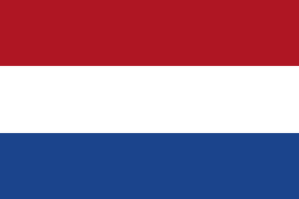
Flag adopted 15 Feb 1794

This post is part of a series about genealogy in France. You can read the complete series HERE.

Before 1792, there was no birth registration in France. The closest record available was baptism records and these contained:

  • Date of the baptisms
  • Name of Godparents, which included on occasion the occupation of male Godparents.
  • Name of Mother
    • Sometimes her father, if mother is a minor
  • Date of birth, this is often referred to as previous day or similar, rarely giving an actual date.
  • Gender of child
  • Given name
  • Names of parents
  • Occupation of father

After 1792 it is therefore possible to locate both a baptism and a birth registration.

Posted in European Ancestors, France, Understanding France Series | 1 Comment

European Ancestors – Understanding France (3) (Births)

Courtesy of Wikipedia
Flag adopted 15 Feb 1794

This post is part of a series about genealogy in France. You can read the complete series HERE.

After 1792, births were required to be registered by civil officials. Information was believed to be more precise than previous, and generally contained:

  • Date including the time of event
  • Date of record, including the time
  • Full name of the child
  • Gender of the individual
  • Names of parents, along with:
    • Occupation of father
    • Ages of both parents
    • Address
    • Legal status of marriage
  • Witnesses (2) as well as
    • Age
    • Occupation
    • Address
    • Relationship to the individual
Posted in European Ancestors, France, Understanding France Series | Leave a comment

European Ancestors – Understanding France (2) (Paris)

Courtesy of Wikipedia
Flag adopted 15 Feb 1794

This post is part of a series about genealogy in France. You can read the complete series HERE.

Following the defeat of France after the Franco-Prussian war 1870-1871, a fire broke out in two locations in Paris, that held copies of all civil records pertaining to events prior to 1861.

These locations were:

  • Town Hall (Hotel de Ville)
  • Law Court (Palais de justice)

Also there were other records that were destroyed such as financial and police records.

Civil records from 1860-1871 were kept at district town halls and as a result, these survive. It was possible to reconstruct records concerning families and descendants, sorted by date and surname and then subsequently digitised. These can be found at the website for the Paris Archives, and on FamilySearch under the term “Reconstitution Chronologique des Actes”

  • Births 1860 – 1924
  • Marriages 1860 – 1945
  • Deaths 1860 – 1986

Parish is divided into 20 arrondissements and each has it’s own register. There is a database for each arrondissement for each record type and they are divided into 10 year periods – these are noted as tables decennales.

Between 1933 and 1954 only annual tables exists.

There are records for Paris on:

  • Families Parisiennes which are sorted by surnames
  • Geneanet
    • various index records most of which are photographed by volunteers.
    • some trees uploaded by others, which might provide clues for other researchers
  • Filae access to index records 1860 – 1900 with some earlier that 1860
  • City directories for 1932 – 2018 (not online) and at Paris archives.
Posted in European Ancestors, Understanding France Series | Leave a comment

European Ancestors – Understanding France (1) (Census)

Courtesy of Wikipedia
Flag adopted 15 Feb 1794

This post is part of a series about genealogy in France. You can read the complete series HERE.

  • 1791 was the first population census, but it is rare to find a surviving document from that time.
  • The majority of towns and cities have their records dating from 1826 or 1831.
  • Census held every five years, except during periods of war
    • 1871 Census was held in 1872 as a result of the Franco-Prussian War.
    • 1916 Census cancelled due to the First World War
    • 1941 Census cancelled due to the Second World War
  • The information contained within a Census document has evolved over time:
    • Surname and first name
      • Women might be listed under their maiden name
    • Occupation
      • Those without an occupations will either have the box empty, or will be filled with sp or sans
      • Type of employment (not all)
        • owner or employee (name of employer, if relevant)
    • Marital status
    • Relationship to the head of the household
    • Age, or year of birth
    • Address (from 1851)
    • Nationality and place of birth (not all)
  • Census for Paris only exist for the following years: 1926,1931, 1936 and 1946
    • Electoral rolls exist and can be found at the Paris Archives.
  • Date of each census can be found written at the bottom of the last page on the census.
  • Census records can be found in the department offices for each region and these are often digitised, and go up until 1936.
    • You can do an internet search (Google is probably best)  for the name of the town + “archives departementales” 
    • Not all regions use the same terminology, and these might be found under different names:
      • recensement
      • denombrement
      • recensement de la population
  • Most of the census are unindexed, which is OK for a small town or village, but really it is best for you to know where your ancestors lived, the information can be found in birth, marriage and death records.
    • Filae does have several indexed census’ – 1872, 1901-1911
  • Enumerators frequently used abbreviations:
    • d for ditto, a wavy line or id (abbreviation for the Latin word of idem, meaning same)
Posted in European Ancestors, Understanding France Series | Leave a comment

THE Genealogical Event of the Calendar

Provided by RootsTech

The event all genealogists have been waiting for has ARRIVED and raring to go – RootsTech is a great event and it is:

#ChooseConnection is all about uniting people worldwide while celebrating our diversity and highlighting how individuals choose connection over division.

The quote here is the last paragraph on the Roots Tech website. Never has a paragraph seemed as important as it is today, in our modern and tragic world.

The pre-recorded talks #RootsTech2022 are now all available for free on familysearch.org/rootstech/  

Posted in Genealogy | Leave a comment

European Ancestors Talk to Kent FHS

I was lucky enough to talk to members of  Kent Family History Society on Tuesday evening.

The subject matter was Researching in Continental Europe and it is always interesting to hear from those who are researching in Europe and to answer questions.

I have had several emails with questions, please bear with me as I answer them in turn. Several people have asked about the Pharos course and I have of course emailed a reply, but I will write a separate post in the next couple of days, as it occurs to me that it might be of interest to the wider genealogical community.

Posted in European Ancestors, Genealogy, Presentations | Leave a comment

Talk – European Ancestors

Kent Family History Society Logo

I shall be giving my talk, European Ancestors, to Kent Family History Society tomorrow, 1 March 2022.

It is my understanding that the talk is available to members only, but non-members can join Kent FHS for the very reasonable £14 membership fee.

It is quite a challenge to cram such a talk into one hour, indeed a 50,000 word text has been given numerous times as a presentation. It has been expanded to a half day event at the Society of Genealogists and now it has been extended into five week course which is available at Pharos Tutors, even then I am merely touching the surface. Talks continue to be offered.

There is much to understand about Europe and in many way you need to understand the more recent past, even the current, as a way of understanding the wider historical context of the countries across Europe.

Posted in European Ancestors, Presentations | Leave a comment

European Ancestors – Not Living in Isolation

Our European ancestors did not live in isolation. They were impacted by:

  • Political decisions
  • Historical events
  • Family decisions in earlier generations
  • Boundary changes, including some that happened in earlier years
  • Religion
  • Wars
  • Colonial measures

Quite recently someone asked me why there was colonial information and more modern information relating to European genealogy in the Researching Ancestors from Continental Europe course and the short answer is as I have listed above, but let me expand on that a little.

Researching in Europe is a huge undertaking and requires dedication to learn and explore. Our ancestors may have lived in 18th Century Turin, Paris, Moscow or any number of more rural locations, but they did not live in a bubble, that suspended those individuals away from the effects of those earlier times, or meant they were not experiencing the fallout of decisions made by others.

So, it is very important to gain a sense of how your country of interest was governed and by whom in the periods of yesterday, whether yesterday was 200 years ago or last week. It is also really important to gain context.

The course provides opportunity to read, learn and explore Europe, and the wider reach of the continent. It does not provide all the answers, but instead opportunity and I look forward to welcoming those with an interest in European ancestry on the course.

Posted in European Ancestors | Leave a comment