Fearless Females 2012 – Day 1

March 1 — Do you have a favourite female ancestor? One you are drawn to or want to learn more about? Write down some key facts you have already learned or what you would like to learn and outline your goals and potential sources you plan to check.

Last year I wrote about my ancestor Esther Bellasis nee King. Esther, over the past few years has featured several times. I find her and her husband fascinating.

When I sat recently to write this post I reflected the question,  do I have a favourite ancestor? and if I did, should I have? Each of my female ancestors made their contribution to my ancestry and in each one of them is important.

In recent weeks, I have revisited the research I hold of specific ancestors. In that revisit I have drawn out a time line of events of their lives and found in some cases I knew very little beyond the paper trail of existence  for them. I guess that this is because we females tend to change names upon marriage; and perhaps that causes us to loose our identity as women and individuals in our own right. In revisiting the information of my female ancestors it enables me to progress their existence beyond that of mother and wife.

Tagged | 3 Comments

1940 United States Census

 Last week I was reading at the 1940 US Census website what the plans are for this particular US Census. Previous Census are available for viewing via various genealogical sites. The difference with the 1940 Census is that it will be freely available to all from 2nd April 2012. On the back of that, a huge index project is being launched. This will enable researchers to locate their ancestors easier and enables those in the genealogical community, to be part of and embrace the genealogical community by give something back. 
Those of us in the UK will not be so lucky. There was no Census in 1941 due to the Second World War. The 1940 Census in the United States, might, apart from any military service records, be the last documentary link between a Citizen of the United States and that individuals death. The United States joined the War after the bombing of Pearl Harbour in 1941, but American troops were all across Europe, assisting the forces of the United Kingdom and her Allies in the Liberation of Europe. 
This may well be opportunity to locate family from Poland, Italy, Germany, France and alike, who fled their homeland and to a Country of safety and freedom. Some fled to the UK and will not appear in any Census until 1951, which is still a closed Census; some though fled to the United States and therefore the release and free access to this Census is a great genealogical asset. 
Whilst, I am not in the United States, I, or at least my husband does, has relatives that will appear on the 1940 Census. I will benefit from the Census being made freely available, and my way of saying “thanks”! is to take part in the indexing. 
For details of the index Project, or to become a 1940 Census Ambassador visit the 1940 Census website.

Tagged | Leave a comment

World Book Day & Bookish Thoughts!

Today is World Book Day. The project is aimed at children and in developing their love of books. The school or nursery registers with the site and at some point the book tokens arrive and are shared, presumably between the children who then go to a book store and use the voucher against a nominated book. I don’t know too much about the scheme, other than what I have read, as I don’t have any children.

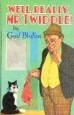
What I do have is a lot of books. Reading was encouraged in my childhood. I would happily sit on my Mum or Grandmother’s knee and be read to and enjoy, time and time again the wonders of Enid Blyton and Beatrice Potter. My favourites from Enid Blyton were the series of Noddy books, and those about Mr Twiddle.

 I still have some of these books, complete with price tickets on showing the price of 12p. I was also rather fond of Rupert the Bear and the lovely yellow hard back covers. Happy memories.

I have no idea what is was about books that made me so enthused with them. I loved Lego as a child, but no longer have my original set or have purchased any for a trip down memory lane. Yet, books and bookshops are a love, perhaps even an obsession. I love nothing more than glancing through old books, perhaps a bookshop or market stall.  New books too are wonderful, but they are brand new and have really no history to them. An old book has is pre-loved! and if only it could talk. What secrets would it share of a former owner?

There does though, come a time when ever a serious book lover has to consider a cull of books. Back in 2005 I culled around 100 of my collection – mainly fiction that had been read once and then destined to the shelves. In 2008 I had another, more serious cull – around half the collection. This time a mixture of fiction and non fiction. Non fiction acquired from my degree and training and further studies. I have to say though, I did feel bereaved. Do I still have the first book that I personally bought? I have no idea; I can not even remember what it would have been. I can probably guess though where I bought it. A fabulous, long since gone bookshop in Guildford called Thorp’s.

What is left resides on a series of book shelves – 3 in my study all full, one in a spare room completely full and holds specific books – a series of fiction books and my Italian and Thyroid collections. In the hall is a further bookcase filled with my collection of cookbooks, my set of Elm Creek fiction books by Jennifer Chiaverini and a shelf holding my collection of old books featuring the Bellasis, Bowring and a few others. In our lounge we have another bookcase filled with hubby’s collection of angling books and our antique books. That all seems fairly organised. There is also in my study a rather large pile of books awaiting reading. As we ponder about downsizing I am not looking forward to further contemplations of having another book cull.

Tagged | 1 Comment

Fearless Females – 31 Blogging Prompts to Celebrate Women’s History Month – Introduction

In March 2010, The Accidental Genealogist launched a series of blogging prompts to celebrate Women’s history Month. I didn’t take part then, but did in 2011 and plan to do so again. 


The prompts are provided by, and copyrighted to The Accidental Genealogist and are listed one for each day in March. They are listed here purely as an introductory post to assist me as I follow the challenge.

Blogging Prompts.

March 1 — Do you have a favorite female ancestor? One you are drawn to or want to learn more about? Write down some key facts you have already learned or what you would like to learn and outline your goals and potential sources you plan to check.

March 2 — Post a photo of one of your female ancestors. Who is in the photo? When was it taken? Why did you select this photo?

March 3 — Do you share a first name with one of your female ancestors? Perhaps you were named for your great-grandmother, or your name follows a particular naming pattern. If not, then list the most unique or unusual female first name you’ve come across in your family tree.

March 4 — Do you have marriage records for your grandparents or great-grandparents? Write a post about where they were married and when. Any family stories about the wedding day? Post a photo too if you have one.

March 5 — How did they meet? You’ve documented marriages, now, go back a bit. Do you know the story of how your parents met? Your grandparents?

March 6 — Describe an heirloom you may have inherited from a female ancestor (wedding ring or other jewelry, china, clothing, etc.) If you don’t have any, then write about a specific object you remember from your mother or grandmother, or aunt (a scarf, a hat, cooking utensil, furniture, etc.)

March 7 — Share a favorite recipe from your mother or grandmother’s kitchen. Why is this dish your favorite? If you don’t have one that’s been passed down, describe a favorite holiday or other meal you shared with your family.


March 9 — Take a family document (baptismal certificate, passenger list, naturalization petition, etc.) and write a brief narrative using the information.

March 10 — What role did religion play in your family? How did your female ancestors practice their faith? If they did not, why didn’t they? Did you have any female ancestors who served their churches in some capacity?

March 11 — Did you have any female ancestors who died young or from tragic or unexpected circumstances? Describe and how did this affect the family?

March 12 — Working girl: Did your mother or grandmother work outside the home? What did she do? Describe her occupation.

March 13 — Moment of Strength: share a story where a female ancestor showed courage or strength in a difficult situation.

March 14 — Newsmakers? Did you have a female ancestor who made the news? Why? Was she famous or notorious? Did she appear in the social column?


March 16 — If you could have lunch with any female family member (living or dead) or any famous female who would it be and why? Where would you go? What would you eat?

March 17 — Social Butterfly? What social organizations or groups did your mother or grandmother belong to? Sewing circle, church group, fraternal benefit society or lodge? Describe her role in the group.

March 18 — Shining star: Did you have a female ancestor who had a special talent? Artist, singer, actress, athlete, seamstress, or other? Describe.

March 19 — Have you discovered a surprising fact about one of your female ancestors? What was it and how did you learn it? How did you feel when you found out?

March 20 — Is there a female ancestor who is your brick wall? Why? List possible sources for finding more information.

March 21 — Describe a tender moment one of your female ancestors shared with you or another family member.

March 22 — If a famous director wanted to make a movie about one of your female ancestors who would it be? What actress would you cast in the role and why?

March 23 — Create a timeline for a female ancestor using your favorite software program or an online timeline generator such as OurTimelines.Post an image of it or link.

March 24 — Do you share any physical resemblance or personality trait with one of your female ancestors? Who? What is it?

March 25 — Tell how a female ancestor interacted with her children. Was she loving or supportive? A disciplinarian? A bit of both?

March 26 — What education did your mother receive? Your grandmothers? Great-grandmothers? Note any advanced degrees or special achievements.

March 27 — Do you know the immigration story of one or more female ancestors? Do you have any passenger lists, passports, or other documentation? Interesting family stories?

March 28 — Do you remember your mother’s best friend? Your grandmother’s? How and where did they meet? How long were they friends? What activities did they share?

March 29 — Create a free Fold3 Memorial Page or a Genealogy Trading Card at Big Huge Labs for a female ancestor. Some of you may have created your own card back in September 2009 following Sheri Fenley’s post over at The Educated Genealogist. This time, the card is for your female ancestor. Tell us about who you’ve selected and why and then post a link to what you’ve created.

March 30 — Did you receive any advice or words of wisdom from your mother or another female ancestor?

March 31 — Pick one female ancestor and write a mini-profile (500 words or less).

BONUS: Take all of your postings and turn them into a memory or tribute booklet for future generations.

Thanks to The Accidental Genealogist for the prompts
Tagged | Leave a comment

Carnival Of Genealogy 115 – Flash Family History

Write 300 words per family line . I am focusing on my 8 maternal  Grandparents.

Charles Butcher & Sarah Ockley
 – Charles Butcher was born in the parish of Wonersh Surrey in 1823. He was the son of John Butcher and Mary Baverstock. Charles married Sarah Ockley on Christmas Day 1858 in Wonersh, when he was aged 35. It has just occurred to me that this does seem rather old for a first marriage, so was there a previous one?Together, Charles and Sarah raised a family of  8 children. Sarah died in 1877 and Charles remarried to Frances Pain in London in 1881 and they had six children.

– Sarah Ockley was born in Wonersh in 1835, the daughter of Peter Ockley and Maria Bolton. Sarah died in December 1877, some three weeks after the birth of her youngest daughter.  How did Charles cope with such a young baby and family? He was probably assisted by his eldest daughter MaryAnne who was 17 years old when her mother died. Charles worked as a labourer within the parish, just as his father had done before him.

Henry Harris & Caroline Ellis
– Henry Harris was born in Headley Hampshire in 1844 to George Harris and Harriet EARLE. Henry was one of not only 10 children born to George and Harriet, but also one of set of triplets.  George and Harriet had previously had twin boys, George and John in 1837, John though, died aged 1 year. In 1844 when Henry was born, his mother also gave birth to Emma and Thomas. Henry and Emma both lived into adulthood, although Emma died in her late 30s and sadly, Thomas died aged just one year. Henry lived until 1929 when he passed away aged 86 years. Was multiple, multiple births common in the 19th Century?  Henry worked as a labourer and around 1864 married Caroline Ellis in Puttenham Surrey.

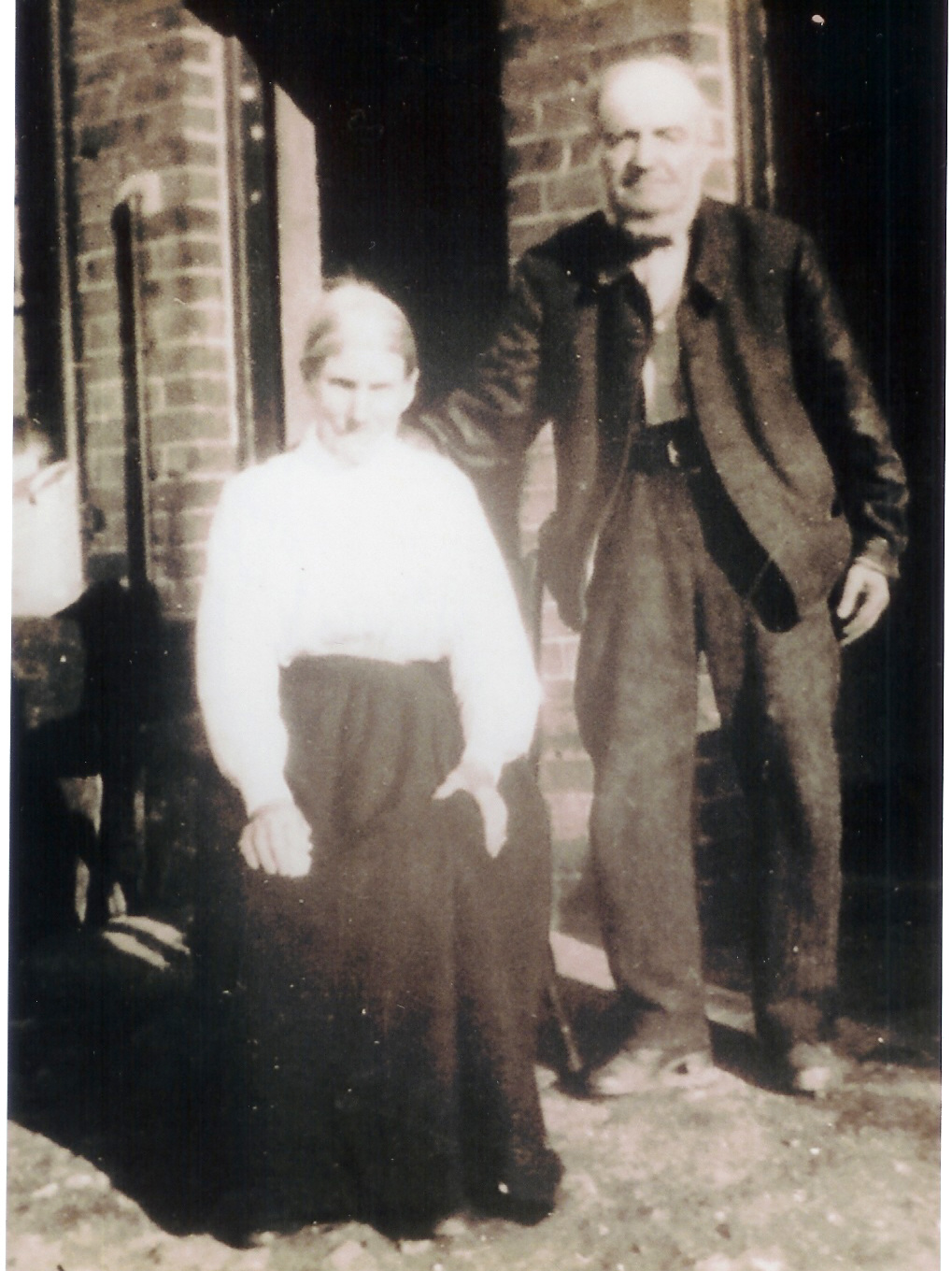
– Caroline Ellis was born in Puttenham Surrey in 1844 the daughter of George Ellis, a former military man and Prudence Budd. The Budd family had been established in the parish of Puttenham since 1723, and lack of surviving records has prevented a firm conclusion of the Budd’s originally living in nearby Shackleford. Together, Caroline and Henry raised a family of  ten children, all born in Puttenham.  Caroline and Henry spent 65 years together, with Henry passing away in 1929 and Caroline in 1935. We have a photograph, taken by their Grand daughter, my Great Aunt on the occasion of their 60th Wedding Anniversary.

John Matthews & Elizabeth Spencer
– John Matthews was born 1848 in the parish of Long Lawford Warwickshire. The son of William Matthews and Jane nee PETTIFER. John was one of 9 children born between 1846 and 1865. In 1871 John married spinster Elizabeth Spencer at Rugby Registry Office and they had three children, Mary Anne born 1872, John born 1875 and Edith born 1877. Not a huge amount is known of William’s life other than upon the death of Elizabeth in 1880, he remarried in 1882 to Maria Flick at Rugby. John is known to have owned a coke business in Rugby, a thriving Midlands town. He moved to the South East of England around 1891 with his second wife and his three children. John died, probably alone in a hostel of some kind in Reigate Surrey in 1927. Very little has to date been established about Maria Flick. According to their marriage certificate she is a widow, but that appears not be the case!

– Elizabeth Spencer was born in 1836, just before Civil Registration began in England in 1837, in the parish of Brinklow in Warwickshire. At the time of her marriage she adjusted the ages to reflect a shorter gap between her year of birth and that of her husband’s. In reality, she was 12 years older than he was. Elizabeth was the daughter of Joseph Spencer and Mary Lennett who married in Coventry in 1834. There is so much more to establish about this side of my family, so many, many questions….

James Elstone & Mary Denyer
– James Elstone was born in 1835 in Bramshott Hampshire, not a huge distance from where Henry Harris (above)  was born. James was 4th child of a family of 8, the children of William Elstone and Eliza BRIDGER. It is this stem of my Grandmother’s family that connects to my Grandfather’s through the marriage of the William to Eliza, which does complicate things. It was this discovery that identified that my Grandparents were actually 6th Cousins, although they had not known it in their lifetimes. James married Mary Denyer in 1857 in Bramshott and together they raised a family of 9 children. The Elstone’s had been a fairly well established family in the Bramshott area. William Elstone had been a paper maker, an occupation he developed through the inheritance of the paper mill at Bramshott which had come into the Elstone’s estate through his Grandmother Ann PIM. There are various branches of this line, that migrate to both Canada and Australia and are very involved with paper making. At some point James and Mary move from Bramshott across the border into Surrey and take up residence in the area known as Merrow. James died in 1901 and is buried in the Churchyard at the small church. He was joined by his wife, Mary in 1913.

– Mary Denyer was born in 1837 in apparently Liphook, the parish adjacent to Bramshott. After many years of searching every parish in this part of Hampshire and the neighbouring parishes in Surrey I finally found Mary’s birth in Lurgershall Sussex. Mary was the youngest daughter of a family of ten children born to Edward Denyer and EmalineLurgershall in 1815. Very little research has been done further into the Denyer and Luff lines, but the boundaries of this part of Sussex, Hampshire and Surrey and the constant appearance of the same surnames within various family lines and the movement amongst the parishes is problematic.

Conclusion
What I have established in writing this post is actually how little I know the details of my Great Great Grandparents. My Grandmother’s ancestry  MATTHEWS & SPENCER from Warwickshire was, in the early years inhibited by two things – distance and the amount of data passed down to my Grandmother. The ELSTONE and DENYER lines are similar. Very little details passed down to my Grandmother who met as a young child John Matthews and was only a baby when Mary Elstone passed away. In contrast to My Grandfather’s family, where there are links via photographs and my the memories of my late Aunt who took the photograph here. Whilst this is the end of this post, it is not the end of the research into these family lines.


Carnival of Genealogy is hosted by Jasia at CreativeGene
Tagged | 6 Comments

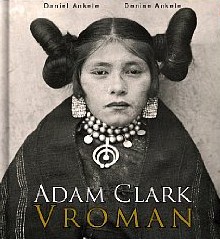
Adam Clark Vroman by Daniel & Denise Ankele

This is a delightful collection of 40 reproduction photographs depicting Indian life in the South Western United States.

The book starts off with a small biography of Adam Clark Vroman, which explains that Vroman started experimenting with photography in 1892. He sold his rare book collection in order to open a store in Pasadena that sold photography equipment, books and stationary. Vroman never sold the photographs he took, preferring to give them to travelling companions with similar interests. Interestingly, Vroman’s bookstore still operates in Pasadena.

Incidentally, a quick search via the Internet reveals a link to Vroman with more details of his life and photographs at the California Museum of Photography. Even in these financially troubled times, the book store still flourishes HERE.

The photographs shown are a small glimpse into the everyday life of Hopi and Zuni people. They are depicted  going about there every day business, some are in poses and there is even a photograph showing the involvement of the hair (see cover photograph). For me this was a delightful way of spending an hour or so, looking at the photographs and seeing what other data is available on line. Fascinating!

Tagged , | Leave a comment

365 Project – February 2012

Wed, February 1, 2012Thu, February 2, 2012Sat, February 4, 2012Fri, February 3, 2012Sun, February 5, 2012Mon, February 6, 2012
Tue, February 7, 2012Wed, February 8, 2012Thu, February 9, 2012Fri, February 10, 2012Sat, February 11, 2012Mon, February 13, 2012
Sun, February 12, 2012Tue, February 14, 2012Wed, February 15, 2012Thu, February 16, 2012Fri, February 17, 2012Sat, February 18, 2012
Sun, February 19, 2012Mon, February 20, 2012Tue, February 21, 2012Fri, February 24, 2012Wed, February 22, 2012Sat, February 25, 2012
View the complete month at 2012 – A Year in Photographs
Tagged | 1 Comment

Leap Years, and a reflective thought.

Leap Years are needed to keep our calenders in alignment with the Earth’s revolutions. If we did not have an extra day every four years we would loose 6 hours from our calendar every year, which means that after 100 years our calender would only be 24 days. Leap Years were invented by Julius Caesar over 2000 years ago and were reflected in the Julian Calendar. In 1752 Great Britain changed and adopted The Gregorian Calender

I am sometimes in amazement of the things that just are. As a genealogist I am aware of the Calendar changes and often ponder on the wider implications things such as this, impacted onto the life’s of my ancestors.

We live in a modern, technological advancing world. A teacher friend, once told me that in order to teach her subject, which happens to be French, she had to first teach several of the students how to tell the time. I was amazed. When I asked why, she replied that the children had learnt to tell the time using digital displays rather than a traditional clock. That issue had never occurred to me.

We present to the future, a generation of children who regularly use computers, Playstations, iPhone and iPods,and much more. Basics things can become forgotten, and technological advancements are seen as the norm and perhaps taken for granted.

The eldest family member I can remember is my Great Grandmother who was born in 1898. She died in 1973 and left a world that had experienced Wars during her lifetime, The Great War, The Second World War, The Boer War, Korea and Vietnam. She had known poverty, fear, worry and grief. During her lifetime she had buried her husband, three infant children and three of her nine adult children. Times were hard and to us, in this modern age perhaps incomprehensible. What would she has made of the world now?

The issues she felt in the United Kingdom are still in existence now in parts of the world. Parts of Africa and the Middle East torn apart by War, famine, and disaster. In many ways, the fact that these things still plague families is tragic.

I was therefore delighted last year to become part of a group called Genealogists for Families. The group is two fold. It brings together like-minded genealogists, across the globe who share a common interest and passion for their families.

Genealogists for Families supports a team which is part of the Kiva Organisation. Whereby, those who choose to, can loan $25 to a specific individual of your choice. The $25 is a loan not a hand out. It is repaid in monthly instalments and allows those registered at the Kiva site to access to funds when there is not the facility to access traditional banks. Our contributions are not going to stop Wars, famines and alike, but it does enable us to be part of someones future.

I made my first loan before Christmas in memory of my Grandmother and have three more loans that I plan to arrange in the memory of two deceased special family members and to commemorate a special birthday of my Mum’s. I plan to continue this process through the course of the year. If you want to take part click HERE

The Genealogists for Families motto is “We care about Families (past, present and future”

Submitted at http://feb29th.net/ – A blogging project across the globe.
(http://feb29th.net/2012/03/02/a-reflective-thought/)

Tagged , | Leave a comment

A Global Blog Project – 29th February 2012

Yesterday I became aware of a great way to acknowledge 29th February 2012 – a leap year!
This is a global blogging project, available for one day only! and is set to be the biggest blogging challenge of the year. The moment the 29th February dawns somewhere in the world, Tonga is up first!, the website will be active for submissions. For more information click HERE
Click to take part and post your submissions  Feb29th.net
Tagged | Leave a comment

Tea Cup Tuesday – A Different Shaving Mug

This weekend marks, what would have been my Grandfather’s 112th birthday. In my kitchen breakfast room there hangs, on some beams a series of mugs & cups. Nothing especially spectacular about any of them, but they each have a story to tell.

This is a cup I remember from my childhood. Originally it was one of those that came with a saucer and had an Easter egg in it; both long since gone. All that remains is this cup and and a series of happy memories. My Grandfather used this mug as his shaving mug when he was too unwell to get to the bathroom and shave at the sink.

Whilst the mug is not of value in the monetary sense, to me it is priceless.

Taking part in Tea Cup Tuesday hosted by Artful Affirmations & Martha’s Favourites

Tagged | 2 Comments