European Ancestors – Migration into, and out of Prussia (4)

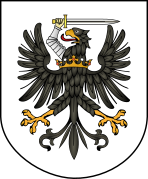
Coat of arms of Royal Prussia. From 1772 coat of arms of West Prussia – Source Wikipedia

Today we are going to take a step back and explain how there were so many Germans in the area in the lead up to 1944.

The Nazi’s had made partial plans in terms of the occupation of the region, and by the time of the Nazi defeat in 1945, those partial plans had only been partially undertaken.

The plan was to remove all Jews and Slavic people from east Europe and settle with Germans. The death toll as a result of these population shifts is tricky to calculate, and is likely to be somewhere between 500,000 to 2.5 million.

There were three phases of these removals, all of which overlaps:

  1. The organised evacuation of ethnic Germans by the Nazi’s from mid 1944 until early 1945 as the Red Army was advancing west.
  2. The disorganised fleeing of ethnic Germans following the defeat of the Wehrmacht
  3. The organised expulsion following the Potsdam Agreement, among the British Government, the United States and Russia.

The number of Germans that had left the area by 1950 varies –

  • Russia indicated that 12 million Germans had fled or were expelled, whilst
  • West Germany estimated that the figure was about 14.6 million which included
    • about a million ethnic Germans who had settled in territories claimed by Nazi Germany during the war.
    • Also included in that number was children born to expelled parents, with the largest number from eastern territories of Germany that were ceded to the Peoples Republic of Poland and the Soviet Union which totalled about 7 million
    • A further three million from Czechoslovakia
    • Included were those from the Free City of Danzig whose German inhabitants had been forcibly deported
    • Those from the Second Polish Republic which existed between 7 October 1918 – 6 October 1939
    • Those from Hungary, Romania, Yugoslavia, and the Baltic States of Estonia, Latvia and Lithuania.
Posted in Prussia | Leave a comment

European Ancestors – Migration into, and out of Prussia (3)

Coat of arms of Royal Prussia. From 1772 coat of arms of West Prussia – Source Wikipedia

The Klaipeda region was a mandated territory of the League of Nations in 1920 as laid out in the Treaty of Versailles and was  unified with Lithuania during the period of 1923-1939.

Between 1944 and 1948 there was a steady move to expel all Germans from central and eastern Europe into Germany and Austria, both of which was under the control of the allied forces at this time.

The term German defined as:

  • Ethnic Germans (Volksdeutsche)
  • German Citizens (Reichsdeutsche)

Since 1945 a small area of Lithuania Minor has been retained in the border of Lithuania and Poland, with the majority of the territory being part of the Kaliningrad Oblast of Russia, which became part of the Soviet Union until December 1991.


Posted in Prussia | Leave a comment

European Ancestors – Migration into, and out of Prussia (2)

Coat of arms of Royal Prussia. From 1772 coat of arms of West Prussia – Source Wikipedia

Where is Lithuania Minor?

It is a historical ethnographical region of Prussia. The name acquired due to the majority of the population in the region speaking Lithuanian.

Until 1945 the land was part of Prussia which was held, at various times under Sovereignty of:

  • Kingdom of Poland
  • Polish-Lithuanian Commonwealth
  • Germany

Today, the area is located in Lithuania and the Kaliningrad Oblast of Russia.

Posted in Prussia | Leave a comment

European Ancestors – Migration into, and out of Prussia (1)

Coat of arms of Royal Prussia. From 1772 coat of arms of West Prussia – Source Wikipedia

After the last significant plague epidemic that took place in East Prussia in 1709-10, and following religious disturbances in south west Germany, Austria, and France, King Fredrick I devised a way to attract Lutheran settlers to the region. Many accepted his offer, but where did they settle?

  1. The majority of the French, with a Huguenot background settled in the Gumbinnen-Judtschen area.
  2. The German speaking protestant refugees expelled from Salzburg in a series of waves, ending in 1731 settled in Lithuanian Minor, in the Kingdom of Prussia.
  3. The remaining Salzburg Protestants scattered to other protestant states across Europe and the British colonies in America – (Georgia Colony, which became known as Ebenezer). 

In 1732 the Archbishop of Salzburg expelled 16,000 protestants who had been practicing their religious practices in secret. A group of 25 miners and peasants from the Gastein Valley emigrated to the British colony of Georgia in the American colonies, arriving at Savannah in 1734. This group of migrants started the first community and consequently were given the broad term of “Austrians”. 

Two more groups, totalling about 150 people arrived in the area, settling in Georgia, whilst a larger group, of about 16,000 settled in East Prussia.

Posted in Prussia | Leave a comment

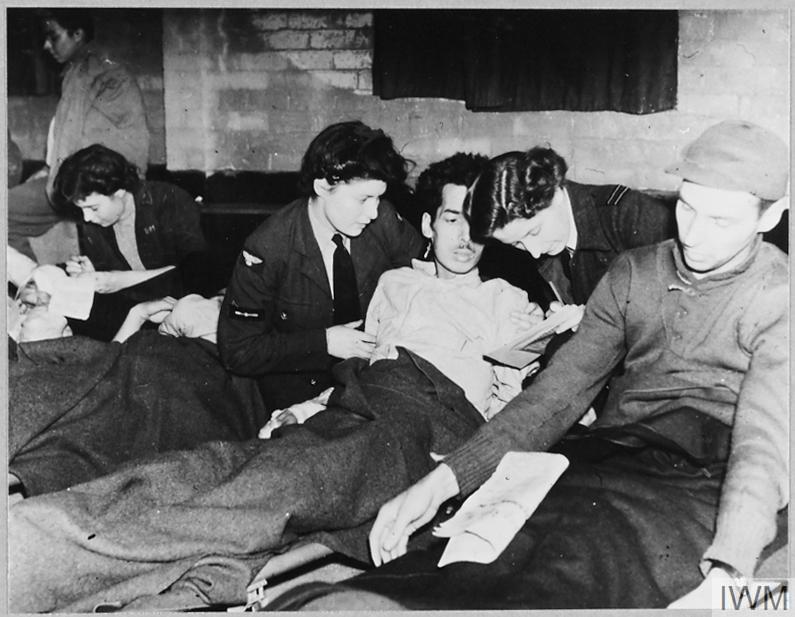
Jack Orlando in WAAF Volunteer Medical Service Photo – Imperial War Museum

W.A.A.F. VOLUNTEER MEDICAL SERVICE (CH 14195) Original wartime caption: For story see CH.14194 Picture (issued 1944) shows – 20 year old Joyce Beresford, a clerk of 24 Spenser Road, herne Hill, London and Flight Officer Eva Robson of The Vicarage, Spittal, Berwick- on-Tweed, helping Sergeant Jack Orlando to compose a telegram to his home in the United States. Copyright: © IWM. Original Source: http://www.iwm.org.uk/collections/item/object/205453504

I came across this photograph on the Imperial War Museum website having done a search for the key word of Orlando for my One-Name Study. To be honest, I did not expect any results, and therefore I was happily surprised to see this.

From a genealogical perspective there is little data to here, but a photograph is an excellent addition to the study. I hopefully will, with some patience and perseverance, establish who Sergeant Jack Orlando was, whereabout his family was located in the United States, and what happened to him after 1944.

The image is used here under non-commercial-licence https://www.iwm.org.uk/corporate/policies/non-commercial-licence and the direct link to the photograph is https://www.iwm.org.uk/collections/item/object/205453504.

Posted in Orlando One-Name Study | Leave a comment

Liddiard Family Gathering

I promised Karen who runs the Liddiard One-Name Study that I would share news of the 2024 Liddiard gathering. I wrote a similar post on the Guild of One-Name Studies website a couple of days ago

Liddiard Family Gathering 20-22 September 2024

The Liddiard study has several webinars available on the Guild website – these are still available to the public:

Courtesy of Karen Rogers

First is this presentation which shines the spotlight on the study, with its whopping 27 surname variants!

Here is the original post that I wrote, which contains some links relating to earlier gatherings.

Courtesy of Karen Rogers

The second presentation focuses on a specific collection of material, the Strat Liddiard Papers, which focuses on the family from about 1880 until 1960 and comprises of material from three generations.

There will be two gatherings for 2024, the first in Wiltshire (you can download the flyer HERE) on 20-22 September 2024. The second gathering will be in Salt Lake City, Utah on 27-28 September 2024.

As luck would have it, Karen will be presenting a webinar to the Guild of One-Name Studies in July about organising the gatherings, and registration will be opening shortly (pop back to this page as I will be adding the link here).

Posted in Genealogy | Leave a comment

Researching European Ancestors?

Next week my Tracing Ancestors from Continental Europe course begins – 7 May 2024.

The course runs over five weeks. Like all Pharos courses there is a weekly session where we can come together, to share research questions, frustrations, hints and tips. Each week there is a lesson and an accompanying set forum discussion.

Tracing Ancestors from Continental European – Copyright Julie Goucher, 2021

There is also a comprehensive research pack. This comprises of links, both genealogical, and historical etc for each European country and a few other near locations.

This course does not have all the answers for researching in Europe, but what it does do is provide context for your research. That is important, because without that context researchers would be unaware of the various elements that might contribute to NOT finding who is being sought, or perhaps researchers looking in an incorrect country. There are lots of frustrations to researching in Europe much of which is driven by the impact of military activity. Even if a researcher is looking, lets say for a family in Prussia two hundred years ago, how could that be impacted?

Well, countries can be impacted by war, name changes, and border changes. More that that, in the case of Prussia, territory has been split and as such research material could be in one or more of several countries. Anyone who has ever heard me lecture on European Ancestors will have heard me say that researching in Europe requires a solid foundation.

I do have some European Ancestors material online HERE which you are welcome to look at. There is also some downloads available which you can find HERE, and these are provided for personal use only, and represent a mere fraction of material available. If you wish to use them for other purposes please email me. 

The course starts on 7 May 2024 and there are some spaces left. This runs annually, and the next time it runs will be 2025. You can find more information and book your space by clicking HERE.

Posted in European Ancestors | Leave a comment

Zeal about Surnames #AZChallenge

Created by Julie Goucher, 2023

I am hopeful that the various posts over the course of the A-Z Challenge, which has been about surnames, surname research and registering a One-Name Study has been enjoyable and given you plenty of scope for ideas and thoughts.

You can see all the posts I have written about surname research HERE and there is a small list of other writings about One-Name Studies and surnames that featured under Writing about your One-Name Study

So what to do next if you are enthused about One-Name Studies and surnames:

  • Visit the One-Name Studies website and perhaps
  • Join the Guild of One-Name Studies and see what the organisation offers
  • Sign up for the Pharos Course – Introduction to One-Name Studies the course runs over five weeks and you will broadly learn:
    • About One-Name Studies
      • History of One-Name Studies
      • Why have a One-Name Study
      • How suitable is my surname
      • Introduction to the Guild of One-Name Study
      • Getting started
    • Surnames and their history
      • How did surnames start?
      • An introduction to common meanings & deviations of British Surnames
        • Non-British surnames
      • Changes, spellings, deviations, Other pitfalls for the unwary
        • Deviants and Variants
      • Surname Distribution & Migration
      • Importance of individual surname studies
    • Core records you will need and information gathering
      • What are core records?
      • Civil Registration records and indexes in the British & Ireland
      • Indexes to the Census
      • Family Search, will indexes and other readily available indexes
      • Data Capture
      • Measuring your progress
      • Organising your One-Name Study 
    • Analysing and making sense of your data
      • Introduction to analysis
      • Designing spreadsheets
      • Family reconstruction
        • Software for a One-Name Study
      • Migration & linking people to places
      • Finding missing data
      • Drawing conclusions
    • Practical aspects of running your own One-Name Study
      • Registering a study with the Guild
      • Ethics
      • Data Protection
      • Publishing your study
        • Facebook Groups & pages
      • Preserving your study
      • Organising your time
  • Purchase a copy of Seven Pillars of Wisdom: The art of a One-Name Study.
    • Available from the Guild

I teach all three of the Pharos surname and One-Name Studies courses and have two studies, one is a Surname whose origins are typically British and the other is for an Italian surname.

The chances are you have been undertaking a study and not necessarily realising that it is a One-Name Study, you can read more HERE. Whether you are new to the concept or have been undertaking a surname research project for a while why not consider your aims for your study.

The next Pharos Introduction course begins 9 July 2024 and you can sign up HERE

I hope you have enjoyed the A-Z series as much as I have enjoyed writing them. Over the course of the last month I have promised I would come back to several topics and plan to do that over the coming weeks.

Posted in A-Z Challenge 2024 - | 4 Comments

Your One-Name & Surname Study #AZChallenge

Created by Julie Goucher, 2023

Once a genealogist has registered the surname with the Guild they agree to do essentially several things:

  • Aim to make the study global
  • Respond to all enquiries.

In fact the five broad principles can be seen here.

There is guidance for a study, the Guild has mentors and volunteers that will help guide you, answer questions and so forth. There is the book, Seven Pillars of Wisdom which was published by the Guild in 2012. There is a suite of courses available, all providing a mechanism to learn and develop.

    • Introduction to One-Name Studies coursea foundation for undertaking a study – learning about the numbers that reflect the people in your study, the history of surnames, and then drawing conclusions as to the history of your surname of interest.
    • Practicalities of a One-Name Studies course – focuses on tools that you can use in your study. I am often asked whether this should be taken first, or the Introduction course, and it is probably as broad, as it is long. If I was coming to this as a fairly new genealogists, or surname researcher, I would likely take both courses; they focus on different things and provide a rounded focus on researching a surname and developing a study.
    • Advanced One-Name Studies course – builds on the material learnt in the introduction course and is probably best taken when you have some time under your belt with a study. This provides the opportunity to create an article and for those who elect to, to have the article read and published in the Journal of One-Name Studies. 

Each time a course runs, students are invited to leave feedback. Feedback is important and provides a mechanism for me to develop the course, or perhaps create an additional paper. A recent addition, as a support document is guidance for developing, and building a study profile – you can download a copy HERE.

The details of your study are left up to you to decide – the core data, the storage of the data, when you go global etc. There is no prescriptive way and where you start may well depend on the origins of the surname.

I have stated several times that I research in three places at one

      • Where I am (England)
      • Where my family originated (the surname is clearly Italian, and my own family are from Sicily)
      • Where they went (Italian migrated globally, but the key places are Argentina, United States and Australia. My own family line went to New York, Alabama and Louisiana, so those three states are my US focus).

Some members like to work on their studies in a more random approach and in some respects I like that too. If you decide to do this, I really recommend that you keep a research log, recording where what you have researched and your findings. If you do stop part way through a larger body of research you will be better placed, and able to pick up where you left off.

The One-Name Study that YOU register is YOURS, you decide how it is kept and maintained and consider the aims of your study. You work at your pace and enjoy the experience and research.

Posted in A-Z Challenge 2024 - | Leave a comment

X Marks the Spot! #AZChallenge

Created by Julie Goucher, 2023

The phrase X Marks the Spot is typical to denote where someone should sign their name or perhaps it denotes a pin mark on a map identifying where a particular location is.

So today I am going to chat about bringing to life the people who are in our own ancestral lines or people with whom we share no connection, but they bare the surname we are researching.

On occasions, when I am researching a family who appear in my One-Name Study I often have to remind myself that these were not my people, but fit into someone’s ancestry. So where do we stop researching?

Some One-Namer’s record the marriage between two people, one of whom appears in their study. Depending if the individual who bears the surname will depend on how far the line is followed. If the line is male it is easier to define, but a female poses a question and consideration.

The Guild offers no suggestion to this quandary and I personally follow the female line through to children and then what happens to those children. Sometimes there is a cross over between two studies, both registered with the Guild and in those instances I reach out to the other member and offer to do a reciprocal swap of information. That is one of the nicest things about the Guild – the friendly responses, connections and collaborations. To quote a former Chairman “members helping members” Families do often marry into each other, and sometimes more than once.

Whether these folk are our own ancestors or part of our study it is quite fascinating to follow someone’s life through their trials and tribulations and for us to attempt to understand all the details. If we are very lucky we connect with an ancestor of the person who perhaps shed further light on them or provide snippets of information.

Posted in A-Z Challenge 2024 - | 1 Comment