I was educated in Surrey, where at the time the school system was three tiered – a primary school, middle school and then senior school. On day one of senior school I, along with my class mates was presented with a small book, measuring 8 cm x 15 cm on the front of it was “homework journal” Inside there was space for each day, Monday to Friday and a small section for notes. As I progressed through probably the first few years I found that the homework journal didn’t have enough space and by the time I was working towards O-Levels it certainly didn’t and I migrated into a notebook. At the time it seemed bizarre, none of my friends that went to other senior schools had those books of course, looking back it was a really useful thing to give a teenager so that they got use to the concept of planning and remembering when things were due
All the way through senior school, University, additional courses, working and decades of genealogical research I have kept both a planner and a notebook. I have always kept one planner; a page a day and use that to track appointments, my to do list, notes when I have called somewhere and what was said. In a working environment I used the same planner. I knew of colleagues who kept a work planner and private planner but I found because of the roles that I had that the day job would merge into the evenings and two planners would have been a nightmare.
Planners
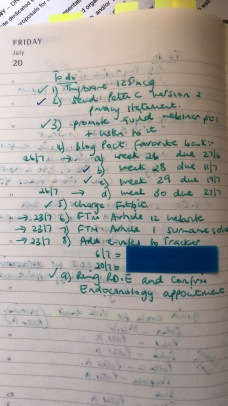 This is a page from my planner from last Friday. I had no appointments or timed specific matters, so the page has my to do list. If I had a timed appointment after I started the to do list I would have either written in a different colour or highlighted it so it was not missed. In some ways I use a bullet system, I number my tasks, a tick means I achieved the task and the > means I migrated the task to a different day, sometimes that is the next day and on other occasions it is a few days later.
This particular planner is the large hardback Moleskine page a day and has in my view a few unnecessary pages at the front of the book and has a bookmark built in. The best bit is the integral pocket at the back, where I can keep any bits of paper that I need to retain, usually post it note size, the other thing I especially like is that Saturday and Sunday have a page each, whereas most other page a day planners have the weekend days share a page. These planners are not cheap, and the 2019 is currently retailing at £22! I know, that is wow! and I have never paid that, I wait until a bit later in the year when the price drops!
 On occasions I have lots of both appointments and items to do, in that case I write the additional few on a post it note and stick it in. I retain that post it note too and often use washi tape to fix it in.
Notebooks are an essential part of my schedule and working life. I note everything. I am and always have been a prolific note taker. My preferred notebook is from Leuchtturm1917. These notebooks are not cheap and they come in a range of colours and in a lined, plain and dot grid which is what most of the “true bullet” journal folk use. These books come with two page markers, the pocket at the back, which is the same as the Moleskine range of planners and notebooks. They also come with the pages numbered already and two pages marked ready to index the pages. Some of the large grocery stores do their own brand of these books, with the pocket at the back and they are cheaper, if I purchase one of those then I leave a few pages at the front for the index and number each page myself. I also date every page.
I tend to use lined and my notebooks incorporate a number of things. Scoping out presentations, proposals and articles, research notes, writing notes from a website & reading etc, all with citations. I have a page for books I want to read and websites that I come across when I am reading. I draw out trees when I research as that helps me think and I often do a page for ancestors or people in my study where I want to track them. Here are a few examples:

So this page is where I was working on a branch of my Italian family – the page on the left is where I was following Concetta Bellantoni whose mother’s maiden name was Licata, sister of my paternal Grandmother. Concetta migrated to the United States along with her Mother, Sister and Aunt; her father had already travelled to the US and settled. Her Aunt, also called Concetta was according to the passenger list going to meet her brother who had already migrated. On the right is the print out from Gens.info where I was looking at the distribution for the surname of Virciglio which is the surname of my paternal Great Grandmother.

This is the page where I was working on the Licata family and you can see Concetta who migrated to the United States and was Aunt to Concetta Bellantoni. My Grandmother is the youngest in this family, Maria, who was the only one of her family to remain in Sutera, Sicily. You can see on this page the washi tape, that appears on every page with a tree.
The reason I draw this out like this is two fold – it helps me think! and it helps me identify who sits where, especially with Italian families where names often repeat. Italian certificates provide the full names of the parents; women retain their birth surname even after marriage.
I do transcribe and add this into my genealogical programme, which is Roots Magic – I always work this way for my own family. For individuals in my study it varies. When I work on a particular individual, family or group of people, then I do work in a similar fashion as I reconstruct their family. Sometimes, this is a partial note a list of the Census years and a tick for when I have located them on a Census & downloaded a copy, I note the place they are living and the occupation. As I work through the data for any individual or family I record where I found what and what I didn’t find, children on one Census but missing from the next is an example.
I also scope out blog posts in this notebook – especially if I am planning a series and when I will scheduled them; as they are scheduled they receive a tick. I have just planned out a series for this blog for October and I did one during April this year. I have the material for my DNA results and I am currently scoping our a DNA series for this blog. I am no expert on DNA, but things I have observed on my own results, about my DNA surname projects etc. On occasions someone will ask a question on this site and I answer the question, but perhaps it eventually generates into a post of it’s own. I have a list from the April 2018 series, which I won’t show you, otherwise it will spoil the surprise!
I am busy planning a trip to Sicily for next year and purchased a specific notebook, in lime green, but opted for the plain version because I know I am likely to stick bits in. That will contain all the notes in the planning stage of the trip and material once we get there – some of the usual holiday things – what we do and when as well as research material, by that I mean notes taken whilst researching on the trip and the Italian bit of my to do list. The rest of the material will all be on my website – even if the One-Name Study of the material is not completely up to date, my personal line will be so that I can use the website instead of carrying paper around. Material on the website that relates to living people is hidden, but I will be able to see it, as long as I am logged in.
I use both Evernote and One Note and I use them for different things. I might have an idea and want to record that, so a one line pondering which I might scope out later and sometimes, much later. I much prefer pen and paper, even though I love the technical abilities we now have. The Evernote web clipper is fabulous and a real help to archive material. I used One Note to scope out a project which I have just about completed, all 50,000 words of it. I chose One Note in 2014 when I started the project and whilst I have some of the notes I took as I researched that project in previous notebooks, the basic idea and the scope is in One Note. I will at some point archive the material electronically, because I never discard anything, even if I never used the material in that particular project – once I research I retain the information as sometimes it contains a gem which I use for something else.
Sorry this has been such a long post and I hope those Guild of One-Name Studies members who were interested found it helpful and if you have a comment or there are any questions, ask away…….

 It has been a long time since I read Atonement by Ian McEwan, I pulled my copy off the shelf and the within a few pages of the first chapter could spot my books for this #6Degrees. Curiously, whilst I enjoyed it, I was not wowed by the book and I have commented recently that in my experience I have been often disappointed by the winners of literary prizes, so I was surprised that the book had survived several book culls (it might not next time!).
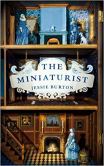 When The Miniaturist by Jessie Burton was first published I really wanted to be able to get into the book. I had spotted it in the window of Waterstones, but there was something that just didn’t click for me. Then at Christmas the BBC released their three part series based on the book and I really enjoyed it. I decided to try again with the book and was not disappointed this time.
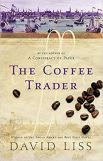 The Coffee Trader by David Liss is one of my favourite books and I probably read it every few years. I then went onto read other books written by Liss, including one called The Day of Atonement.
 Midnight Blue is about the birth of Delft pottery and set in what is described as the “Dutch golden age” when Dutch trading ships were bring back discoveries and wares from the Far East. It is a lovely book and the cover is just “perfect”.
 As the same time as the Dutch Empire was shaping and dominating parts of the world so too was the British Empire and here enters my next book, which has been brilliantly researched and is filled with examples of how the foods from parts of the Empire were used. There is an extensive bibliography and notes section.
 My next book links in to the Empire and a significant commodity that was adapted and exported, drunk the world over and that is Tea. This is the first of a series, The Tea Planter’s Daughter. You can view the series HERE
 And the last book in the #6Degrees is The Best Exotic Marigold Hotel by Deborah Moggach. The BBC have recently in the last few years launched a series, The Real Marigold Hotel where they take a group of celebrities who are in their retirement years (65+) and take them to India to see if they would consider a retirement in India. The third series is currently being broadcast in the UK and you can see some details HERE on the BBC website.
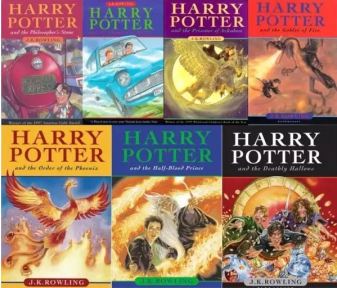 I was a late starter with the Harry Potter series.
 I inherited a pile of buttons from my Grandmother and late Mum. I also had a pile of buttons that came as extra’s with clothes bought over the years. They had gathered in my sewing box and filled all the sections in a completely unorganised manner. I realised that I now had three generations of buttons and that I should put them all together in an attempt to be reasonably organised and of course, they may actually come in handy.
 The vase, filled with buttons from three generations of my maternal family sits on my bookcase and every now and again I sort through them and see if I can recall what item of clothes they came from. In many cases the item of clothes is no more, but the buttons remain as a tribute to the past.

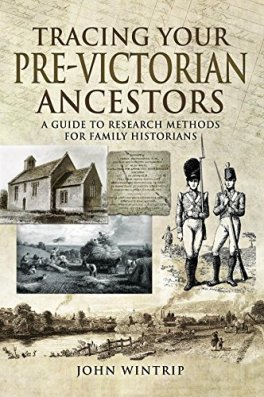 This is a fabulous book for those who are embarking on researching their genealogical pursuits in England and Wales, whether you are new to this area of research or an established researcher. This book takes you back earlier than Civil Registration in England and Wales which began in September 1837 and for which the indexes can be found at the large genealogical data companies and FreeBMD.

 Julie Goucher ~ Anglers Rest