Pharos One-Name Studies & Surname Courses

© Julie Goucher – September 2020

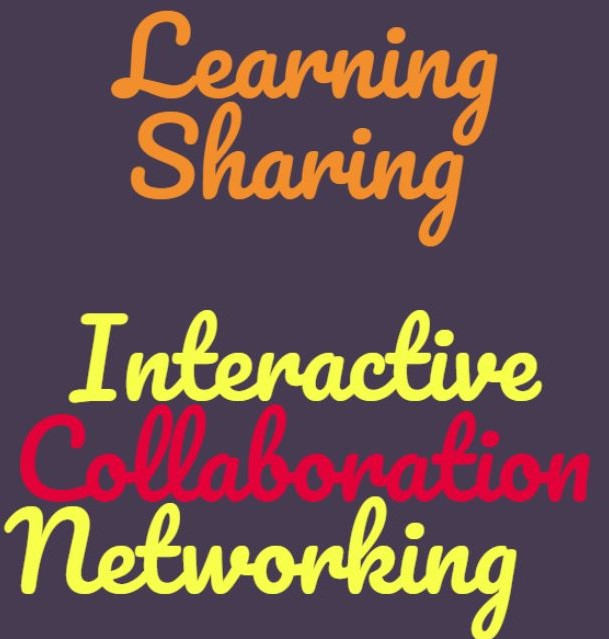
I hope you all like the new image, it is not a Picasso, but was enjoyable to create. The hardest bit, making sure that I have the little squares nice and tidy. Given that I am clumsy, you can guarantee that I knock the cutting mat, sending little alphabet tiles everywhere! The image reflects the three one-name (Surname) courses that I teach and together, they offer a layered learning approach.

The Introduction course (901) looks at the  first steps of a study, thinking about the types of surnames, the numbers of a study and the history of surnames are just a few of the elements covered. The Practicalities of a One-Name Studies course (903) looks at the practical element of a study, spreadsheets, various software and online trees, plus much more. The last course currently is the Advanced course (902) which looks at, to name a few, surname case studies, plus writing, sharing and getting published.

The courses are either 5 or 6 weeks, all have a weekly chats, with the Practicalities course having a practice week and the Advanced course a reading & research week. The Introduction and the Practicalities course both run twice a year and the Advanced course currently runs once a year. Even though the courses have all run previously, there is always upbeat learning, sharing of material and a camaraderie that Guild of One-Name Studies members will recognise.

For those of you who I might have tempted and are wondering where to start, I recommend you have a look through the numerous surname posts I have written, all of which can be found HERE and download the Surname Worksheet and then read the individual course information, which you can access by clicking the links above. If you have any questions, please do leave a comment.

Posted in Advanced One-Name Studies (Pharos Course 902), Genealogy, Introduction to One-Name Studies (Pharos course 901), One-Name Studies, Practicalities of a One-Name Studies (Pharos Course 903) | Leave a comment

Genealogical Libraries – #LibrariesWeek

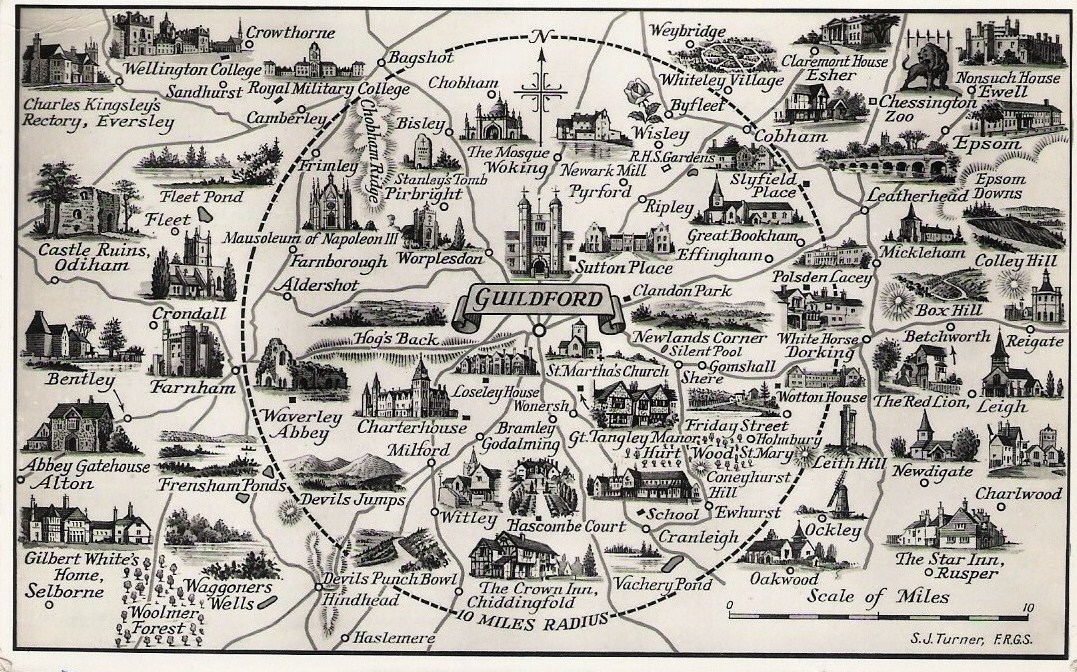
I talked about Guildford library yesterday and we stay with that location for today’s post.

Guildford library housed, when I began my genealogical and local history research, a rather fantastic set of local history material located on the top floor of the library. Despite it’s location it was in fact part of the Surrey Records Office, which also housed material at the Muniment Room, Guildford and at Kingston upon Thames.

I remember tentatively reaching the top floor and  found there was an open section of local history books etc and a enclosed area which housed the archive element of the collection. I explained to the librarian, who was called Mavis, what I wanted and suddenly a new world of material was available to me. Mavis was an inspirational individual, had she been less helpful or less welcoming I might not have ever gone back, but she was fantastic and it was her actions that set me on the pathway of genealogy, family and local history. Every genealogist should have a Mavis in their memory bank!

It was Mavis who shared my joy when I located my Great Grandmother, aged 3 on the 1881 Census. What was so magical, was that I remember my Great Grandmother, who allowed me to snuggle with her, aged 3, when I visited with my Mum and Grandparents. By then, Granny as she was known was an elderly lady in her 90’s and living with her eldest daughter (my Grandfather’s sister) and her husband. I have many happy memories of those visits both as a snuggling 3 years old and as an note book holding adult, recording numerous genealogical notes.

As I reflected when I wrote this post, we have come a long way since then. At the time, the latest Census available was 1881. I remember the subsequent release of each of the 1891, 1901 and 1911 Census, and of course, the 1921 Census release is just around the corner. These days, we can search our census records from the comfort of our homes, dressed in our PJ’s if we like. In the days of my experience of locating Granny in the 1881 Census, we had to visit the archives to search those Census materials. We extracted the film from the box and loaded it to the reader, threading the film. We moved through the film until we found who we wanted to locate, some of us letting out a small exclamation of “got you!” Those of us who were regulars at the Guildford local studies library recognised each other and often enjoyed conversations and shared the joy of those “got you!” moments.

I spent many hours at that local studies library, researching my Surrey family and those from the parishes of North Hampshire. I was very lucky to have such easy access to such a repository. Years later the library moved across to the newly build Surrey History Centre and whilst it was great to have everything in the new one stop shop for Surrey heritage, those days with Mavis and the other staff were great, the knowledge of the material and locations was second to none. They were enjoyable years, but whether it is the years of the late 1980’s or yesterday, we are lucky to have the expertise of librarians and archivists. The contribution they make is huge and they are often under valued.

#LibrariesWeek

Libraries Week takes place in the UK from 5 – 10  October. You can read more HERE. You can become a lifelong library supporter – more details HERE

Posted in Books, Genealogy, Libraries | Leave a comment

Library Memories – #LibrariesWeek

When I close my eyes I can still remember Guildford library(1); as it was when I was a child. The library didn’t just have books, but a fascinating card system which housed the card from the book that subsequently was inserted into a small card folder. When you returned books, you were given round Cardboard discs that you could exchange for books. The books had a stamp inserted in the front, so you knew when to return them. The whole experience was wonderful to my childhood self. Occasionally, the librarian allowed me to stamp out the books, something that just added to the wonderful experience.

Mum would take me to the library frequently, there I could immerse myself in another world. It wasn’t just the library that fed my book habit. Each week I was allowed to choose a new book, from Woolworths or WH Smiths, I still have some of those books, complete in some series with the price ticket of 12p, a lot for the early 1970’s. Before I could read, both my maternal Grandmother and Mum would read to me. We explored the fictional lives of the characters within the pages of Enid Blyton books amongst others, some books read repeatedly. I would fall asleep to dream of the wonders of Rupert the Bear (2), Peter Rabbit (3) or Noddy(4)

When we moved in together, my now husband was horrified at the boxes of books. His face was picture of horror as the boxes filled our home. Over the years since, I have had several book culls, to charity shops and friends. Even now I have way to many books and I am in the middle of the latest cull, much to my husband’s relief. Of course the cull is simply to make room for the several stacks of books that are on my office floor.

Then along came a Kindle, from Amazon. Whilst the whole experience of having a book in your hand is wonderful; the feel and smell of books triggers happy memories, alas they take up space, whereas a Kindle has an invisible electronic room, ready to be filled with books. I only download to my iPad the books I am currently reading, and a few reference type books. I won’t share how many Kindle books there are, but let’s just say I have a substantial “few”.

I have never grown tired of books. If I am not buying books, I am reading books, or adding them to my to be read list. My iPhone’s camera role is filled with images of book covers, saved so I do not forget to check out a book.

You can never have too many books, just too few book cases!

  • (1) Guildford is located in Surrey, England
  • (2) Rupert the Bear by Mary Tourtel (formerly Caldwell)
  • (3) Peter Rabbit by Beatrix Potter
  • (4) Noddy by Enid Blyton
  • (5) Kindle by Amazon

#LibrariesWeek

Libraries Week takes place in the UK from 5 – 10  October. You can read more HERE. You can become a lifelong library supporter – more details HERE

Posted in Books, Libraries | Leave a comment

Guild of One-Name Studies Widening Horizons Seminar

Courtesy of the Guild of One-Name Studies – September 2020

The Guild of One-Name Studies is renowned for their quarterly seminars. COVID-19 has prevented seminars from taking place in the usual format.

This latest seminar is a collaboration with The Local Population Studies Society and launches on Wednesday 7th October at 8pm London (UK) time.

You can read about the webinar line up and register for ALL the various presentations HERE. The series is available to everyone FREE of charge and will be available for 14 days before becoming a Guild members’ benefit.

The first presentation, Mortality and Morbidity: a study of National Registration death certificates for two families 1837-2009 by Elizabeth Green is truly a fascinating account. All genealogists can most certainly benefit from hearing this fascinating talk, looking at one of the basic elements of genealogy. You will not look at death certificates in the same light again! I was fortunate to hear this talk a week or so ago and highly recommend it. It is in my top 5 of webinars for 2020, not only was the subject matter fascinating, but Elizabeth was delightful to listen to.

Posted in Genealogy | Leave a comment

Researching in European Ancestors – East and West

Over recent years I have given a number of lectures about researching in Europe, either in person or online. The one thing that is consistent across delivering the presentation in both formats is the amount of questions. I am not wanting to stop questions, all attendees learn by the asking of a question. I knew that what would be beneficial would be to have a longer session, though, it has to be said I always struggle to comply with the time because Europe is a fascinating subject.

The Society of Genealogists regularly books this talk and I deliver it in two parts, but there are always more questions. I always aim to ensure that everyone who attends any presentation or course that I teach walks away (or turn of their computer) with a piece of paper filled with notes and links, and is inspired to research their European forebears.

So, the next outing of this presentation is virtually with the Society of Genealogists on 15 October 2020 in an extended format providing attendees with two lectures, extended questions (and hopefully answers!) AND the option to leave the session with a work plan for future research that the attendee can begin to explore. You can read the session information and the time table on the SOG website by either clicking the image below or clicking HERE.

Posted in European Ancestors, Genealogy, One-Name Studies, One-Place Studies, Surnames | Leave a comment

Genealogy During COVID

Created September 2020 using Wordclouds.com

Like the rest of the world, I was at home during lock down, the furthest I went for 4 months was the end of the drive or the garden, so I had plenty of time to ponder and look at my genealogy. I even managed to whizz the vacuum cleaner round every now and again 🙂

Having made a mess of the marriage spreadsheet (and back-up) for England and Wales for my BUTCHER one-name study, I needed to spend about 20 hours fixing it. (Though as I typed this, I put years instead of hours, which is probably more accurate! 🙂 ). This was added to the list.

The next thing I wanted to get done was to do a data extraction from the catalogue of the Records Office for those counties in the south east in England – Sussex, Surrey, Hampshire, and Kent, before moving onto other regions. The reason I started in this region was because my own Butcher family came from Surrey and Sussex, so with the material that I already had, I wanted to retrace my steps and see what I had and what I needed to obtain.

Sussex is a large county and has two records offices, West Sussex Records Office and East Sussex Records Office. The records office that is the most likely to hold material relating to my own family is the West Sussex records office and that is where I started my quest. I actually spent the entire lock down working on West Sussex material, the reason for which is two fold, firstly the catalogue system they use is called Calm and the descriptions they provided for each document is excellent.

In some cases, with material from their catalogue and my existing research I was able to build a substantial family tree, because all the data, when looked at, as a whole enabled me to confirm an already formed hypothesis or when considered with my own family knowledge confirmation of a family grouping. Of course, I still need to see the documents located at the records office, but the description being so comprehensive is the next best thing. I also used the time to focus on my to do list and see if there were any links between that and the catalogue extraction.

The issue of working in a surname project such as this means that you likely have individuals within a county who do not necessarily connect to your family, but what I did do was to focus on one town within the county, which in my case was Rudgwick. I then was able to use the material I had already from earlier research, family knowledge, parish records and the data extraction and to bring those different elements together. I will talk on this in the coming weeks as currently this piece of work is on a series of index cards!

Lockdown coincided with the breaking open of a new notebook. I may have mentioned before that I had used a Moleskine expanded – 400 pages. The notebook was used from the 24 March through until 28 July and contains the work from the West Sussex records office, which is rather handy.   My current notebook is the regular size and I am likely to finish that by the end of the month. The next expanded sitting on my desk, primed for action! The next records office to tackle is East Sussex and I shall not only extract notes of the surname Butcher, but also the house names and Rudgwick, in case there are some overlaps. Something to remember is that current boundaries do not reflect what was, therefore it is important to search both records offices and that means extending the search words.

Posted in Butcher One-Name Study, Genealogy, One-Name Studies, Surnames | Leave a comment

COVID-19 and what it has meant for Genealogy

Created September 2020 using Wordclouds.com

I am sure we all agree that 2020 has been a strange year. COVID-19 has moved from being a viral condition that had it’s focus on the Far East of the world and many of us, likely did not consider it back in December 2019 as a issue that would effect us. Our focus was likely on the festive season, with cooking, grocery shopping, present buying and then the wrapping of gifts.

Fast forward to the early part of 2020 and the focus was shifting, across Continental Europe and beyond. By the time early March arrived there was mentioning of COVID every day in the news, as the numbers of infections and sadly deaths rose and rose. Towards the end of mid March, the Prime Minister of the UK hit the pause button and we entered a lock down.

My neighbour recently commented to me that when it snows there is an silence that descends on our neighbourhoods and that same silence arrived with the lock down, she then said did I know what she meant? I agreed, I did know what she meant and I too had voiced something similar to my nearest and dearest, though I think he was not really interested!

Having entered the lock down, our focus shifted, mine certainly did. In fact in March I was teaching the new surnames course for Pharos Tutors and Teaching, Practicalities of a One-Name Study. The course concluded and I gathered my notes and tutor papers, returned them to the bookshelf and entered a note in my diary for July, when I wanted to do a review and make edits, ready for the next intake of the course in October.

Meanwhile, family history societies around the globe were cancelling meetings and gathering. There was a degree of uncertainty on how long any restrictions would last, but in the main, many societies made the decision to cancel events. For some organisations, they immediately moved events online. Others though were slower in doing so, not in reaching that conclusion, but getting the practicalities organised and doing work behind the scenes, testing platforms like Zoom and making decisions on what type of account they should purchase. There is quite a steep learning curve if you have never been involved in online events as an organiser.

If COVID has taught us nothing else, it has meant that genealogical and family history organisations have needed to evolve, in order to maintain a presence. In the last five years many organisations have been seeing a decline in their membership numbers. The meetings that local genealogical groups organised were still being attended by many members, but nowhere near the numbers of ten or 15 years ago. The decline probably due to the internet, but that is not all. Lets go back a step or two, as I make some general points.

When I began researching in the late 1980’s I was, without doubt one of the youngest at any meetings I attended. Genealogy was always considered something undertaken by those who were retired and perhaps, in the majority it was mostly, 30 years ago. The internet changed those demographics. Now, if you were retired 20 years ago then the likelihood of you wanting to attend evening events being 20 years older is perhaps slim. Perhaps genealogy is now, quite literally a past time, rather than a pastime. If that is the case then perhaps membership numbers start to decline. Organisations in countries where there is huge distances, the USA and Australia were probably the most likely to embrace online events earlier than the UK organisations.

I belong to a number of genealogical societies, of which none in the UK provided any online facilities in the format of meetings and webinars. The Guild of One-Name Studies began delivering webinars in 2018, with COVID there has been an increase of organisations taking advantage of platforms like Zoom and I am personally delighted. It has meant that I can participate in online discussions or attend presentations organised by the Society of Genealogists (SOG), amongst others. Indeed, my two surname talks that I was due to deliver in May at the SOG were understandably cancelled. The SOG then embraced the online world and I delivered the same presentations in early June, with another scheduled for later this year.

Created September 2020 using Wordclouds.com

Is the glass half full or half empty?

My glass is always half full, so whilst the world of COVID has been truly devastating in terms of the global casualties of the pandemic, deaths and the economies, it has provided an opportunity to those family history societies to rejuvenate themselves and for those out of area and housebound members, amongst others to interact with the society, even if on a small scale.

It has also provided opportunity for researchers to rejuvenate their family history. Revisit old post it notes, data extractions from online providers and catch up on the filing and organisation of their work. I’ll be back talking what I did, genealogically speaking in a future post.

Posted in Genealogy | 5 Comments

A Year in Surnames Week 3 – A Surname that is curious #AYearInSurnames

Image created Julie Goucher 2020 using wordclouds.com

This week I have chosen to not focus on a specific surname, but something that happens with surnames; the use of an alias.

I talked about what I worked during lock-down, you can read that post HERE. During my work with the material from the catalogue of West Sussex Records Office, I came across several instances of members of the Butcher family using an alias, in the first instance with the surname of Cowper and a separate Butcher family with the surname Piper, as these were all in Rudgwick, it is likely that not only do these families connect, but they connect to my own family.  I was of course curious about that, but something else happened.

In undertaking some much needed filing, I came across some notes that I had made years ago, involving the surname Chitty. Now, that surname is well known across Surrey and Sussex and the surname already has a connection to my Budd family, but this documentation relates to an Ann Chitty who left a will in 1745 where she mentions various elements of my Butcher family. Then I came across another series of notes relating to a Chitty family, alias Bucher. (note the missing of the T from Butcher).

Initially I thought this was the case of inter-marrying etc, but with an occupational surname, perhaps this John Chitty was referred to as alias Bucher because he quite literally was a Butcher? And if that was the case then did that have any bearing on the Cowper and Piper alias’? This needs much more research and unravelling.

The next instalment of #AYearInSurnames will be posted sometime next weekend. If you would like to take part, you can read the introductory post HERE, but essentially,each Saturday (UK time), a blog post that fits with the theme for the week should be written and posted to your own site during the forthcoming week. Do not forget to leave the link for your post in the comments on this site.

For those who like to plan ahead, I have released the blog themes for the entire year and these can be downloaded from HERE

#AYearInSurnames

Posted in A Year in Surnames, Butcher One-Name Study, Genealogy, One-Name Studies, Surnames, Variants, Deviants and Alias | Leave a comment

A Year in Surnames Week 2 – Surname Beginning with A (Ayling) #AYearInSurnames

This week I have focused on a surname that occurs in my own ancestry, the surname of AYLING.

My Grandfather’s sister, Ellen Butcher married Albert Edward Ayling in 1930 at St Nicholas Church at Guildford. Albert was known by his middle name, though it was shortened to Ted. He was a keen sportsman, playing cricket in the Surrey village of Shackleford until he was in his early 70’s.

Marriage of Ellen Violet Butcher and Albert Edward Ayling 1930 St Nicholas Guildford Courtesy of Surrey History Centre & Ancestry

When my Aunt died in 2009, aged 98, she had been a widow some 24 years. During the time I spent with the family following my Aunt’s burial, I was asked if I could do some research on the Aylings. This I did, sharing with the family. Recently, with the death of one of their children, I have turned again to those notes and taken the opportunity to research further.

I had a quick look at that earlier research and found that Ted’s Ayling family had hailed from Lurgershall in Sussex. A coincidence was that another branch of my family come from the same village. In the space of an hour I managed to retrace Ted’s family back to 1801, which confirmed the earlier research.

Ayling Surname Distribution based on the 1881 Census for England and Wales courtesy of Surname Atlas (Steve Archer)

Sussex is a hotbed of Ayling’s, as is Hampshire and to a lesser degree Surrey. A quick look at Surname Atlas which is a super surname distribution map, based on the 1881 Census. This map shows the most instances of the surname in the darker counties. You will see that Sussex is a significant county, followed by Middlesex, Surrey, Hampshire and Kent. Then there are a few other incidences of the surname in the palest locations, such as Norfolk.

From the collection of Julie Goucher, the view across Lurgershall towards the church from the Mill at Lurgershall

A few years ago, I came across a lovely watercolour painted by George Ayling (1887-1969). I purchased it, not because of the Ayling connection, but because of the view. The painting is the view across Lurgershall from the Mill and towards the church. This mill is now located at the Wield and Downlad Museum. I visited the museum more than 40 years ago whilst I was at school.

The next instalment of #AYearInSurnames will be posted sometime next weekend. If you would like to take part, you can read the introductory post HERE, but essentially,each Saturday (UK time), a blog post that fits with the theme for the week should be written and posted to your own site during the forthcoming week. Do not forget to leave the link for your post in the comments on this site.

For those who like to plan ahead, I have released the blog themes for the entire year and these can be downloaded from HERE

#AYearInSurnames
Posted in A Year in Surnames, Ayling, Genealogy, One-Name Studies | Leave a comment

A Year in Surnames Week 1 – Surnames of my Grandparents #AYearInSurnames

I always think of the surnames of my Grandparents in two groups. On one side, the English ones for the surnames of BUTCHER and MATTHEWS and on the other side, the Italian ones, for the surnames of ORLANDO and LICATA.

All four surnames, and how they link into my family saw variations of migration, whether that was across County lines in the United Kingdom or across the English Channel or Atlantic in regard to my Italian Grandparents.

Distribution of Surnames 2014 for Orlando and Butcher – Copyright Julie Goucher 2020

The image shown here, comes from one of my surname presentations and has been created using the site, https://forebears.io

This shows the distribution of the surnames, Butcher and Orlando for 2014, which is the only year where there is a comparison between the two surnames.

My own Butcher family migrated across the globe much earlier than this though, starting with John Hunt Butcher in 1815 who left Surrey for Tasmania along with his family. Other branches of the family later on went to Canada and on the home front, moved consistently and frequently between Surrey and Sussex.

My own Orlando family migrated in two waves, firstly to the United States in the early years of the 20th Century and later post the second world war, though at that time they came to England. Since then they have ping-ponged their way back and forth.

In thirty years of research I have never explored if my Matthews family individuals migrated out of England. My great great Grandfather, John Matthews (born 1848) migrated from Warwickshire where he was a re-married former widower with three children from his first marriage and a coke dealer, to Surrey. It was relatively common, for widowers to remarry fairly quickly, though in John’s case he took four years to do so. He died in Surrey in 1927.

My Grandmother, Maria Carmela Licata born 1899 and lived her entire life in Sutera a rural village in Sicily, the youngest of four children. Her brother and two older sisters left Sutera and migrated to the United States, settling at least initially in New York. Of the sisters, the oldest was married and sailed with her younger sister and two children, to join her husband who had already sailed and established his life in America. The younger sister was not married and recorded her brother as her family member. It has been two years since I did any work on this family, but the older sister died in New York, with her death registered in New York and also entered into the death register in Sutera, which un-nerved me a bit, as it inferred she had died in Sutera, whereas it was written by a priest keeping careful watch on his former flock.

The next instalment of #AYearInSurnames will be posted sometime next weekend. If you would like to take part, you can read the introductory post HERE, but essentially,each Saturday (UK time), a blog post that fits with the theme for the week should be written and posted to your own site during the forthcoming week. Do not forget to leave the link for your post in the comments on this site.

For those who like to plan ahead, I have released the blog themes for the entire year and these can be downloaded from HERE

#AYearInSurnames
Posted in A Year in Surnames, Genealogy, One-Name Studies | Leave a comment