Local History Along the Wall #HW1900

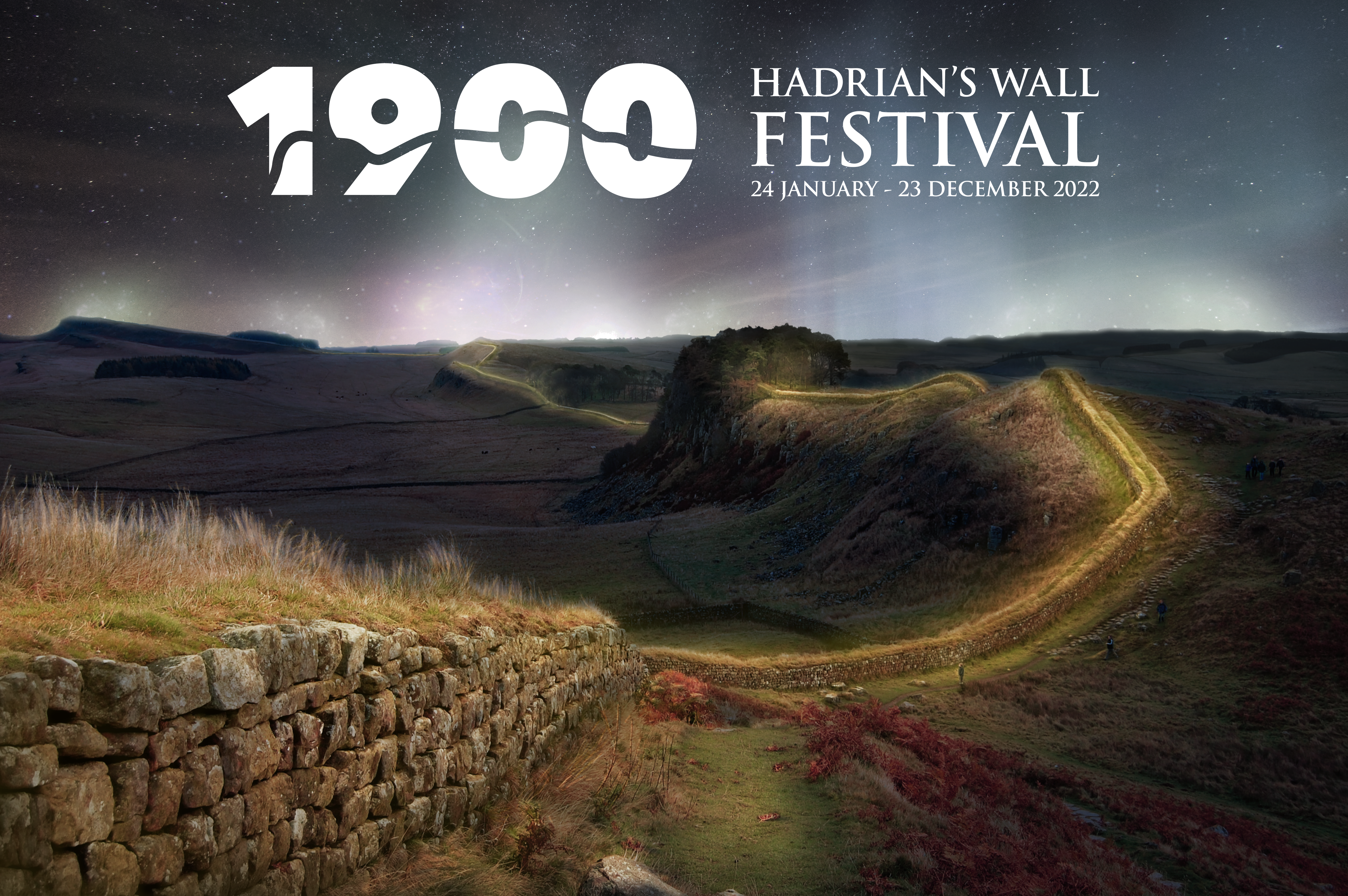
Official image for the 1900 Hadrian’s Wall Festival – used with permission 2021

Marking the 1900th Anniversary of Hadrian’s Wall (AD 122-2022)

The 24 January 2022 marks the 1900th anniversary of the commencement of the building of Hadrian’s Wall. The anniversary celebrations conclude, on 23rd December 2022 which is the final day of the Festival of Saturnalia.

A relatively recent relocation into the northeast of England and being almost a stone’s throw of part of Hadrian’s Wall, this is a great opportunity for us to explore part of the wall and the heritage sites that exist along the wall.

It will enable us to research the fundamentals of those who lived and worked within the broad Roman Empire, and within the Frontier. These explorations will enable us to add some context to the archaeology and heritage of the Roman Empire as well as any artefacts that were left behind and have survived the test of time.

Some of the questions we will be exploring and answering are:

  • Why the Wall
  • Where the Romans came from and where they went
  • Why they came and why they left
  • Naming of People and Places
    • Tria Nomina
      • Phaenomen
      • Nomen
      • Cognomen
  • People and Places – what was important to the people of the time
    • Festival of Saturnalia

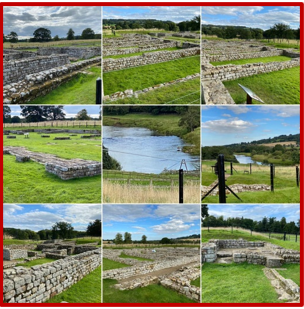
© Julie Goucher, September 2020 – Chesters Roman Fort

As we explore Romans along the wall, we will visit properties and sites looked after by a combination of English Heritage, National Trust, and various other organisations:

  • Chesters Roman Fort
  • Housesteads Roman Fort
  • Benwell Roman Temple
  • Birdoswald Roman Fort
  • Denton Hall Turret
  • Birdoswald Roman Fort
  • Walltown Crags
  • Corbridge Roman Fort
    • Corbridge Hoard
    • Corbridge Collection
  • Lanercost Priory
  • Poltross Burn Milecastle which is a river location
  • Willowfort wall, turrets, and bridge
  • Harrows Sear Milecastle and wall
  • Roman Vindolanda Fort and Museum
  • Roman Army Museum
  • Arbeia South Shields
  • Segedurium Roman Fort
  • Vindolanda Trust
  • Senhouse Roman Museum

Moving Forward:

  • Reading about Romans
  • Key Resources

The list is not exhaustive and over the course of the year, we shall be exploring and sharing our researching and readings, along with any illustrations and photographs online. There is likely to be other material we come across, and we will shared this also. This is going to be a fascinating project and we are looking forward to being able to take part.

The posts will be suitable for all age groups, and they  will be shared via social media and will each contain the hashtag #HW1900.

All published posts will be listed and linked from the main menu above. They can also be found using the category of 1900 Years of Hadrian’s Wall, and the full link for the series of posts is https://anglersrest.net/genealogical-research/hadrians-wall/

If you want to see who else is taking part in celebrating this amazing anniversary, or want to participate then please visit the main website the for the event HERE. You can read my entry HERE.

Posted in 1900 Years of Hadrian’s Wall, Genealogy, History, Local History | Leave a comment

Fascinations in the Parish Registers – Compton,Surrey

Created by Julie Goucher, 2021 using Wordscloud

In 1990 I was looking at the parish register for Compton in Surrey. Tucked away in the register was some additional bits of information, I made a few notes and carried on. Fast forward to 2019, I came across my earlier notes and planned to revisit the material.

This additional information was either written on blank pages within the parish register, but sometimes on loose papers. Most of the papers were in date order, but some were not. The vicar of the parish choose to use the register for this additional information which held baptisms, marriages and deaths for the period of 1639-1812. The register is at the Surrey History Centre under reference PSH/COM/1/2 and has been digitised by Ancestry and it was the digitised records that I looked at recently when I looked at what I was going to do with my notes from 1990.

I thought this was worth sharing, especially as some relates to the early 19th Century census which broadly speaking has few examples that are known to have survived, and for those that have survived there is restricted data available. I pulled the census material together for a quick series of posts, Census, People and Genealogy which will be published in January. (I had planned for December, but got a little side tracked by something else!), but there was more….

In the same register was other interesting sets of materials:

  • Several lists of those vaccinated for Cowpox in Compton from 1810
  • A list of those that were Confirmed at Godalming in 1821
  • Several lists of those Confirmed at Godalming, various dates post 1821
  • A note about the building of a school room at Compton in 1840
  • A small note about the gallery in Compton Church in 1842
  • List of Compton Charities
  • Details of a sermon given at Compton Church 1843
  • A note about the Chancel at Compton Church 1859
  • Details about the roof of the Church at Compton 1869
  • A small list of those from Compton confirmed at Puttenham (Surrey) in 1869 (an earlier confirmation by the Bishop of Winchester was deemed invalid)
  • A narrative about the murder of Joseph Hollis which took place in 1809 in Compton
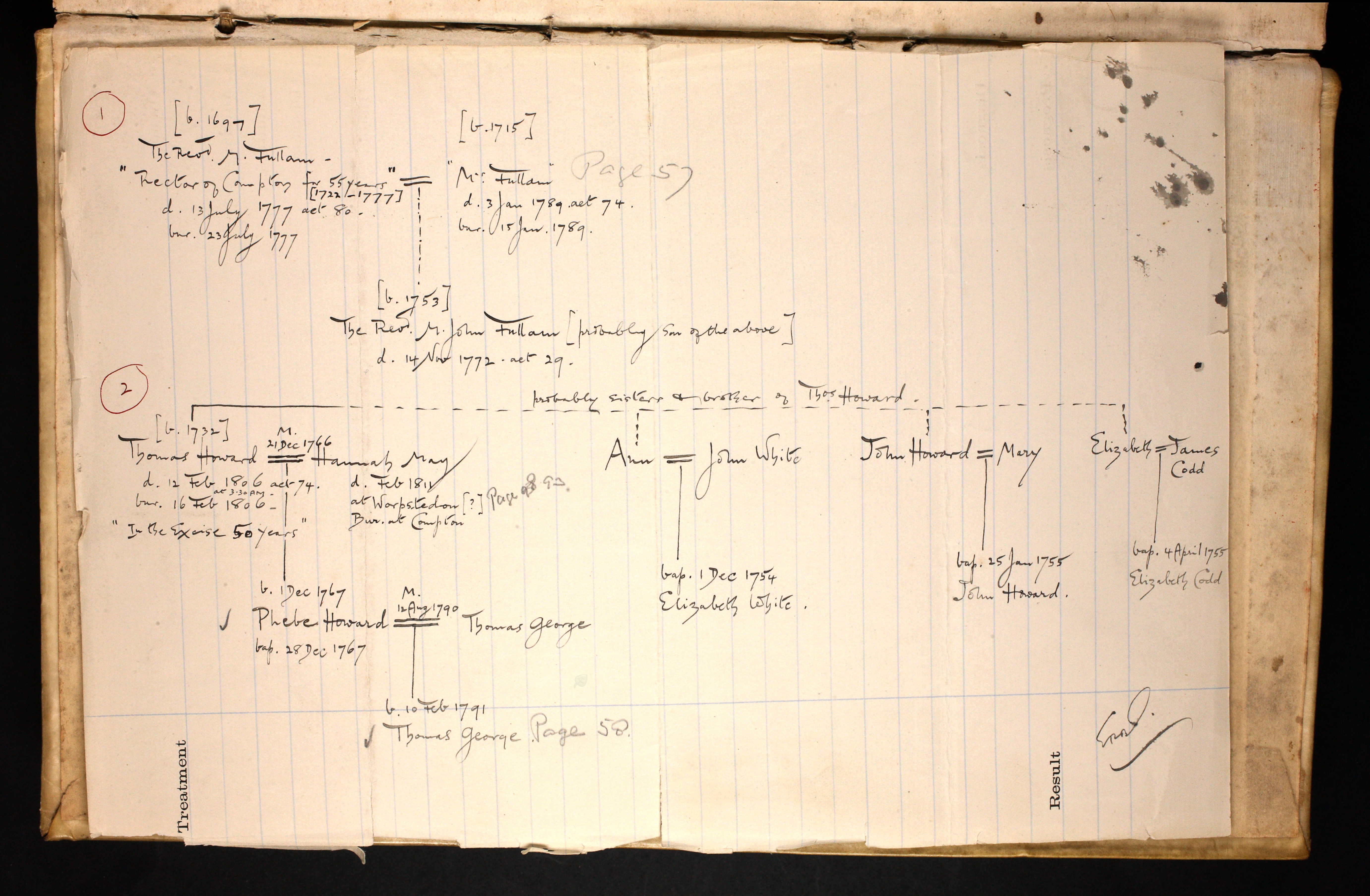
  • A pedigree of Fullam family – those that had events that occurred in Compton were identified and with page numbers given. This identified that there were two vicars from the same family, one of which was vicar for 55 years – illustrated below.

Compton Parish Register – Surrey History Centre, Woking, Surrey  PSH/COM/1/2  accessed via Ancestry

This illustrates how fascinating our parish registers are and how their remit may well go far and wide beyond the recording of births, marriages and deaths. Have you found other material in parish records you have looked at?

Posted in Compton, Surrey, England, Genealogy, One-Place Studies, Puttenham & Wanborough | Leave a comment

Spotlight on….Genealogy the Next Generation Webinar


Genealogy the Next Generation making the genealogy community a welcoming space for all age groups.

Dr Janet Few is shining the spotlight on Why we need to make the genealogy community more inclusive, with particular reference to age. What are the current barriers? What needs to be done? The important part of this session will be the discussion afterwards.

What will people learn? What problems/difficulties might it help with? Why young people current feel excluded/unwelcome. What can be done by individuals, societies and institutions to overcome this? 

Dr Janet Few is President of the Family History Federation and long-time Guild member who was once (many decades ago) a young genealogist. Passionate advocate for young people’s genealogy.
This is something everyone needs to address, so why not join us in an extended Guild of One-Name Studies webinar, lasting around 90 minutes which will include not only hearing from Janet, but also include discussion. The webinar will take place at:

7pm GMT on 16 December 2021 It is FREE to attend and we welcome the wider genealogical community, please register HERE.

This webinar has concluded, and is available on the Guild of One-Name Studies website HERE


Posted in Genealogy | Leave a comment

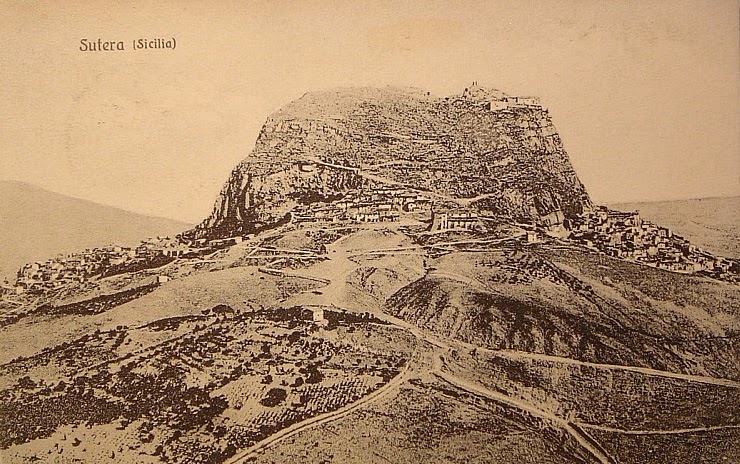
Getting to know Sutera – An Overview

Sutera circa 1930 - from the personal collection of Julie Goucher

Rising 600 meters above sea level, some 100 km from Palmero is Sutera, in Sicily. Now a town of 1223 people (May 2021), it has a fascinating history. Sutera is a rural community, defined by feudal estates and cereal cultivation which has evolved through a community of peasants – indentured servants, craftsman  – carpenters, masons and bakers, and professionals in the modern age undertaking the roles of medics, pharmacists and lawyers.

The Arabs reigned between the 9th and 11th Centuries and founded a settlement in Sutera around 860 AD. The urban centre of Sutera is made up of three districts, Rabatto, Rabatello and Giadinell.

Rabatto has many typical features of an Arabian village, narrow streets, terraces and plaster walls, though many of the surviving features are hidden behind a succession of layers, in an attempt to modernise, but the area is still reminiscent of the period. It is here, that the living Nativity scene is set each year. The roads wind their way around the mountain of San Paolino.

A mosque was built in 875 AD and was the largest religious building. In 1370 it was demolished and replaced with a church, Santa Maria Assunta. There is also a 15th Century ruin, Salamone Palace. The church of Maria Santissima de Carmelo, built in 1185, and rebuilt in 1934, alongside a small convent that was built in 1664, which now fittingly houses the Museum of Rural Life, An Ethno Anthropological Museum reflecting the culture and community of Sutera across hundreds of years.

In 1545 the church was rebuilt and became the mother church, which is still standing, on the archaeological site of San Marco. The church houses a handcrafted organ, dating to 1600.

San Paolino is a lovely church, located on the top of the mountain in Sutera, which is 812 metres high. The church is located next door to the small 18th Century convent of the Philippine Fathers. It is here, at San Paolino, that the reclics of the Patron Saints of Sutera are found, San Paolino, Sant’Onofrio and Sant’Archileone.

Posted in Genealogy, Local History, One-Name Studies, One-Place Studies, Orlando One-Name Study, Specialised Studies, Sutera, Sicily | Leave a comment

Researching Ancestors in Continental Europe (Pharos Course)

Part of the European Ancestors Series

For much of the last year, I have been writing and updating my Researching Ancestors in Continental Europe material. The final tweaks have been done, and now the Pharos course is available to book – HERE.

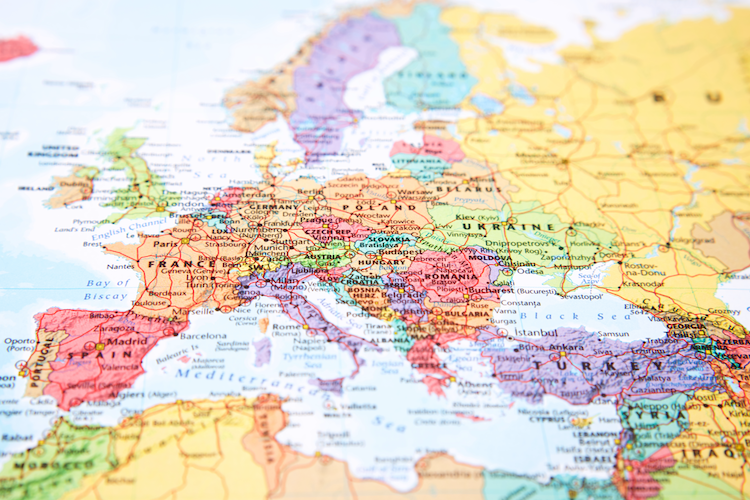
Europe is a complex Continent, spanning more than 50 modern Countries. Europe has seen a huge amount of change, forced religious changes, border changes, war, mass displacement and much more.

During the course we will explore the similarities and differences across Europe and encourage the consideration of some practical factors when conducting your research. There are a great many resources that can be used to assist your research. This course is about creating a solid foundation to research in continental Europe.

We will look at defining Europe and what countries are in Europe (it is not always as obvious as you might think!) We look further at the European Empires and the impact on migration to and from the continent. We look too at the borderlines and unifications. The course explores the standard resources across Europe, key websites, reading material and much more, providing the building blocks for robust and solid foundation research in Europe.

We will consider the reasons for migration, e.g. work opportunities, emigration schemes, persecution, internment and following military service, in the context of historical events. We will also look the culture that the migrants brought with them from their native land, keeping those links alive. Sometimes, it is following those links that actually helps with your research.

So, who is going to join me, for what I hope is going to be an enlightening and fascinating course? You can book the course HERE.

Posted in European Ancestors, Genealogy | Leave a comment

Webinar – Zotero: A Versatile Research Tool for Genealogists

Copyright Guild of ONS Used with permissionThe Guild of One-Name Studies was lucky enough to welcome Patti Lee Hobbs yesterday, who delivered a very interesting webinar, Zotero: A Versatile Research Tool for Genealogists.

Patti Lee Hobbs spoke about Zotero, open-source software developed specifically for researchers—is noted for its easy ability to capture source information to use in citations whether from websites, books, or electronic files. It’s as easy as a click of a button or adding an ISBN. But it does more. Extensive notes for each source can be created and files or links to files can be attached. Zotero will even automatically outline component parts of electronic files making it easy to find specific information easily. Electronic files can be “checked out” to a reading device and checked back in importing all highlighting and notes added by the reader. This webinar will demonstrate the research advantages Zotero offers genealogists.

The webinar is available to be viewed by the public for 30 days; with the associated handout also available on the same page, which is found HERE.

The webinar was very interesting and those who are considering undertaking the Pharos course, Practicalities of a One-Name Study, might find it interesting to watch.

Posted in Genealogical Resources, Genealogy, Practicalities of a One-Name Studies (Pharos Course 903) | 1 Comment

Genealogical Field Notes (2) – A Journey to the Spice Islands

Part of Genealogical Field Notes

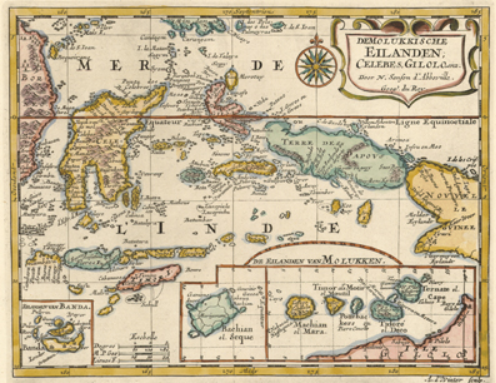
Image from Princeton University Library, used with permission

Mariners on board the vessel The Ascension in 1603 saw English soil for the first time in two years. A description of the voyage is documented by an unnamed individual who was on board the vessel, in a booklet, entitled A True and Large Discourse, and was published shortly after the vessel returned to shore.

The booklet, which is available online, is a mixture of a travel guide, phrase book, diary and an incomplete log of the journey. In addition, a copy of the book is available at the British Library on film, as well as, at the libraries of the Universities of Cambridge, Oxford and Edinburgh.

The Ascension did not sail alone, it was one of 20 boats, which included The Red Dragon, The Hector and The Susan. The voyage commenced on 20 April 1601, just four months after the formation of The Honourable East Indies Company.

It was hoped that the ships would return with black pepper from the Spice Islands, which is now known as Indonesia. The ships arrived in South Africa on 9 September and remained there until 29 October, rounding the Cape of Good Hope on 1 November, and reached the island of Madagascar on 16 December.

The ships compliment was of 478 mariners, of which the vast majority were likely of English or Welsh origin, although there was at least one Dutchman, Martine Cornelison. Upon it’s return, there was 371 survivors, those that did not make the journey back to England are listed at the at the end of the booklet,

The ships returned with Nutmeg from the Banda Islands and 1,000,000 pounds of pepper which sold for around 6 shillings a pound.

For those interested in exploring further, here is a small selection:

Posted in Genealogical Field Notes, History | Leave a comment

Guild of One-Name Studies Webinars – Technology Tools Series

The latest webinars from the Guild of One-Name Studies are now available to book.

The next two webinars are FREE to attend, but you do need to register.

The next webinar is on Zotero, at takes place on 11 November, which might be especially helpful for those who have taken or want to take the Practicalities of a One-Name Study course.

The December webinar is from John Cardinal about ORA. You can read the summary of the webinar on the Guild’s website, as well as book to attend the event on 1 December.

John did an earlier Technology Tools series for the Guild. The series featured GedCom Publisher, ORA and GedSite. You can view this and download the syllabus HERE.

For those interested in ORA specifically. I recommend watching the recording on this page first, before watching the most recent webinar (on 3 November) which you will find HERE (due to be uploaded in the next few days)  and, then seeing the webinar on 1st December.

Posted in Genealogical Resources, Genealogy | Leave a comment

European Ancestors – Europeans Beyond Europe – Jewish & German Migration to China

Part of the European Ancestors Series

With the rise of the Nazi regime in Germany in the early 1930’s, it was becoming a period of concern for the Jewish population. There had always been Jews in other parts of the world, but now there was increased focus on other regions, in particular the Jewish population in China.

There is a significant amount of reading material published relating to the Jewish in China alone, as this shows:

READ NOW: “Jewish Diaspora in China and Their Contributions,” by Xu, Xin, Nanda Review, Vol. 1 (Winter 2009), Nanjing University Press, 2009, pp.144-162. Click here to read the article

There was also a presence of those of Jewish faith in Latin America. There is an online exhibition at the Wiener Holocaust Library which can be viewed at https://wienerholocaustlibrary.org under exhibition.

It is estimated that around 53,000 German Jewish population fled to Latin American alone, that was around 10% of the population. There was also around 10,000 who fled who were Germans, but not Jewish. Those that fled to Latin America, did so on tourist visas.

Posted in European Ancestors, Europeans beyond Europe, Holocaust, Jewish Genealogy & Research, Second World War (WWII) | Leave a comment

European Ancestors – Europeans Beyond Europe – The Holocaust in North Africa and Beyond

Part of the European Ancestors Series

By 1942 the Holocaust has spread from Europe to North Africa into the Middle East. There was a mixture of native Jewish rounded up within countries in North Africa and some Jewish that had fled to north Africa who were subsequently rounded up.

In this part of the world, there were German military, but there was also influence and enforcement from Italy and Vichy France.

Vichy France existed between 10 July 1940 and 9 August 1944. It comprised of the French State who was officially independent, but whose position aligned with Nazi Germany and therefore Vichy France collaborated with Germany. Whilst the Paris was the capital, the Government established themselves near the French town of Vichy and subsequently that Government overlooked and was responsible for the French civil administration and the colonies that France held.

The Vichy Government passed a Jewish Statute in October 1940. The Statute specified that someone who was Jewish was determined as someone with three of their four Grandparents who were Jewish, or two Jewish Grandparents and a Jewish spouse.

The Jewish populations across this region received varying restrictions and actions, this was aligned to the constrictions that Jews were subjected to early in the Nazi rule, such as:

Tunisia – Under Vichy rule from 1940, occupied by Germany from November 1942. Jewish leaders were ordered to round up 5,000 Jews for forced labour, and 400 Jews died under the German occupation. The allies liberated Tunisia in May 1943 and saved 66,000 Jews from the camps in Europe.

Morocco – A French protectorate country. Jews not sent to death camps. Received less rations than those of Muslim faith or Europeans. The Jewish Statute gave Jews just one month to move into the Jewish quarter.

Algeria – The Jewish population was at least 110,000 strong. Jews stripped of their French citizenship, restricted from some occupations – only 2% of lawyers, doctors, midwives could be Jewish. Jewish expected to comply with the order of selling businesses within one month and those of military service age sent to Internment camps. The Vichy officials remained in office after the liberation, with Jewish restrictions overturned in 1943.

Libya – Enacted anti Jewish laws under the direction of Italy, which gradually increased in strictness. In 1942 Mussolini ordered 2,600 Jewish in Libya to concentration camp in the desert, 500 Jews died of starvation and disease. 30,000 Jews escaped imprisonment following the liberation of the country, along with the liberation of the camp which was called Giado. More than 1 in 5 died at the camp within just months of Typhoid or hunger.

Palestine and Egypt – Many Jews were killed by a Nazi mobile killing unit. The allies prevented the deaths of 75,000 Jews in Egypt and 500,000 in Palestine.

Syria and Lebanon – Another two countries that were Vichy controlled. Jews were removed from government jobs, media and press roles and railways. Despite those restrictions there was limited enforcement. Jews across Syria and Lebanon totalled around 30,000. Following the invasion of the Allies in June 1941 Vichy rule ceased.

Iraq – There was around 135,000 Jewish in the country. There were some instances of violence that erupted following 1 June 1941, which can be described at best as Pogroms.

Those of Jewish faith had been in region since the 6th BCE, earlier than most of the Muslim communities. Jews lived alongside Muslims and Christians albeit in separate communities, interaction leading to merging communities was extremely rare.

In March 1921 there was the establishment of the Iraqi State under British Mandate. From then, Jews became full citizens and were permitted to vote and hold official elected office.  In 1932 Iraq gained Independence under informal rule of the British. In June 1941, Jews celebrating a traditional Jewish holiday, known as Shavuot, were subjected to violence and rioting, which lasted two days. The riots led to violence, there were between 150 to 180 Jews killed, more than 500 were injured and there were instances of offences towards women. There was looting of shops and homes. In many ways this violence and anti-Jewish sentiment increased and aligned with the Axis theology with Jews being murdered on the streets. As the British and allies advanced, the regime in Iraq fell apart, though there were around 180 Jewish murdered.

EXPLORE FURTHER: Holocaust Encyclopaedia – https://encyclopedia.ushmm.org/content/en/article/the-farhud


Posted in European Ancestors, Europeans beyond Europe, Genealogy, Holocaust, Jewish Genealogy & Research | Leave a comment