 I spotted this book when it was first released in paperback. I almost bought it then remembered that I could purchase it on the way back to the car, then promptly forgot. I ordered it from Amazon and it arrived the next day. I set about reading immediately; I was drawn in my the prologue alone.
It is not a book that you can read cover to cover, completing in a few days. I read in chapters and took a few weeks to complete the book, not because it was heavy going or difficult to read, but because I needed to think between chapters and reflect.
Whatever our personal circumstances, we are in many ways determined by our genetics and the blood that runs through our veins, whether or not we know those people. In the prologue to the book the author talks of a visit to India and visiting a cousin who had a mental illness diagnosis and had been confined to an appropriate hospital. In may ways, the circumstances for those with this diagnosis is tragic and those left behind struggle with acceptance and the stigma that is attached to that.
Like the author, my Grandfather had a first cousin who was confined to such a hospital from an early age. She remained there for decades until the Government began closing the facilities and selling off the land and promoting “care in the community”. By that point she was totally institutionalised, but went to live with her brother who condemned their father for putting her through that. I remember explaining to the two of them, that in the early part of the 20th Century and prior, many conditions that are treatable today were not then and furthermore, were not explainable. Conditions such as Epilepsy and even dementia like symptoms as a result of a untreated Thyroid condition all were treated the same, rightly or wrongly, as mental illness. We have come a long way in a short space of time in that regards, yet the stigma for some conditions remains and for some, the damage of decades of incorrect treatment and diagnosis remains; furthermore, a diagnosis and the modern knowledge may simply be too late to reverse the situation, which is thoroughly tragic on many levels. We can not condemn the past on the knowledge of the present.
The book has made it to my favourite list because I walked away from it reflecting and contemplating the medical conditions of the cousin mentioned above and even my late Mum, who did not have a mental health condition. She had Polio as a child and the effects of that, both at the time and decades later were not understood then and in some cases even now. I will write about that later this year when I unveil a project I have been working on!
Any book that makes you think, both as you read it and for days, weeks, months afterwards is, in my book (no pun intended!) a good one. The book has done it’s job, in educating, providing knowledge, thought, reflection and understanding all in addition to be a pleasure to read. In fact when Amazon had the Kindle version on sale at 99p earlier this year I bought that too, because at that price why not!
We are determined by those that went before us and that is why many of us spend decades researching the lives of our ancestors. It too is why some of us have undertaken DNA tests as a way of connecting with others with whom we share an ancestral link. I am no DNA expert, but more and more I am seeing the benefit of those tests. I will write about DNA tests, projects and my results later in the year.

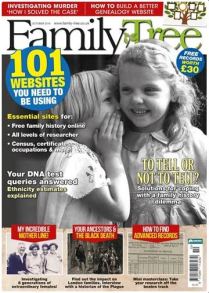 As my 2018 series, Research Rarities, draws to a close I was delighted when the October 2018 issue of the UK genealogical magazine Family Tree arrived with me last week. You can see the full series of articles below in reverse order, although there is also a November issue which is to yet to be published.
 This made it to the favourite’s list for whole host of reasons.
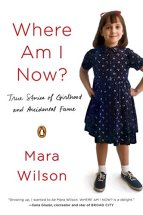 I had not come across this memoir, but was familiar with the actress, although I did not recognise the name. My husband is a huge fan of the movie, Miracle on 34th Street in which Mara Wilson starred and we probably watch it several times during the festive season. At the time of writing this I have not ordered the book, but think I am very likely too!


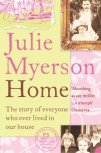 Remaining in London we follow the clues of the lives of the former inhabitants of author, Julie Myerson’s house from the time it was built until recent times.
  A similar book,
  Remaining across the Atlantic we explore the book,

 The webinar I jointly presented with Michael Cassara on Tuesday 21st August is now available on the
  Next Tuesday, 21st August 2018 the Guild of One-Name Studies will be offering their latest webinar in their 7 Pillars series.
 For reasons I cannot explain this book has become a favourite. It is a shame that this likely first book about Bullet planning was published by someone who did not devise the concept, but such is life!
 Whilst this book has hit my favourites list it almost did not. This is a not a substantial book in terms of pages, there are over 350, but in terms of contents and historical scope.
 Julie Goucher ~ Anglers Rest