Weekend Cooking – A Collection of Occupation Recipes by Lillie Aubin Morris

For some reason I had always wanted to visit the Channel Island of Jersey, and last July we did. We were not disappointed. It was very strange, I instantly felt a connection with this island that lies closer to France than England. During the course of the week we spent there we visit several places that had been on my list, including the Jersey War Tunnels. You can read about our trip to Jersey HERE and I wrote four posts about the War Tunnels – Part 1, Part 2, Part 3, Part 4. We enjoyed our week so much that we returned for a second week in October. During the October trip we visited several of the Jersey Heritage sites and it was at that site that I picked up this book.
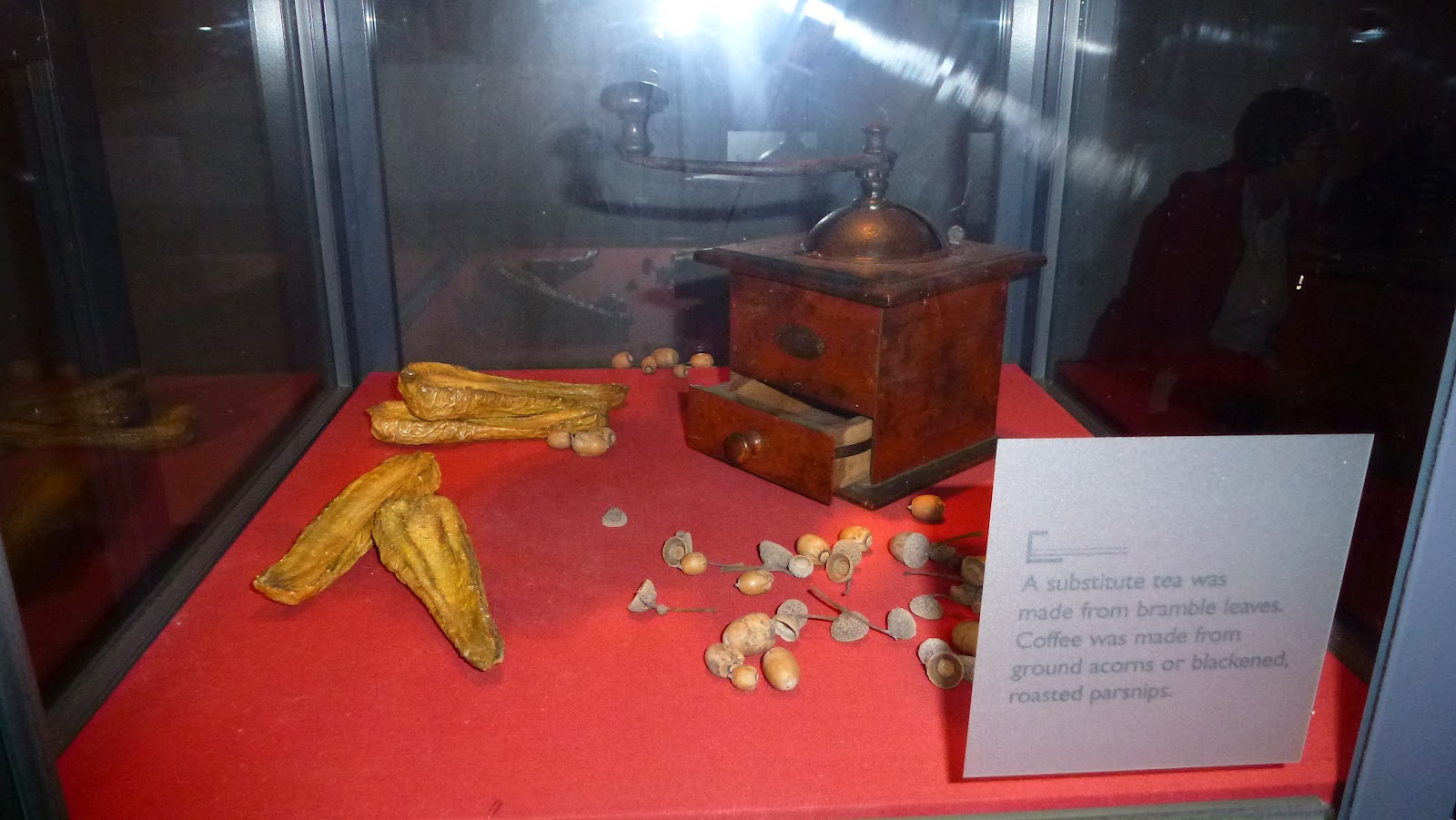
Jersey was during the Second World War heavily protected against the Allies by the German Army. Therefore, food was in short supply.  There was a black market, but in essence food was scarce and after D-Day things became worse. The International Red Cross Ship; The Vega didn’t arrive until 30th December 1944. By this time, the population of Jersey had spent more than 3 years living on what foods they could find, grow and improvising. Trying to keep life as normal as possible. This little book is a collection of recipes, recorded at the time, either by Mrs Morris or from the Jersey Evening Post. 
Poverty Cakes (Page 11)
“Scraps of meat or fish can be turned to good account and made to go a long way if mixed with the following ingredients: one egg, two cupfuls of milk, quarter teaspoon of baking powder, pinch of salt, sufficient flour to make a paste. Roll out as for a scone, cut in squares or rounds and fry in hot fat. The cakes should puff up and are very light”
Potato and Tomato Casserole (Page 14)
“2lb potatoes
1 tin tomatoes
1oz butter
pepper and salt
Melt butter in a small pan, add potatoes cut into quarter inch slices, put potatoes into the fat for a few minutes over a low gas. Turn into pie dish, cover with tomatoes and a little pepper and salt. Bake in a moderate oven until brown. The liquor from the tomatoes maybe used according to taste”
Sugar Beet Coffee (Page 4)
“Wash sugar beet and grate roughly. Roast the pieces in an oven if gas is available, or if sufficient wood and tar to give a fair heat in coal oven. When roasted, mince the pieces finely and use as coffee”
As I read through this little book, there seems to be much more than a few recipes within its 30 pages. I recall the jar of jam made in 1942 and now archived at the War Tunnels. 

A reminder of the hardships faced.


Weekend Cooking is hosted by BethFishReads

Tagged , , | 18 Comments

Postcard Friendship Friday – Burchell’s Zebra

Some recent genealogical research revealed a connection, albeit, a distant one, to the man that these Zebra are named after; William John Burchell (1781-1863). So far, the life of William appears absolutely fascinating and I think this will continue to be the case. The path research takes us along is sometimes mind boggling!

This particular card dates from circa 1950.

Submitted as part of Postcard Friendship Friday hosted by The Best Hearts are Crunchy 

Tagged , , | 4 Comments

…..A long way from home

I always think it is sad to come across a gravestone of someone who passed away many miles from home. I don’t mean those who are born in one Country and live and pass away in another, I mean those to whom death occurs and is unexpected and occurs away from home.
The point of headstones is that there is a marker to indicate that behind the name and perhaps a set of dates a person existed. It is a visual spot whereby loved ones can pay their respects and mourn.
I live in the coastal town of Teignmouth on the South Devon coast of England. I have no specific reason to visit the cemetery and no one that I know is buried there. After a few years we paid a visit to the cemetery and simply wandered around. Looking at the headstones that were erected with love and now simply a testament that someone had cared enough to place a stone, but perhaps there is no one left to visit and lay flowers.
One headstone was dedicated to a Russian mariner. Teignmouth has a working port and ships regularly dock here, both now and in the past, loading and unloading their cargo. Knowing this fact I was not surprised to see such a headstone, commemorating the passing of an individual who died many miles from home. On the few occasions I have seen the grave there are no flowers left and it suddenly occurs to me that this individual passed away 100 years ago. Perhaps there are no family left who remembers this man, perhaps his name is simply a question mark in someone’s ancestry – his existence is known, but the details surrounding his death and burial place is not.
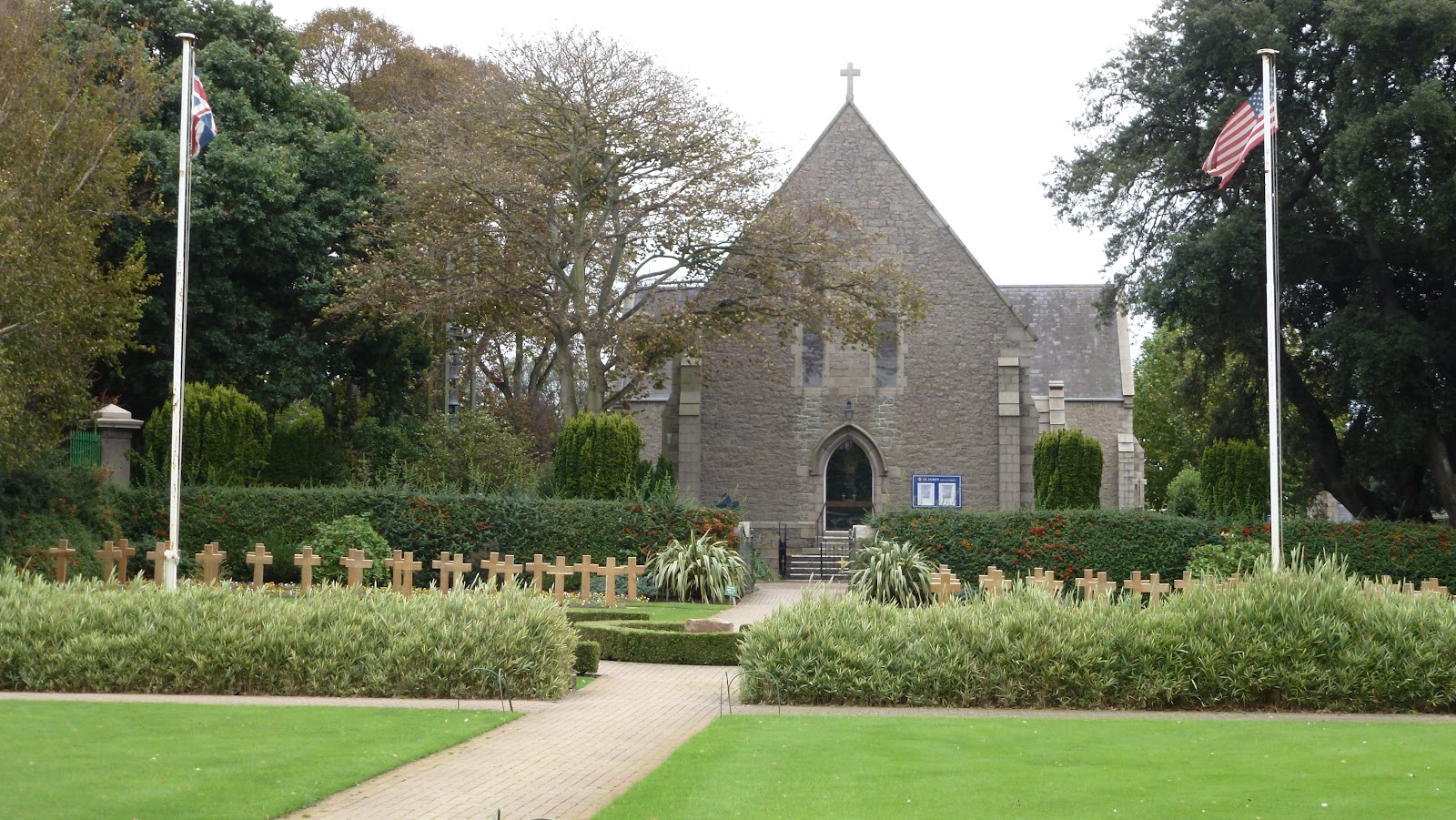
In October 2011 my husband and I visited the Island of Jersey which lies in the seas of the British Isles and yet rather confusingly is governed completely independently of the United Kingdom. The Island lies 14 miles off the coast of France. I was looking at a map as we planned the following day’s activities. In the smallest of print I spotted the following words “W.W.2 War Graves”. The next day we headed off to our planned destination by way of a detour to the park which hosted the graves mentioned.
The board of interest indicated that the grounds were given to the people of Jersey in memory of a local land owner whose son had perished in the First World War. We then followed the path to the War Graves.
There, we felt overwhelmed. In front of us lay two groups of graves. The graves represent Servicemen who died during the Second World War. Some individuals were named, others were not. These were men whose bodies were recovered during the War and were buried within the confines of the park with the respect they deserved. They were cared for in death by the population of an Island that was inhabited from 1940 by the German Army. Yet, despite those tough times, the local population wanted those individuals to be remembered. 
As we walked along the rows of headstones, reading the names the grounds man was mowing the prestige lawn. The pattern created by the mower in uniformed strips. I stopped to talk to him and asked him about the headstones. He said rather sadly, very few people come here to see them. When I asked why, he said very simply “people forget they are here and time passes by…..”
He is right, time does pass by, but we should never forget this sacrifice. The majority of these men died many miles from home and now lie in a foreign land, some from within the UK and serving in the British Armed Services, others from the United States. Only one Grave represents Islander and that is the Grave of Maurice Jay Gould who had been born in England in 1924. His birthplace meant that he was deported from the Island at the start of the Occupation. He died in Germany aged just 19 in 1943. His body was returned to the Island in 1997 and buried in this special place.


 This post also appeared at On line Journal of Grave yard Rabbit

Tagged , | 2 Comments

Guest Post at International Graveyard Rabbit

I have been invited to be an international guest poster at the On line journal of Graveyard Rabbits.

You can read my guest post HERE

Tagged , | Leave a comment

Wordless Wednesday

Taking part in Wordless Wednesday
Tagged , | 1 Comment

Loose Ends…..

I have a note book. Just a small one, pocket size. Nothing especially pretty, a simple black notebook with a red spine. 
The contents are simple; much like the book. It is a list of my genealogical loose ends and it is very much out of date. In some cases the material has been printed or requested from the archives and in other cases there are additions. Like most genealogical projects there are always additions and loose ends. That is why genealogy is so addictive.
I decided, by way of a small experiment with Word Press that I would transcribe the notebook. 
The notebook, its contents and the transcriptions are simple. The genealogical research and my ancestry is anything but…….
You can read the contents HERE at Genealogical Loose Ends.
Tagged , , | Leave a comment

Conclusion

Well, that it is, in just 17 posts I have transcribed the note book from the early years of my research, which was the point of the exercise.

The majority of the entries were written almost 20 years ago. In some cases they were thoughts and ponderings on what to check next. In other cases there were specific references that might or might not relate to my family. If they did connect to my ancestry I ordered a copy of the document.

What is ironic, is that some of those ponderings I am still having now – the example of that is the references to Elizabeth &  James Butcher children of Daniel Butcher and his wife Elizabeth!

I do not anticipate that I shall add further to this particular blog as this notebook is now all transcribed and the book is looking to join my other old note books in the loft!

Thanks for travelling with me on this short journey!

Posted in Notebook 1 (Research Agenda 1992) | 2 Comments

Rear Page 7

Guildford Munimen Room – 20th Feb 1993

  1. 85/13/621-624 – Ordered and Rec
  2. 91/3
  3. 1/15/20
  4. 96/5/7-10
  5. LM 1036/33-61
  6. LM1330/72/1-13
  7. 1230/1
  8. 2/7/1-6 – Bramshott Hampshire Records
  9. 65/4/12/13 – “Butchers Land”

LM= Loseley Manuscripts

Posted in Notebook 1 (Research Agenda 1992) | Leave a comment

Rear Page 6

Kingston Records Office – 22nd July 1995

Land Tax Records for Dunsfold and Hascombe

  1. P41/2/46/13 – Send papers
  2. P35/2/89 Alfold Settlement Examinations
Posted in Notebook 1 (Research Agenda 1992) | Leave a comment

Rear Pages 4 & 5

Guildford Muniment Room Indexes – 4th Feb 1993

  1. Albury – 86/2/32
  2. Hascombe Park Hatch – 85/2/1/ (Number 96) sp 1814
  3. Scotlands Farm Early Deeds 111/4/3
  4. Park Hatch 5077/2
  5. James Denyer Will – 2/31/7 Godalming 1817
  6. Butchers Farm House – 91/3, 1/15/20, 123/4/9
  7. Scotlands Farm Cranleigh (Cranley) 125/1/7-11, 1452/2

Posted in Notebook 1 (Research Agenda 1992) | Leave a comment