Secrets of the Workhouse is the latest programme produced in“Who Do You Think You Are” Style and brought to UK television screens by ITV.
Below is the TV Trailer – Courtesy of YouTube
The series follows 5 celebrities; actress Felicity Kendal, author Barbara Taylor Bradford, actor Brian Cox, model Kiera Chaplin (Granddaughter of Charlie Chaplin) and presenter Fern Britain.
The stories of the celebrities are to some extent interwoven across the individual programmes, but that does not detract from the overall value of the programme or what it has to offer the viewer.
The workhouses, which are to around 1 in 3 Britons(statistic given in programme one) , the only safety net in which our ancestors had during the late 1800s up until the Second World War apart from family. These institutions existed as the only mechanism of support and help outside the family unit. These establishments existed before the benefit system and before the National Health Service formed.
They were harsh establishments in the main. They produced fear, shame and every other human emotion that you can think of.
My Great Aunt told me in a whisper on a glorious sunny afternoon during the summer of 1989 that her great uncle, her grandmother’s brother, had died in the workhouse. She touched my hand, closed her eyes and shock her head ever so gently as she whispered, “oh the shame of it”
My genealogical mind, desperately wanting to know answers too many questions, his name, the reason he was there; but that afternoon was not the time to ask such questions. Over the course of the next few weeks I was told his name and why he was there and I asked where was the workhouse building reducing my voice to a whisper, although why I did so is curious as we were completely alone. Aunt revealed the location of the workhouse and then said “it was where you were born you know.”
This one sentence, linking my generation to a previous one suddenly seemed, I don’t know, special perhaps. Like many of the workhouse type buildings after the formation of the National Health Service in 1948 they were turned into the local hospitals and within a generation the harshness and grimness of their existence wiped away; unless of course you were my Great Aunt and could remember it all in very fine detail.
Therefore as I sat and watched the recorded version on Wednesday morning I recalled that afternoon with my Great Aunt where she had shared those details with me. In fact we had many, many afternoons like that one, where she would talk of the past and share facts, gossip and snippets of our family history. What I will never forget is that some 80 years later she still felt the shame of association with the work house.
The internet genealogical world is very active and a recent discussion that I watched revealed that actually not all workhouses were harsh as we left the Victorian era behind.
Like with any large institution the inmates, as they were called were provided with a uniform on admittance. Their belongings taken away for fumigation and stored ready for the moment they left, if of course they did leave.
Once admitted the work was harsh and monotonous, the meals basic, boring but at regular intervals. Typically Women, Men and Children all lived in separate blocks. Health care and that is a huge general term was provided to a fashion. Those that were infirm or suffering from an illness were generally speaking provided for in separate accommodation.
It is worth noting that conditions that are fairly common and treated now were not always. Conditions such as hypothyroidism that can if untreated lead to dementia type conditions, epileptics and those with mental health conditions were potentially admitted received limited treatment and were potentially transferred to asylums.
These institutions were a product of Victorian success; where should you fall on hard times was not viewed as unfortunate fact of life, but more that you did not try hard enough to prevent it. With that mindset, the workhouses and hospitals were harsh establishments and ones that you went to when you had no other choices left.
As the Victorian era due to a close, and a new Century dawned the mindset and harshness softened somewhat, we headed our way towards a system that showed a glimmer of humanity.
For me this first programme was a rediscovery of those notes and afternoons with my Great Aunt. It is a chance to explore the social and economic lives of my ancestors in rural Surrey in the early 20th Century, and whilst it is too late for my Great, Great Uncle, someone 100 years later does care enough to ask
Why?
A fantastic website looking at Workhouses can be found HERE
The last week of May and the first day or so of June proved to be very busy and has had an excitingly bookish theme.
The Hay Festival took place in the location of Hay in England, situation just about on the Hereford and Wales border. The town is very bookish and is home to around 30 bookstores and the festival each year.
I have visited Hay twice, neither time during the festival and whilst I am all for taking part and listening to writers talk about their tomes, writings and inspiration I prefer to wander the streets and bookshops of Hay taking it all in on a much more personal level. The festival was beamed across the country and possibly beyond by the television channels and I am delighted that it does.
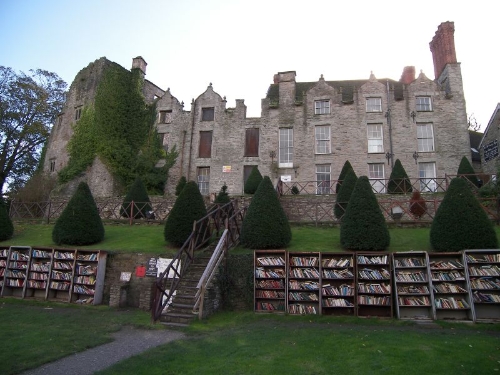
My visits to Hay are at least 7 years old, but I still recall the wonder of sheer joy when my husband and I ventured into a town on our first night in the area. We stumbled across Castle Bookshop, which is, as I am sure you will not be surprised to find out in the remains of a castle building.
Castle Bookshop – October 2006 Copyright J & S Goucher
Within the confines of the grounds are a series of bookshelves, exposed to the elements complete with books. My poor husband, who bless him does not have a bookish bone in his body (unless you count endless fishing and angling books) was almost beside himself. “Who on earth would leave books outside?” He asked me. I smiled and simply wallowed in the experience and of it all noting that there was a small trust box for payment. Such innocence is actually worth a smile and a real pleasure to see.
And yes, to those of you who are puzzled; there are books in those bookshelves. What I call disposable books, books which are perhaps on their last legs, in other words, very pre owned. The price for each book is just 20p and whether you buy a book or not, to touch and see them in such a unique setting is delightful. I recall purchasing two books and both of them reside on the bookshelves in my study and almost hold the memory of the Hay experience within their covers.
I had just caught my breath from the televised Hay experience when Armchair Book Expo America came to me via the internet. The virtual format of this book conference was produced quite wonderfully and ran alongside the main conference.
There was a getting to know you set of questions to kick us off. Those with a blog chose their questions and then answered them upon their own blog and linked up with the main Armchair BEA site. Each day there was a discussion about a bookish genre, other set questions such as ethics and then there were giveaways and lots of other wonderful posts. The idea of the whole theme was as a book blogger to participate from your own blog and link into the main site.
The entire process ran well and the organisers and volunteers should be commended for putting on such a good virtual show.
I am still reading some of those links and commenting. Not to mention adding recommendations to my never ending book list.
I have had a great May and early June. Did you take part in Armchair BEA? Have you been to Hay, either to the festival or for a bookish break? Leave a comment and tell us!
Not too far from us is the tourist site of Kents Cavern. According to their website, the caves have been tempting explorers since 1571. Despite being a mere 7 miles from us I have never been and it is not on my tourist bucket list either.
Here is a postcard that I spotted recently, that dates from circa 1960
Despite the fact that I am not over keen with going underground, the caves that feature in this week’s prompt from New South Wales I have been to. Sadly I could not easily get to the photographs that we took in January 1997, the days before digital!
Earlier in the week a fellow genealogist commented via Twitter about an article in The Irish Times. That article flagged up some interesting points including the potential issue that EU regulations could pose limitations on genealogical research and any subsequent publication of that research.
This morning Chris Paton has given credit to Sheena Tait who has provided the link to the actual proposals and the subsequent comments from the Information Commissioners Office.
The relevant clause for genealogists appears to be number 83, entitled “Processing for historical, statistical and scientific research purposes”.
My personal view is this. Have we not gone too far in terms of the EU? We have lost our identity and that can not be a good thing. We should absolutely preserve privacy, but there has to be a degree of common sense surely.
It would seem that this will be decided in Brussels and those who have an opinion should write to their Member of European Parliament (MEP) as soon as possible. You can find out who your MEP is at the European Parliament website.
If you are outside of the European Union then I suggest writing to the MEP relevant to your heritage area.
Regular readers will have no doubt noticed that this week has been fairly bookish. I have had a pile of review posts and notes loitering on my desk and the time came to do something with them!
It has been a fairly busy few weeks, I have been involved with a project that has been formalised and an announcement will appear here over the next month or so. It is all very exciting and possible because of technology and the wonders of it.
I have also just completed the first batch of workshops called The Book of Me, Written by You. Which has been exhausting, wonderful and thoughtful all at the same time. I am ready for the next set of workshops to begin in the coming weeks.
Those in the Geneablogging world need not be disappointed. It is going to be run in association with Thomas at GeneaBloggers, so please keep reading; the launch is likely to be at the end of the Summer
Meanwhile, we have had some sun in the south west of England. Hurrah! and not before time I might add. So we have taken advantage of the good and dry weather and given Alfie a few extra walks, to destinations that are new to him (and us) and not too far from home. It is amazing what is on your doorstep when you open your eyes and look around you.
Anyway, I mention that simply so that I can show a lovely picture of Alfie, taken over last weekend. Doesn’t he look cute, such a gorgeous little face!
Don’t let that little face con you into thinking he had walked miles and needed a drink. At this point we had barely left the car and he was waiting patiently for his master to take a picture and I managed to take this picture.
He had a lovely time, and we enjoyed the walk. Sadly the venue was rather hilly and really upset my back, but it was great to get some fresh air and look at the view.
Meanwhile, the study clear up and out goes on. I had a boss in a former professional life who said there were “filers and pilers”. To be honest he was more messy than me and had a knack from expecting me to second guess him all the time. When he moved on I gave a (huge) sigh of relief, but always remember his little phrase.
As I look around the study I have sadly migrated from filer to piler and I need change my ways! The problem is my brain is simply without an off switch, and I find that I am easily in a genealogical sense distracted, so I extract files and don’t put them back, then I can’t find them. I know, very naughty and I must do better!
Thank you to the new followers who have joined me this week. It is much appreciated. There is only a few days left of life with Google Reader. I have migrated my feed to Feedly so I can carry on reading other blogs, but to be honest I have removed the RSS option from the Anglers Rest blog. Instead I offer a Facebook page the link is on the side bar, in addition to the options of posts by email and twitter feeds. If anyone does have any thoughts please leave a comment.
The June choice for our reading group was The White Mughals by William Dalrymple. The comments from the group were split into essentially three camps, those that loved it, those who read it and persevered and those who hated it.
I fell into the loved it camp and I did love it. The book took the author 5 years to write. It is thoroughly researched and painstakingly written, threading the storyline together with the use of historical documents and probable hypothesis when the documentation can not support the theory.
The book is based upon the surviving papers and diaries from 18th Century British aristocrats who spent many years in India. What is shown is India in context with history; the defeat of Napoleon in Egypt for example. The book explores the culture exchange, where many of the men in the region “go native” with local women and then send the children back to England to be educated. The book explores the Christian/Muslim/Hindu exchange which was perfectly acceptable in the 18th Century, alas when the 19th Century appears that exchange and the “go native” approach is scorned and unaccepted.
The book does cover the romance of James Achilles Kirkpatrick who was a promising British resident in Hyderabad, and a young noblewoman and descendant of the Prophet Muhammad, called Khair-un-Nissa and whilst this romance is essentially the backbone of the book, it in some ways fades into the background amongst the historical aspects of India and the region at this time.
Even so, I loved the book, I loved the provision of sources and notes and the depth of research and for me this has to be the read of the year.
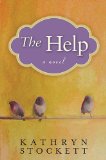
This was the read for my book group back in March. I had both read the book and seen the movie previously and loved both. The responses from the group were mixed and we had a great debate on racism, both across the pond and here in the UK.
The book is narrated by three of the central characters to the storyline; Skeeter Phelan, a white girl from the South and two black maids, Aibileen and Minny.
Skeeter is from a well established white family. She has graduated from college, has a set of friends and is active in the local community. Her plan is to enter the world of journalism and in doing so she challenges the behaviours and events of the time. Meanwhile, her mother wants Skeeter to marry into a good family, live in a big house with a black maid, but for Skeeter that just is not enough.
Determined to use her degree, Skeeter writes to the publishing house of Harper and Row in New York. When she hears back, it is not with a job offer, but with some good advice and wisely Skeeter quietly follows it.
I thoroughly enjoyed this book, the author has managed magnificently for a first book, to transport the readers back to the deep south of the United States when the civil rights movement was steadfast in it’s dreams, hopes and aspirations for the future; a time when Martin Luther said “I have a dream”
The characters and plot were strong and believable and I have rarely read a book twice in a year, but this one I have.
On the back of the recent BBC series this book essentially covers the projects that the contestants were asked to make. What is also included in the book is some historical details on Sewing Bee’s, including those hosted by the then Queen, and more commonly and affectionately known the Queen Mum.
From 1939 The Blue Room at Buckingham Palace was opened and all the female staff invited to attend the “Stitch to Victory” sewing bee that took place twice weekly. It was an attempt, and a successful one too, to get the women in the Country behind the War work and bring a sense of togetherness when the Country was at it’s darkest days.
Image courtesy of Cardiff University
Also included is a rare known fact that the husband of Mrs Beeton included a traceable pattern in every printed edition of The Englishwoman’s Domestic Magazine. The magazine was published from around 1880 and the patterns started being issued from 1863.
The book also contains how you can create your basic sewing kit.
Once you have gone beyond basic sewing kit and the history elements of the book the projects begin. Each project is described in full, with handy tips and guidance all the way through. There is a real mix of projects; from an apron to patchwork throw, a bow tie to waist coat, laundry bag to curtain, cushions to dresses & skirts.
There is guidance on selecting material, tacking, sewing seams, patterns and much more.
I have to say, I was plunged back to my childhood as I read the book. To moments of having to stand still whilst my Mum hemmed up the latest dress she had sewn, to helping her look for lace for her latest creation or patchwork squares for a quilt. Looking back now recalling how I hated wearing handmade dresses, not understanding or appreciating the effort and skill it took to pull it all together into a fine piece of clothing; and whilst I hated wearing those handmade articles, I was never laughed at by the other kids, which means that it was a good job well done; as we all know kids can be brutal when it comes to perhaps being different.
I enjoyed the book. I enjoyed what it was trying to achieve, I enjoyed revisiting those memories, things I hadn’t thought of in years and the things that I had forgotten about. The book is well laid out and presented. There is lots of guidance and ideas for sewing projects.
The final pages of the book are given to an index with the acknowledgements to the show and book production teams.
An earlier post written by me with links to the programme editions on YouTube is HERE







 Julie Goucher ~ Anglers Rest